
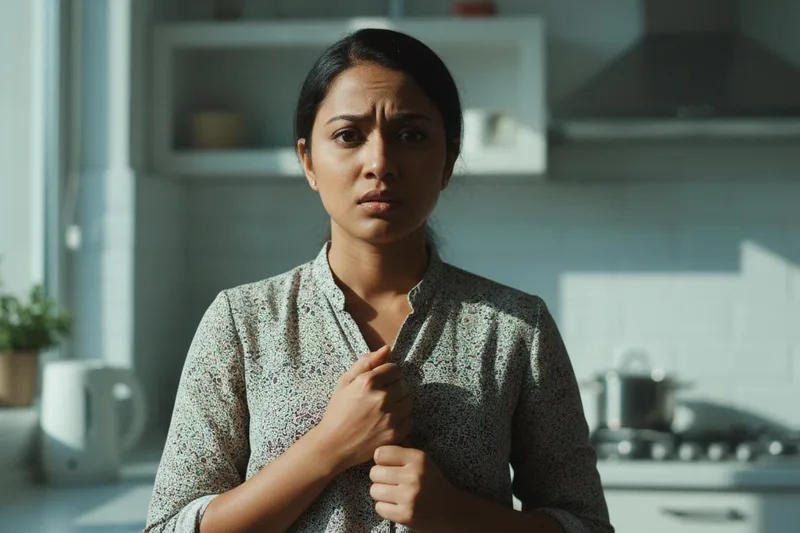
What is this fear of the kitchen (Mageirocophobia)?
Simply put, Mageirocophobia is an extreme, unusual, and uncontrollable fear of cooking. In medicine, this is what we call a specific phobia . That is, a strong fear or anxiety about a specific thing – in this case, cooking. This condition (Mageirocophobia) can sometimes be associated with other mental health problems. For example:- Conditions that cause repetitive thoughts and compulsions, such as Obsessive-Compulsive Disorder ( OCD ): Here, thoughts such as whether every step in the garden is done correctly or whether there is a germ can recur and increase the fear.
- Perfectionism: People with this type of perfectionism blame themselves and feel bad about making even the slightest mistake. So, if a dish is a little off while cooking, they can become overwhelmed and fearful.
- Fires: Kitchen appliances like stoves, ovens, and microwaves can cause fires , right? Especially if an oil fire starts, it can spread quickly and be difficult to put out. It's no wonder that we get scared when we think about things like this all the time.
- Food poisoning : The fear that certain foods can be contaminated and make you sick if they are not cooked properly. Imagine how heartbreaking it would be if someone ate something you cooked and got sick.
- Food loses its taste: Even if you make a small mistake, if you overcook or overcook a dish, it can lose its taste. You may think, "Won't anyone eat the food I made?" "What if they say it's not tasty?"
- Injuries : There is a risk of minor injuries when using sharp objects like knives and scissors. You may feel scared, such as "Will I cut my hand?" or "Will I get scalded with hot water?"
- Stress :Cooking is a time-consuming and focused activity. If you're a busy person, cooking can feel like a lot of pressure on top of that.
What exactly is a phobia?
Now look, we all have a little fear of fire, sharp weapons, and getting sick, right? That's normal, natural. Such fears don't stop us from going about our daily lives. But a phobia is a much more severe, intense fear. It causes you to do anything to avoid the feared thing or situation. A phobia causes you to have unusual thoughts and behaviors that are difficult to control. These feelings can be a big challenge in your daily life.To explain this fear of the kitchen (Mageirocophobia) further...
It's normal for many people to feel a little nervous or fearful about things like trying a new recipe or cooking for guests. However, for someone with Mageirocophobia, the thought of cooking or even seeing someone else cooking can cause unbearable anxiety . Sometimes this can be so severe that it can lead to panic attacks , where the fear becomes so intense that it's hard to breathe.If you feel like you have this condition, there is no reason to be ashamed or to hide it. It is not your fault. The important thing is that you can get help for it and there are treatments that can help reduce the impact it has on your life. Talking to your doctor about this can be the first step to recovery.
Why does this fear occur? (Mageirocophobia Causes)
There are several main reasons that contribute to the fear of cooking (Mageirocophobia). Let's take a look at what they are.- Genetics: If someone in your family, such as your mother, father, or siblings, has had anxiety-related mental health problems, such as depression or other mood disorders , you may also have a slight predisposition to developing this type of phobia. It's something that comes from your genes.
- Environment and past experiences: You may have had a traumatic or frightening experience with cooking in the past. For example, when you were a child, something happened in the kitchen and you were very scared when you saw it. Or, you may have been very hurt when someone criticized a dish you cooked in the past, saying things like, "This is not edible, it's not safe." Such an experience may be stored somewhere in your mind and may later emerge as this kind of fear.
What are the symptoms of this fear? (Mageirocophobia Symptoms)
In the case of Mageirocophobia, you may exhibit certain behavioral and physical symptoms. These may vary from person to person.Behavioral changes
This fear may lead to several behaviors that affect your daily life:- Avoiding going near the kitchen for fear of being seen cooking. Perhaps even avoiding going into the kitchen at home.
- Trying to choose jobs where you don't encounter people who are cooking.
- Not wanting to go to restaurants or eat out because they are afraid that if there is a visible kitchen, they will see someone cooking.
- Stop cooking at home completely, always bring food from the store, or wait for someone else to cook for you.
Physical discomfort
This condition (Mageirocophobia) can cause you to experience some physical discomfort. It can feel like an illness, such as:- Feeling unbearable anxiety .
- A feeling of dryness in the mouth and throat .
- Sweating more than usual.
- Constant headaches .
- Feeling like your muscles are tightening and spasming (muscle tension) .
- A sudden increase in heart rate , like a pounding in the chest (palpitations).
- Stomach discomfort , sometimes accompanied by nausea, vomiting, or diarrhea.
- Constantly feeling a lot of mental pressure and stress .
How is this condition diagnosed? (Mageirocophobia Diagnosis)
There are no special blood tests or scans to diagnose this condition (Mageirocophobia). Your doctor or mental health counselor will talk to you about your symptoms, your behavior patterns, and your past experiences to help you understand the condition. Your doctor may ask you questions like:- "Have you or anyone in your family ever had a specific phobia or a condition like social anxiety disorder ?"
- "How often do you have thoughts about cooking? What happens when those thoughts come to you?"
- "When you think about cooking, how do you feel when you face that opportunity? What emotions come up?"
- "What are you most afraid of in the kitchen? That it will catch fire? That the food will lose its taste? Or something else?"
- "Has your fear of cooking changed your daily routines or habits?"
- "Are you now avoiding things you used to enjoy doing and places you used to go to (e.g., parties at friends' houses, festivals) because of this fear?"
What are the treatments for this? (Mageirocophobia Treatment)
The most effective and widely used treatment for this condition (Mageirocophobia) is Exposure Therapy . You may have heard of this. It may seem very simple, but it is a very effective method. In this, a qualified therapist carefully, gradually, and in a controlled manner exposes you to the thing you fear, that is, the garden and its related things. At the same time, you are taught healthier coping methods to face and manage this fear. First, start with things that you are not very afraid of, and that are low-risk. For example:- Looking at pictures of people gardening.
- Watching videos on how to cook.
- Touching and looking at kitchen utensils (without cooking).
- Watching someone else cook.
- Helping to make something simple (like a sandwich).
- Eventually, you get to the point where you try to cook a little something on your own.
Are there other treatments that might help?
Yes, in addition to exposure therapy, there are several other treatments and methods that can help:- Cognitive Behavioral Therapy (CBT): This is another very important treatment. CBT helps you to explore why you feel so afraid and anxious about cooking. It helps you to identify the wrong, irrational thoughts you have in your mind (e.g., "Everything I cook is bad," "If I cook, I'll get hurt") and replace them with more realistic, positive thoughts. It also helps you learn to confront negative thoughts without giving in to them.
- Medications: It is important to remember that medications cannot completely cure Mageirocophobia. However, some medications can help control the symptoms. For example, medications such as antidepressants can help reduce your mood disorders and anxiety. Also, anti-anxiety medications can be given for a short period of time to control sudden, severe anxiety. However, all these medications should be taken only under medical advice, if prescribed by a doctor, in the prescribed dosage, and for the prescribed period of time.
- Stress reduction techniques: Yoga , meditation, deep breathing exercises can help you relax your mind and body. When you practice these daily, your anxiety will decrease and you will gain the mental strength and confidence to overcome this condition (Mageirocophobia).
Is there anything we can do to avoid this fear?
Some people may be at higher risk for developing anxiety-related problems. If you are one of these people, taking steps to manage your anxiety early can go some way to preventing it from developing into a phobia. Here are some things you can do to reduce your risk of developing Mageirocophobia and other phobias:- Limit or completely stop the use of alcohol and other drugs .
- Adopting methods to reduce stress in daily life and at work (e.g. working in a relaxed manner, engaging in hobbies)
- Avoid smoking and other tobacco use.
- Spending time with people who love you and understand you , talking to them about what's on your mind.
- Start a new hobby that brings you joy. This can help you take your mind off things that scare you.
Can we get out of this situation? What will the future hold?
Yes, absolutely. Treatments such as exposure therapy , cognitive behavioral therapy (CBT) , and, if necessary, medication can help you gradually overcome your fear of cooking. This is not something that happens overnight, it takes some time, but you can definitely achieve successful results. After treatment, it will be easier for you to carry out your daily activities without fear. Sometimes, you may feel a little scared and nervous again when cooking. That is normal. However, because you have learned how to calm yourself down and control those feelings during those times, you will be able to prevent those feelings from becoming severe and affecting your life.Other things you need to know to overcome this fear
To overcome this fear (Mageirocophobia), learning a little more about gardening and increasing your knowledge about it will also be a great help in increasing your confidence.- Learn more about food safety rules. For example, you can learn how to use a digital food thermometer to check if food is cooked properly and at a safe temperature. Knowing these things can help reduce the fear of food poisoning.
- Learn how to cook something you love by asking a patient friend or family member you trust to help you cook it. Then you can ask questions and learn without fear.
- If possible, attend a cooking class.Choose a class that has a good, friendly atmosphere. When you go to a class, they often do the prep work for you, so you can focus on cooking. Plus, since there are other people, it can be a bit of a fun experience.
- In the early days, use a grocery delivery service . This will save you from having to go to the store and potentially see scary things. Some services also offer meal kits or even ready-made food .
Remember this.
So, finally, I have to tell you, this fear of cooking, that is (Mageirocophobia), is a real condition that can have a big impact on some people's lives. Most of the time, people are afraid of the consequences of what they cook. "What will others think if I make a mistake?", "Will it hurt someone?" are the most common fears in their minds. Because of this, you can try to avoid cooking altogether, even to avoid thinking about it. But when you do that, this fear will take over your life even more, controlling you.But you don't have to live like this forever. You can overcome this. With the help of a qualified mental health professional , especially through exposure therapy and cognitive behavioral therapy (CBT), you can overcome this fear completely. Also, learning a little about cooking and food safety can help reduce your fear and increase your confidence. Remember, asking for help is not a weakness, it's a strength!
` Mageirocophobia, fear of cooking, phobia, mental health, anxiety, exposure therapy, phobia


💬 Comments (0)
No comments have been posted yet. Add your comment here for the first time.
Add your comment