
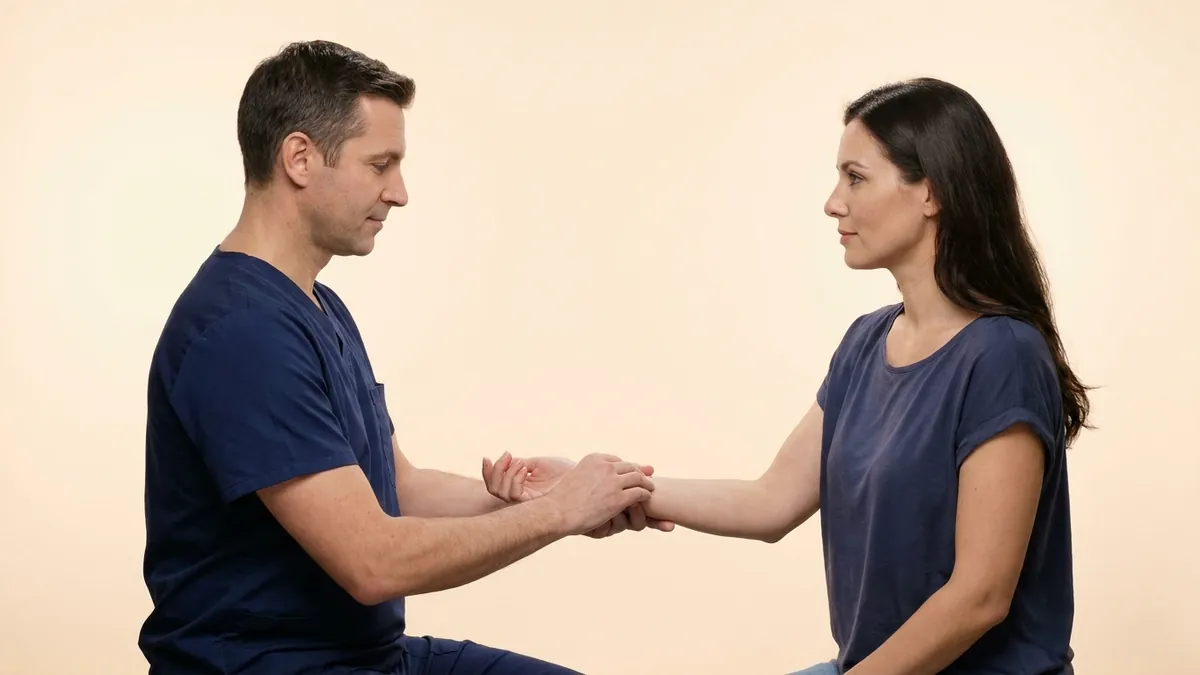
You may have heard of a 'Nurse Practitioner' in a foreign film, TV series, or from a relative living abroad. But this name is a bit new to us in Sri Lanka. Who is this person who comes to you in a hospital like a doctor, talks to you, examines you, and perhaps prescribes medicine? Is this a doctor? Or a nurse? Or both? You may have had these questions too. So today, let's talk about who this Nurse Practitioner, or NP for short, is.
Simply put, who is this Nurse Practitioner (NP)?
Simply put, a Nurse Practitioner (NP) is someone who has a bachelor's degree in nursing, and has received further postgraduate education and specialized training. This means that an NP has more knowledge, training, and experience than a regular Registered Nurse (RN).
This additional training gives NPs the power and ability to do many of the things a doctor does. When they treat patients, they focus on the patient's overall well-being, not just the disease. That means they pay close attention to things like disease prevention, how to live a healthy lifestyle, and how to accurately understand and advise on your health issues.
An NP can work as your family doctor (Primary Care Provider), or they can provide specialized services for a specific patient group (for example, children, the elderly, cancer patients).
You can find an NP in places like these:
- Physicians' offices
- Clinics
- Hospitals
- Emergency Treatment Unit (ETU)
- Urgent care sites
- Nursing homes
- Universities and Colleges
Sometimes these NPs are also called Advanced Practice Registered Nurse - APRN''. So if you hear both of these names, remember that they are referring to someone at the same level.
What does an NP do?
An NP does the same things a regular nurse does, like asking about your medical history and prescribing medications. However, their duties go far beyond that. An NP is someone who provides a very high level of nursing care.
They sometimes work alone, and other times they work as a team with doctors. You can get a good idea of their roles by looking at the table below.
| Main tasks of an NP | A simple explanation |
|---|---|
| Recording medical history and symptoms | We will listen to and take notes about your difficulties and previous illnesses. |
| Physical examination | They examine you like a doctor would. (e.g. listening to your chest with a stethoscope) |
| Ordering tests for diagnosis | They will refer you for X-rays and laboratory tests to determine the exact cause of the illness. |
| Test report analysis | I look at your reports and understand what they say. |
| Diagnosis and treatment | Based on your symptoms and test results, the diagnosis is determined and treatment is given. |
| Preparing treatment plans | They will create a plan for you regarding the treatments, medications, and lifestyle changes you need. |
| Prescribe | In many countries, an NP has the power to prescribe medication. |
| Referral to specialists | If you need treatment from a specialist, we write referral letters for that. |
| Providing advice | We will advise you on how to stay healthy and avoid illness. |
What is the difference between an NP and a doctor?
This is a problem for many people. An NP is not a doctor. However, in some countries, like the United States, NPs are legally allowed to work independently as primary care providers, just like doctors. This means they can see and treat patients on their own without the supervision of a doctor.
However, in some other countries/states, an NP cannot work alone. They need the approval of a doctor when making certain decisions and prescribing medications.
The main difference lies in education and training.
- A doctor: Must go to medical school and earn a postgraduate degree such as a Doctor of Medicine (MD). They receive more training than an NP.
- An NP: After a nursing degree, they obtain a postgraduate degree (Master's or Doctorate) in nursing. Their training is centered around nursing.
In short, an NP is a specialized nurse who has received more training and education than a regular nurse and is authorized to do many of the things a doctor does.
What is the difference between an NP and a Physician Assistant (PA)?
This is another similar profession. The services provided by an NP and a Physician Assistant (PA) are very similar. However, there is a slight philosophical difference in the way they approach the patient.
- Physician Assistant (PA): They are trained in the same way as doctors, but according to the "medical model." That is, their primary focus is on diagnosing, testing, and treating disease .
- Nurse Practitioner (NP): They are trained according to the "nursing model." This means that their primary focus is on the patient . They care for the patient's mental, physical, and overall well-being while treating the illness.
Are there different types of NPs?
Yes, absolutely. Just as doctors specialize in different areas, NPs specialize in different patient groups or areas of health. Here are some examples.
| NP area of expertise | What you do is simple. |
|---|---|
| Psychiatric NP | Treating people with mental health problems and substance abuse issues. |
| Family NP | Healthcare services are provided throughout the life of the family, from young children to the elderly. |
| Pediatric NP | They treat children from infants to young adults, giving them vaccinations and routine checkups. |
| Neonatal NP | Newborns are treated, especially those who were born prematurely or who are sick. |
| Emergency NP | They work in Emergency Treatment Units (ETUs). They decide who needs urgent treatment and treat them. |
| Women's Health NP | We focus on women's health issues, especially reproductive and gynecological health. |
| Oncology NP | We work together with oncologists to treat and care for cancer patients. |
How do you become a Nurse Practitioner?
The journey to becoming an NP typically requires about 6-8 years of medical education and training. It is not an easy journey.
1.First, you need to become a registered nurse (RN): This requires a diploma in nursing (ADN) or a bachelor's degree in nursing (BSN). Many people work as an RN for several years and gain experience.
2. Next, you need to pursue a postgraduate degree: The next step is to enroll in a postgraduate program. This can be a Master's degree in Nursing (MSN) or a Doctor of Nursing Practice (DNP).
3. Specialist training: During this postgraduate period, they learn in depth about their chosen specialist field. They also receive intensive clinical training (clinical experience). For example, they study in-depth subjects like (Pathophysiology) (changes in the way the body works due to diseases) and (Pharmacology) (medicine).
4. Obtaining licenses and certifications: After completing your degree, you must obtain a state license to work as an NP. You must also pass a national certification exam.
So you can see now that an NP is someone who has received a very high level of education and training and plays a very important role in healthcare.
💡 Take-Home Message
- A Nurse Practitioner (NP) is a healthcare professional who has received higher postgraduate education and specialized training than a regular nurse.
- They can diagnose diseases, plan treatment, and even prescribe medications in many countries.
- Although an NP is not a doctor, they perform many of the same tasks as a doctor. Their approach is often focused on the patient's overall well-being rather than the disease.
- Although this position is not common in Sri Lanka, an NP is a very common and important figure in healthcare in foreign countries.
- So from now on, if you encounter an NP abroad or in a movie, you now know who they are and what their role is.






Janiw kuna arsuwinakas jichhakamax uñt’ayatäkiti. Aka chiqanx amuyt’awim jan ukax jiskt’awim yapxatañamawa.