
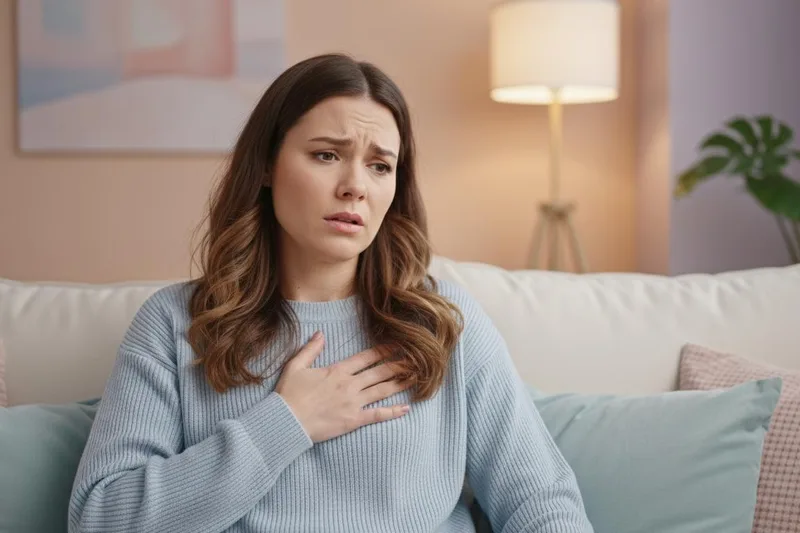
Do you also have difficulty breathing when you bend over? Let's talk about Orthopnea!

Do you also have difficulty breathing when you bend over? Let's talk about Orthopnea!

When you lie down in bed, or lie down on the sofa watching TV, do you suddenly find it difficult to breathe? It feels like your chest is constricted and you are short of breath? But when you stand up and sit up, it subsides. Have you ever experienced this? Many people think this is normal, but it is not something to ignore. This is what we call Orthopnea in medical terms.

Simply put, what is Orthopnea?

Orthopnea is a condition in which you have difficulty breathing when you are lying down, especially when your neck and chest are at the same level. For example, if you lie down in bed without a pillow, you feel short of breath, but the difficulty goes away when you sit up or when you sleep with your head elevated on two or three pillows. This is the main symptom of orthopnea.

Here's another thing. Some people wake up suddenly at night with shortness of breath. We call this Paroxysmal Nocturnal Dyspnea (PND). Orthopnea is a little different. PND only happens during sleep. But orthopnea can happen even when you're awake, even if you're lying down. For example, you might feel it when you're lying down to watch TV, or when a doctor has you lie down in bed for an examination.

The important thing is that Orthopnea is not a disease, but a symptom of another disease . Therefore, if you have this kind of discomfort, it is essential to find the underlying cause.

What other symptoms come with orthopnea?

In addition to difficulty breathing, you may experience several other symptoms. Some people sleep with a lot of pillows on top of them, while others sleep sitting up in a chair. This is because it is easier to breathe while sitting than lying down.

Symptom Description
Chest tightness or pain Feeling like your chest is constricted and heavy when you breathe.
Wheezing or coughingA 'cheese-cheese' sound from the chest when breathing or a persistent cough.
Palpitations Feeling like your heart is beating fast, like a heartbeat.

Why does this happen? What are the causes of orthopnea?

The main reason for this is that fluid accumulates in the lungs due to some medical condition in the body, or the lungs are unable to expand properly and take in air.

Think of it this way. When we bend over, the blood in our legs flows back to our chest. A healthy heart can pump this extra blood back to the body without any problems. But if your heart is weak, it can't pump this extra blood. Then that blood builds up in your lungs, creating pressure, making it hard to breathe. When you stand up and sit up, gravity moves that blood back to your legs, reducing the pressure in your lungs and making it easier to breathe.

Some of the main medical conditions that can cause orthopnea are listed below.

Condition A simple explanation
Congestive Heart Failure This is a major cause of orthopnea. As the heart weakens, fluid builds up around the lungs, making it difficult to breathe.
Pulmonary Hypertension (PH) Increased pressure in the blood vessels that carry blood to the lungs.
COPD (Chronic Obstructive Pulmonary Disease) A group of diseases that cause chronic inflammation of the lungs, which causes difficulty breathing.
ObesitySevere obesity can cause breathing difficulties as the diaphragm is unable to fully expand.
Pulmonary Edema Fluid accumulation in the lungs.
Severe Pneumonia A severe infection affecting the lungs.
Diaphragm Paralysis A weakened diaphragm due to an injury, tumor, or other disease, making it difficult to breathe.

How do you find this, Doctor?

When you tell your doctor that you have this problem, he or she will first ask you a few questions. In particular, the question "How many pillows do you need to sleep on?" is very important. The number of pillows you need, whether one, two, or three, can give you an idea of ​​the severity of the condition.

Then, they will order several tests to find the underlying cause.

  • Chest X-ray
  • A scan to check the function of the heart (Echocardiogram)
  • ECG test (Electrocardiogram)
  • Pulmonary function tests

What are the treatments for this?

Remember, orthopnea is not a symptom, but the underlying condition that causes it . Your doctor will also recommend ways to reduce your shortness of breath while treating the condition.

Typically, symptoms can be controlled by sleeping with your head elevated, administering oxygen if necessary, and losing weight. There are also specific treatments depending on the cause.

  • Heart Failure: Lifestyle changes, diuretics, and medications such as ACE inhibitors and beta-blockers may be prescribed to help the heart function. Sometimes surgery or a pacemaker may be needed.
  • COPD: Medicines that widen the airways (Bronchodilators) and reduce inflammation in the lungs (Corticosteroids) are used.
  • Obesity: Weight control through a healthy diet and exercise is key.
  • Pneumonia: Antibiotics and oxygen are given if necessary.

Can orthopnea be prevented?

The best way to prevent orthopnea is to reduce the risk of developing the diseases that cause it. That means living a healthy lifestyle.

  • Properly control conditions that increase the risk of heart disease, such as diabetes, high cholesterol, and high blood pressure .
  • Exercise regularly. It's good to exercise for at least 30 minutes a day, most days of the week.
  • Avoid smoking completely. If you smoke, ask your doctor for help to quit.
  • Limit or completely stop alcohol use .
  • Add fruits, vegetables, and nutritious foods to your diet.
  • Get a medical checkup at least once a year and be aware of your health status.

Having orthopnea doesn't necessarily mean you have a heart attack. However, it can be a major symptom of a heart attack. Therefore, be sure to see a doctor for a proper diagnosis.

Take-Home Message

  • Orthopnea is a condition in which it becomes difficult to breathe when you bend over, but it improves when you sit up.
  • This is not a disease, but rather a symptom of an underlying medical condition, often involving the heart or lungs.
  • A common sign of this is using multiple pillows to sleep on.
  • Never ignore this symptom. See your doctor as soon as possible to find out the cause.
  • By properly treating the underlying condition, you can control your breathing difficulties and live a good life.

Orthopnea, difficulty breathing, shortness of breath when leaning, heart disease, lung disease, dyspnea, shortness of breath, heart failure

👩🏽‍⚕️ Additional questions (FAQs)

💬 What is Muscle Ache / Myalgia?

It's normal to feel achy/sore muscles after working out at the gym or after a lot of running and walking. But this condition called 'Muscle Ache (Myalgia)' is a severe symptom that makes you feel like all the muscles (and spine) in your body are suddenly crushed and crushed, making it unbearable to even get out of bed, without doing any heavy work.

💬 What are the main causes of muscle aches/pain that makes it impossible to get out of bed?

There are several main reasons for this: 1) 'Severe viral infections' - When you get dengue, COVID-19, or the common flu, your immune system goes to war and your muscles all over your body ache. 2) 'Muscle Spasm/Cramps' - When your body is dehydrated, places like your hair suddenly become stiff. 3) 'Statins/Rhabdomyolysis', a side effect of cholesterol-lowering drugs, can also cause muscle aches and pains. 4) Fibromyalgia.

💬 When you have muscle cramps, you should go to the hospital immediately, not just stay home and take Panadol. What are the 'fatal/emergency situations (Rhabdomyolysis)'?

In most cases, this will subside in 3-4 days with a viral fever/fatigue (rest/drink water). But the biggest danger! Along with the muscle pain, if 1) your urine turns dark coffee or blood-colored (Dark tea-colored urine), it means that your muscles are melting and your kidneys are starting to rot (Acute Kidney Injury)! 2) If your neck muscles are frozen and you have a fever (Meningitis), 3) If you have difficulty breathing, you need to be hospitalized immediately!

⚠️ Important: The medical articles and information on Nirogi Lanka are for general awareness only, and are by no means a substitute for professional medical advice, diagnosis, or treatment. For any medical problem you have, consult a qualified physician immediately.

💬 Comments (0)

No comments have been posted yet. Add your comment here for the first time.

Add your comment

Please calculate: 5 + 8 =
Do you also have difficulty breathing when you bend over? Let's talk about Orthopnea!
SymptomsApril 10, 2026

Do you also have difficulty breathing when you bend over? Let's talk about Orthopnea!

When you lie down in bed, or lie down on the sofa watching TV, do you suddenly find it difficult to breathe? It feels like your chest is constricted and you are short of breath? But when you stand up and sit up, it subsides. Have you ever experienced this? Many people think this is normal, but it is not something to ignore. This is what we call Orthopnea in medical terms.

Simply put, what is Orthopnea?

Orthopnea is a condition in which you have difficulty breathing when you are lying down, especially when your neck and chest are at the same level. For example, if you lie down in bed without a pillow, you feel short of breath, but the difficulty goes away when you sit up or when you sleep with your head elevated on two or three pillows. This is the main symptom of orthopnea.

Here's another thing. Some people wake up suddenly at night with shortness of breath. We call this Paroxysmal Nocturnal Dyspnea (PND). Orthopnea is a little different. PND only happens during sleep. But orthopnea can happen even when you're awake, even if you're lying down. For example, you might feel it when you're lying down to watch TV, or when a doctor has you lie down in bed for an examination.

The important thing is that Orthopnea is not a disease, but a symptom of another disease . Therefore, if you have this kind of discomfort, it is essential to find the underlying cause.

What other symptoms come with orthopnea?

In addition to difficulty breathing, you may experience several other symptoms. Some people sleep with a lot of pillows on top of them, while others sleep sitting up in a chair. This is because it is easier to breathe while sitting than lying down.

Symptom Description
Chest tightness or pain Feeling like your chest is constricted and heavy when you breathe.
Wheezing or coughingA 'cheese-cheese' sound from the chest when breathing or a persistent cough.
Palpitations Feeling like your heart is beating fast, like a heartbeat.

Why does this happen? What are the causes of orthopnea?

The main reason for this is that fluid accumulates in the lungs due to some medical condition in the body, or the lungs are unable to expand properly and take in air.

Think of it this way. When we bend over, the blood in our legs flows back to our chest. A healthy heart can pump this extra blood back to the body without any problems. But if your heart is weak, it can't pump this extra blood. Then that blood builds up in your lungs, creating pressure, making it hard to breathe. When you stand up and sit up, gravity moves that blood back to your legs, reducing the pressure in your lungs and making it easier to breathe.

Some of the main medical conditions that can cause orthopnea are listed below.

Condition A simple explanation
Congestive Heart Failure This is a major cause of orthopnea. As the heart weakens, fluid builds up around the lungs, making it difficult to breathe.
Pulmonary Hypertension (PH) Increased pressure in the blood vessels that carry blood to the lungs.
COPD (Chronic Obstructive Pulmonary Disease) A group of diseases that cause chronic inflammation of the lungs, which causes difficulty breathing.
ObesitySevere obesity can cause breathing difficulties as the diaphragm is unable to fully expand.
Pulmonary Edema Fluid accumulation in the lungs.
Severe Pneumonia A severe infection affecting the lungs.
Diaphragm Paralysis A weakened diaphragm due to an injury, tumor, or other disease, making it difficult to breathe.

How do you find this, Doctor?

When you tell your doctor that you have this problem, he or she will first ask you a few questions. In particular, the question "How many pillows do you need to sleep on?" is very important. The number of pillows you need, whether one, two, or three, can give you an idea of ​​the severity of the condition.

Then, they will order several tests to find the underlying cause.

  • Chest X-ray
  • A scan to check the function of the heart (Echocardiogram)
  • ECG test (Electrocardiogram)
  • Pulmonary function tests

What are the treatments for this?

Remember, orthopnea is not a symptom, but the underlying condition that causes it . Your doctor will also recommend ways to reduce your shortness of breath while treating the condition.

Typically, symptoms can be controlled by sleeping with your head elevated, administering oxygen if necessary, and losing weight. There are also specific treatments depending on the cause.

  • Heart Failure: Lifestyle changes, diuretics, and medications such as ACE inhibitors and beta-blockers may be prescribed to help the heart function. Sometimes surgery or a pacemaker may be needed.
  • COPD: Medicines that widen the airways (Bronchodilators) and reduce inflammation in the lungs (Corticosteroids) are used.
  • Obesity: Weight control through a healthy diet and exercise is key.
  • Pneumonia: Antibiotics and oxygen are given if necessary.

Can orthopnea be prevented?

The best way to prevent orthopnea is to reduce the risk of developing the diseases that cause it. That means living a healthy lifestyle.

  • Properly control conditions that increase the risk of heart disease, such as diabetes, high cholesterol, and high blood pressure .
  • Exercise regularly. It's good to exercise for at least 30 minutes a day, most days of the week.
  • Avoid smoking completely. If you smoke, ask your doctor for help to quit.
  • Limit or completely stop alcohol use .
  • Add fruits, vegetables, and nutritious foods to your diet.
  • Get a medical checkup at least once a year and be aware of your health status.

Having orthopnea doesn't necessarily mean you have a heart attack. However, it can be a major symptom of a heart attack. Therefore, be sure to see a doctor for a proper diagnosis.

Take-Home Message

  • Orthopnea is a condition in which it becomes difficult to breathe when you bend over, but it improves when you sit up.
  • This is not a disease, but rather a symptom of an underlying medical condition, often involving the heart or lungs.
  • A common sign of this is using multiple pillows to sleep on.
  • Never ignore this symptom. See your doctor as soon as possible to find out the cause.
  • By properly treating the underlying condition, you can control your breathing difficulties and live a good life.

Orthopnea, difficulty breathing, shortness of breath when leaning, heart disease, lung disease, dyspnea, shortness of breath, heart failure

👩🏽‍⚕️ Additional questions (FAQs)

💬 What is Muscle Ache / Myalgia?

It's normal to feel achy/sore muscles after working out at the gym or after a lot of running and walking. But this condition called 'Muscle Ache (Myalgia)' is a severe symptom that makes you feel like all the muscles (and spine) in your body are suddenly crushed and crushed, making it unbearable to even get out of bed, without doing any heavy work.

💬 What are the main causes of muscle aches/pain that makes it impossible to get out of bed?

There are several main reasons for this: 1) 'Severe viral infections' - When you get dengue, COVID-19, or the common flu, your immune system goes to war and your muscles all over your body ache. 2) 'Muscle Spasm/Cramps' - When your body is dehydrated, places like your hair suddenly become stiff. 3) 'Statins/Rhabdomyolysis', a side effect of cholesterol-lowering drugs, can also cause muscle aches and pains. 4) Fibromyalgia.

💬 When you have muscle cramps, you should go to the hospital immediately, not just stay home and take Panadol. What are the 'fatal/emergency situations (Rhabdomyolysis)'?

In most cases, this will subside in 3-4 days with a viral fever/fatigue (rest/drink water). But the biggest danger! Along with the muscle pain, if 1) your urine turns dark coffee or blood-colored (Dark tea-colored urine), it means that your muscles are melting and your kidneys are starting to rot (Acute Kidney Injury)! 2) If your neck muscles are frozen and you have a fever (Meningitis), 3) If you have difficulty breathing, you need to be hospitalized immediately!

⚠️ Important: The medical articles and information on Nirogi Lanka are for general awareness only, and are by no means a substitute for professional medical advice, diagnosis, or treatment. For any medical problem you have, consult a qualified physician immediately.

💬 Comments (0)

No comments have been posted yet. Add your comment here for the first time.

Add your comment

Please calculate: 5 + 8 =