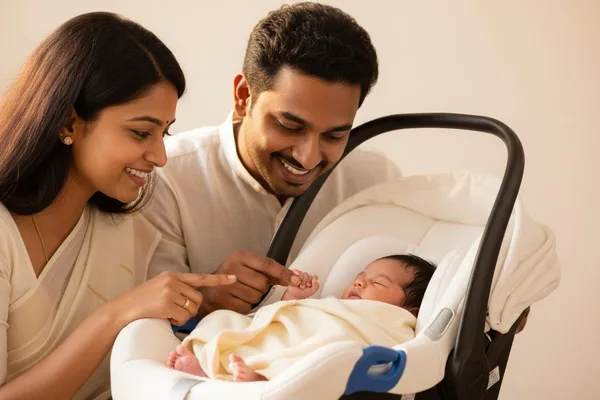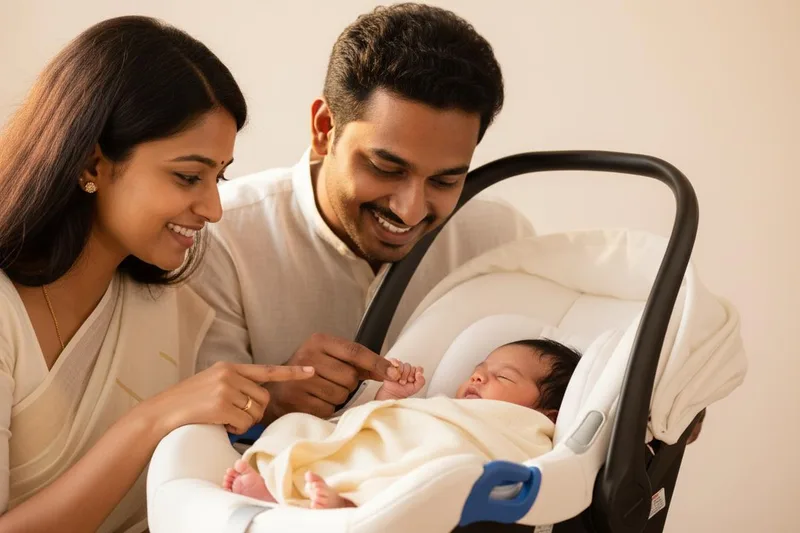
The day your little one comes home! (Bringing Your Newborn Home) Let's find out all about this, shall we?

The day your little one comes home! (Bringing Your Newborn Home) Let's find out all about this, shall we?

The day you bring your little one home from the hospital is like a dream come true, isn't it? Some babies can come home right after birth. Others, especially premature babies, may need to spend a few days in the Neonatal Intensive Care Unit ( NICU ). However, today we're going to talk about how you can prepare for this new and exciting journey. It's normal to feel a little scared and nervous.

Remember these things before leaving the hospital!

Before you are discharged from the hospital and take your baby home, there are a few things you need to take care of. Don't worry, let's go through them one by one.

How to prepare clothes for mother and baby

Many mothers prepare clothes to wear when they go home even before they leave the hospital. But sometimes, considering the weather, you can ask your husband or a family member to bring clothes that are suitable for you and the baby. If you want to wear something, choose something that is a little loose and has an elastic waist. Because the clothes you wore before having the baby may not fit you yet.

On the first day you bring your baby home, you often see them dressing you up more than they need. Don't do that. You should dress your baby in the way you feel comfortable. Think about it, if you put a knitted hat on yourself in the summer and it makes you sweat, your baby will sweat too.

  • On a hot day, dress your baby in a T-shirt and light cotton pants. Or you can put a small blanket over the legs.
  • On a cold day, wrap your baby in footie pajamas, a hat, and a warm blanket. Be careful not to put the blanket too close to your baby's face, as this can cause suffocation.

Rather than choosing a complicated outfit that requires you to press the arms and legs of a newborn baby and struggle to dress them, if you choose a simple, easy-to-dress outfit, you will be able to take your baby home calmly and without any fuss.

Baby's first ``checkup``

Before you leave the hospital, be sure to talk to your baby's pediatrician (or baby's health care provider) to find out exactly when your baby should have their first checkup . Sometimes, premature babies can be given a special monitor to check their breathing, heart rate, and breathing when you go home. You may also be taught how to give your baby cardiopulmonary resuscitation (CPR).

Don't be in a hurry to leave the hospital. Ask any questions you have, whether it's about breastfeeding, bathing your baby, or sending your baby to the hospital, to the nurse, the lactation consultant, or the baby's doctor.

Bringing your baby home: Don't forget the importance of a car seat!

The most essential thing for a trip home with a baby is a proper `(Child Safety Seat)`, as we all know, a `(Car Seat). Sri Lanka also now has laws regarding this. Because this is the best way to keep a baby safe.

How to install a `(Car Seat)` correctly

If you need help installing your car seat, or want to make sure you've installed it correctly, ask someone who knows about it. There are places called car seat inspection stations, but they're a bit hard to find in Sri Lanka. So, check your vehicle's manual, read the car seat's instructions carefully, and install it correctly.

Never, no matter how close the trip is, have one person drive the car while the other person holds the baby. If you stop the car suddenly, there is a high chance that the baby will jump out of your hands and hit the dashboard. Isn't that an unthinkable accident?

What kind of ``(Car Seat)`` should you choose?

It's best to take your time and choose the right car seat before your baby is born. There are two main types of car seats that are suitable for babies:

  • Infant-only seats: These are designed to be used rear-facing only. They are more suitable for newborns than convertible seats. The American Academy of Pediatrics (AAP) recommends that babies be rear-facing until they are 2 years old, or until they reach the maximum weight or height recommended by the manufacturer for the car seat. (If your baby outgrows the manufacturer's weight limit before 2 years old, you will need to use a convertible seat that is designed for a slightly older baby.) Some parents use a travel system (a set that includes a stroller and an infant-only car seat). This makes it very easy to transfer a sleeping baby from the car to the stroller.
  • Convertible seats: These seats should be rear-facing until your baby is at least 2 years old, or until they reach the manufacturer's maximum weight/height. If they reach the height/weight limit before 2 years old, it is safest to keep them rear-facing in a larger convertible seat. Younger babies can be rear-facing even after 2 years old. (Follow the manufacturer's instructions for when to turn the seat forward.)

Never place a rear-facing infant or convertible seat in the front of the car. Always place it in the back. The passenger-side airbags in the front are very dangerous for both rear-facing and forward-facing car seats. Also, most accidents happen in the front of the car, so it's also dangerous. On a cold day, first place your baby in the seat, strap him in, and then carefully wrap him in a blanket.

If you buy a used `(Car Seat)`...

If you buy a used car seat, itMake sure it is not older than 6 years and has never been in an accident (even if it looks good on the outside, it may be broken on the inside). Don't buy a seat that is missing parts or doesn't have the correct manufacturing date and model number (there's no way to know if there's a recall). Also, check the seat's "expiration date" from the manufacturer. If you have any doubts about the seat's history, or if it has any cracks or chips, don't use it.

When buying a new `(Car Seat)`

When buying a new seat, remember that there is no such thing as "this type is the best, safest". Choose one that fits your vehicle and can be installed properly. The quality of the seat does not increase just because it is larger. It may have extra features that you do not need. Be sure to ``register`` your new seat, so that you will be notified if there is a problem or a ``recall``.

If your baby is coming home from the NICU, bring the car seat to the hospital first and show it to the staff. They can then see if it will fit your baby. If a regular seat is not suitable due to a special medical condition, ask your doctor about car seats that are suitable for children with special needs.

What you feel as a new mother and father

When you bring your baby home, especially if it's your first, it's not surprising that you're feeling a mix of mixed emotions. You might feel a little nervous, maybe even scared. In fact, you might feel like you've lost some control over your life.

If you haven't had your baby with you much in the hospital, you may not know what kind of routine your little one is used to. But you will soon understand. But remember, babies' routines change a lot in the first few months. If you can relax and adapt to the changes without over-scheduling them, you will feel a lot less stressed.

Depending on your experience of childbirth, you may be physically exhausted and feeling aches and pains. Your hormones may also be trying to adjust to the new situation. Meanwhile, your partner may feel a little lonely because you are completely focused on the baby.

Maybe there are other children at home waiting for this new family member to arrive. Or maybe there is a pet at home who is wondering who this new person is who has suddenly grabbed everyone's attention. The expectations of new grandparents, the competition from other siblings, and the opinions of angry friends can all make this new journey a little stressful.

The first time your baby comes home and cries, it can be a little overwhelming. Remember: Newborns usually cry for 1 to 5 hours in a 24-hour period. They can't always be soothed. This crying will gradually decrease after the first few weeks.

How to introduce your new puppy to the rest of the family

Introducing your new baby to the rest of the family can be a bit of a challenge.

If there are other children at home

If you have other children, don't forget to spend quality time with each of them separately. Some parents bring little gifts from the new baby to older siblings. At first, expect a little jealousy from the other children. Imagine that the child who had your full attention for years suddenly has a new competitor. Encourage them to "help" take care of this new family member.

If you have a pet

If you have a pet, ask your partner to bring something with the baby's scent, like a blanket, home before the baby comes home and place it near the pet. That way, when you bring the baby home, the pet will be somewhat accustomed to the baby's scent. But remember one thing: never leave a pet and a newborn baby alone.

Be careful about these things when relatives and friends come over.

There's no shortage of people coming to visit a new baby when it comes home, right? But even at this time, there are things we need to think about.

Ask your partner to control the number of visitors, which means limiting the number of guests in the house for the first few days. You and your baby need time to adjust to this new situation and relax. Although babies are usually not afraid of strangers for the first 3 months, they can feel tired and overstimulated when they are around a lot of people at once.

You can change the voicemail message on your phone to include the new baby's details (name, date of birth, weight, etc.). That way, you don't have to tell everyone one by one. You can also include this information as an auto-response in an email.

Never hesitate to welcome guests into your home gradually. If anyone is sick, tell them not to come until they are well and no longer contagious. Also, remind everyone to wash their hands before touching the baby. This is especially important because newborn babies' immune systems are not yet fully developed.

When should I call the doctor?

Doctors are well aware that as new parents, you will have questions about breastfeeding and your baby's health. Therefore , it is best to talk to your doctor and ask questions rather than worry unnecessarily.

If you're wondering whether or not you should call your doctor's office, do so. Especially if you see something you've never seen before, that seems strange to you, or that worries you, be sure to call. If you notice any of these symptoms, seek medical advice immediately:

  • Rectal temperature of a baby under 2 months old(`(rectal temperature)`) 100.4 Fahrenheit (38 Celsius) or higher.
  • If you see signs of dehydration: crying without tears, sunken eyes, the soft spot on the baby's head (like the forehead) seems to be sunken in, or if they haven't urinated for 6 to 8 hours.
  • If the baby's soft spot on the head appears swollen when he is calm and upright.
  • If the baby is difficult to wake up or seems excessively sleepy.
  • If breathing is rapid or seems difficult to breathe. (If the baby's lips turn blue , call an emergency number like 119/1990 immediately and take him to a hospital. )
  • If you are constantly vomiting or unable to keep down any liquids.
  • If there is blood in the vomit or stool .
  • If you have diarrhea more than eight times in 8 hours.

If you think what you are experiencing is an emergency, take your baby to the nearest hospital emergency room immediately after speaking to the doctor. Remember, even a minor illness in a small baby can quickly become serious.

Finally, a few things to remember (Take-Home Message)

Starting this new life with your little one is so beautiful, but it's not without its challenges.

  • Be well prepared: Get the necessary supplies and knowledge before your baby comes home.
  • Safety first: Be sure to use a car seat, especially when traveling by car. Make the home environment safe for your baby as well.
  • Take care of yourself: As a new mother, you need rest, good nutrition, and mental peace. Don't hesitate to ask for help when you're feeling tired or overwhelmed.
  • Ask questions: Don't be afraid to ask the doctor or midwife anything about the baby, about yourself.
  • Enjoy this time: Live every moment with love and happiness. Every second spent with this little one will never come back.

We all wish you and your new family member the best of luck for a bright future!

👩🏽‍⚕️ Additional questions (FAQs)

💬 What should a mother do after bringing her new baby home from the hospital for the first time?

First, let the baby get to know the home environment and get used to it. Keep noise levels to a minimum (turn off the TV/radio) and create a quiet environment. Do not allow visitors to visit the baby, especially those with a cold .

💬 How do you take care of a new baby if there are other small children and animals (dogs/cats) at home?

Make sure that young children in the house wash their hands before touching the baby. Also, if you have animals, never let them (pet dogs/cats) into the room where the baby sleeps. Always let them be under the supervision of an adult.

💬 What kind of cotton clothes should the baby wear? Is it mandatory to wear hats and socks?

Dress your baby in soft 100% cotton clothes. If the temperature inside the house is normal, it is not necessary to wear hats and socks, as they can cause the baby to sweat and cause heat rash. Use them only in cold weather.


` Newborn care , bringing baby home, car seat safety, postnatal adjustment, new parent feelings, hospital discharge, baby's first checkup

Frequently Asked Questions (FAQ)

What kind of ``(Car Seat)`` should you choose?

It's best to take your time and choose the right car seat before your baby is born. There are two main types of car seats that are suitable for babies:

⚠️ Important: The medical articles and information on Nirogi Lanka are for general awareness only, and are by no means a substitute for professional medical advice, diagnosis, or treatment. For any medical problem you have, consult a qualified physician immediately.

💬 Comments (0)

No comments have been posted yet. Add your comment here for the first time.

Add your comment

Please calculate: 6 + 6 =
The day your little one comes home! (Bringing Your Newborn Home) Let's find out all about this, shall we?

The day your little one comes home! (Bringing Your Newborn Home) Let's find out all about this, shall we?

The day you bring your little one home from the hospital is like a dream come true, isn't it? Some babies can come home right after birth. Others, especially premature babies, may need to spend a few days in the Neonatal Intensive Care Unit ( NICU ). However, today we're going to talk about how you can prepare for this new and exciting journey. It's normal to feel a little scared and nervous.

Remember these things before leaving the hospital!

Before you are discharged from the hospital and take your baby home, there are a few things you need to take care of. Don't worry, let's go through them one by one.

How to prepare clothes for mother and baby

Many mothers prepare clothes to wear when they go home even before they leave the hospital. But sometimes, considering the weather, you can ask your husband or a family member to bring clothes that are suitable for you and the baby. If you want to wear something, choose something that is a little loose and has an elastic waist. Because the clothes you wore before having the baby may not fit you yet.

On the first day you bring your baby home, you often see them dressing you up more than they need. Don't do that. You should dress your baby in the way you feel comfortable. Think about it, if you put a knitted hat on yourself in the summer and it makes you sweat, your baby will sweat too.

  • On a hot day, dress your baby in a T-shirt and light cotton pants. Or you can put a small blanket over the legs.
  • On a cold day, wrap your baby in footie pajamas, a hat, and a warm blanket. Be careful not to put the blanket too close to your baby's face, as this can cause suffocation.

Rather than choosing a complicated outfit that requires you to press the arms and legs of a newborn baby and struggle to dress them, if you choose a simple, easy-to-dress outfit, you will be able to take your baby home calmly and without any fuss.

Baby's first ``checkup``

Before you leave the hospital, be sure to talk to your baby's pediatrician (or baby's health care provider) to find out exactly when your baby should have their first checkup . Sometimes, premature babies can be given a special monitor to check their breathing, heart rate, and breathing when you go home. You may also be taught how to give your baby cardiopulmonary resuscitation (CPR).

Don't be in a hurry to leave the hospital. Ask any questions you have, whether it's about breastfeeding, bathing your baby, or sending your baby to the hospital, to the nurse, the lactation consultant, or the baby's doctor.

Bringing your baby home: Don't forget the importance of a car seat!

The most essential thing for a trip home with a baby is a proper `(Child Safety Seat)`, as we all know, a `(Car Seat). Sri Lanka also now has laws regarding this. Because this is the best way to keep a baby safe.

How to install a `(Car Seat)` correctly

If you need help installing your car seat, or want to make sure you've installed it correctly, ask someone who knows about it. There are places called car seat inspection stations, but they're a bit hard to find in Sri Lanka. So, check your vehicle's manual, read the car seat's instructions carefully, and install it correctly.

Never, no matter how close the trip is, have one person drive the car while the other person holds the baby. If you stop the car suddenly, there is a high chance that the baby will jump out of your hands and hit the dashboard. Isn't that an unthinkable accident?

What kind of ``(Car Seat)`` should you choose?

It's best to take your time and choose the right car seat before your baby is born. There are two main types of car seats that are suitable for babies:

  • Infant-only seats: These are designed to be used rear-facing only. They are more suitable for newborns than convertible seats. The American Academy of Pediatrics (AAP) recommends that babies be rear-facing until they are 2 years old, or until they reach the maximum weight or height recommended by the manufacturer for the car seat. (If your baby outgrows the manufacturer's weight limit before 2 years old, you will need to use a convertible seat that is designed for a slightly older baby.) Some parents use a travel system (a set that includes a stroller and an infant-only car seat). This makes it very easy to transfer a sleeping baby from the car to the stroller.
  • Convertible seats: These seats should be rear-facing until your baby is at least 2 years old, or until they reach the manufacturer's maximum weight/height. If they reach the height/weight limit before 2 years old, it is safest to keep them rear-facing in a larger convertible seat. Younger babies can be rear-facing even after 2 years old. (Follow the manufacturer's instructions for when to turn the seat forward.)

Never place a rear-facing infant or convertible seat in the front of the car. Always place it in the back. The passenger-side airbags in the front are very dangerous for both rear-facing and forward-facing car seats. Also, most accidents happen in the front of the car, so it's also dangerous. On a cold day, first place your baby in the seat, strap him in, and then carefully wrap him in a blanket.

If you buy a used `(Car Seat)`...

If you buy a used car seat, itMake sure it is not older than 6 years and has never been in an accident (even if it looks good on the outside, it may be broken on the inside). Don't buy a seat that is missing parts or doesn't have the correct manufacturing date and model number (there's no way to know if there's a recall). Also, check the seat's "expiration date" from the manufacturer. If you have any doubts about the seat's history, or if it has any cracks or chips, don't use it.

When buying a new `(Car Seat)`

When buying a new seat, remember that there is no such thing as "this type is the best, safest". Choose one that fits your vehicle and can be installed properly. The quality of the seat does not increase just because it is larger. It may have extra features that you do not need. Be sure to ``register`` your new seat, so that you will be notified if there is a problem or a ``recall``.

If your baby is coming home from the NICU, bring the car seat to the hospital first and show it to the staff. They can then see if it will fit your baby. If a regular seat is not suitable due to a special medical condition, ask your doctor about car seats that are suitable for children with special needs.

What you feel as a new mother and father

When you bring your baby home, especially if it's your first, it's not surprising that you're feeling a mix of mixed emotions. You might feel a little nervous, maybe even scared. In fact, you might feel like you've lost some control over your life.

If you haven't had your baby with you much in the hospital, you may not know what kind of routine your little one is used to. But you will soon understand. But remember, babies' routines change a lot in the first few months. If you can relax and adapt to the changes without over-scheduling them, you will feel a lot less stressed.

Depending on your experience of childbirth, you may be physically exhausted and feeling aches and pains. Your hormones may also be trying to adjust to the new situation. Meanwhile, your partner may feel a little lonely because you are completely focused on the baby.

Maybe there are other children at home waiting for this new family member to arrive. Or maybe there is a pet at home who is wondering who this new person is who has suddenly grabbed everyone's attention. The expectations of new grandparents, the competition from other siblings, and the opinions of angry friends can all make this new journey a little stressful.

The first time your baby comes home and cries, it can be a little overwhelming. Remember: Newborns usually cry for 1 to 5 hours in a 24-hour period. They can't always be soothed. This crying will gradually decrease after the first few weeks.

How to introduce your new puppy to the rest of the family

Introducing your new baby to the rest of the family can be a bit of a challenge.

If there are other children at home

If you have other children, don't forget to spend quality time with each of them separately. Some parents bring little gifts from the new baby to older siblings. At first, expect a little jealousy from the other children. Imagine that the child who had your full attention for years suddenly has a new competitor. Encourage them to "help" take care of this new family member.

If you have a pet

If you have a pet, ask your partner to bring something with the baby's scent, like a blanket, home before the baby comes home and place it near the pet. That way, when you bring the baby home, the pet will be somewhat accustomed to the baby's scent. But remember one thing: never leave a pet and a newborn baby alone.

Be careful about these things when relatives and friends come over.

There's no shortage of people coming to visit a new baby when it comes home, right? But even at this time, there are things we need to think about.

Ask your partner to control the number of visitors, which means limiting the number of guests in the house for the first few days. You and your baby need time to adjust to this new situation and relax. Although babies are usually not afraid of strangers for the first 3 months, they can feel tired and overstimulated when they are around a lot of people at once.

You can change the voicemail message on your phone to include the new baby's details (name, date of birth, weight, etc.). That way, you don't have to tell everyone one by one. You can also include this information as an auto-response in an email.

Never hesitate to welcome guests into your home gradually. If anyone is sick, tell them not to come until they are well and no longer contagious. Also, remind everyone to wash their hands before touching the baby. This is especially important because newborn babies' immune systems are not yet fully developed.

When should I call the doctor?

Doctors are well aware that as new parents, you will have questions about breastfeeding and your baby's health. Therefore , it is best to talk to your doctor and ask questions rather than worry unnecessarily.

If you're wondering whether or not you should call your doctor's office, do so. Especially if you see something you've never seen before, that seems strange to you, or that worries you, be sure to call. If you notice any of these symptoms, seek medical advice immediately:

  • Rectal temperature of a baby under 2 months old(`(rectal temperature)`) 100.4 Fahrenheit (38 Celsius) or higher.
  • If you see signs of dehydration: crying without tears, sunken eyes, the soft spot on the baby's head (like the forehead) seems to be sunken in, or if they haven't urinated for 6 to 8 hours.
  • If the baby's soft spot on the head appears swollen when he is calm and upright.
  • If the baby is difficult to wake up or seems excessively sleepy.
  • If breathing is rapid or seems difficult to breathe. (If the baby's lips turn blue , call an emergency number like 119/1990 immediately and take him to a hospital. )
  • If you are constantly vomiting or unable to keep down any liquids.
  • If there is blood in the vomit or stool .
  • If you have diarrhea more than eight times in 8 hours.

If you think what you are experiencing is an emergency, take your baby to the nearest hospital emergency room immediately after speaking to the doctor. Remember, even a minor illness in a small baby can quickly become serious.

Finally, a few things to remember (Take-Home Message)

Starting this new life with your little one is so beautiful, but it's not without its challenges.

  • Be well prepared: Get the necessary supplies and knowledge before your baby comes home.
  • Safety first: Be sure to use a car seat, especially when traveling by car. Make the home environment safe for your baby as well.
  • Take care of yourself: As a new mother, you need rest, good nutrition, and mental peace. Don't hesitate to ask for help when you're feeling tired or overwhelmed.
  • Ask questions: Don't be afraid to ask the doctor or midwife anything about the baby, about yourself.
  • Enjoy this time: Live every moment with love and happiness. Every second spent with this little one will never come back.

We all wish you and your new family member the best of luck for a bright future!

👩🏽‍⚕️ Additional questions (FAQs)

💬 What should a mother do after bringing her new baby home from the hospital for the first time?

First, let the baby get to know the home environment and get used to it. Keep noise levels to a minimum (turn off the TV/radio) and create a quiet environment. Do not allow visitors to visit the baby, especially those with a cold .

💬 How do you take care of a new baby if there are other small children and animals (dogs/cats) at home?

Make sure that young children in the house wash their hands before touching the baby. Also, if you have animals, never let them (pet dogs/cats) into the room where the baby sleeps. Always let them be under the supervision of an adult.

💬 What kind of cotton clothes should the baby wear? Is it mandatory to wear hats and socks?

Dress your baby in soft 100% cotton clothes. If the temperature inside the house is normal, it is not necessary to wear hats and socks, as they can cause the baby to sweat and cause heat rash. Use them only in cold weather.


` Newborn care , bringing baby home, car seat safety, postnatal adjustment, new parent feelings, hospital discharge, baby's first checkup

Frequently Asked Questions (FAQ)

What kind of ``(Car Seat)`` should you choose?

It's best to take your time and choose the right car seat before your baby is born. There are two main types of car seats that are suitable for babies:

⚠️ Important: The medical articles and information on Nirogi Lanka are for general awareness only, and are by no means a substitute for professional medical advice, diagnosis, or treatment. For any medical problem you have, consult a qualified physician immediately.

💬 Comments (0)

No comments have been posted yet. Add your comment here for the first time.

Add your comment

Please calculate: 6 + 6 =