
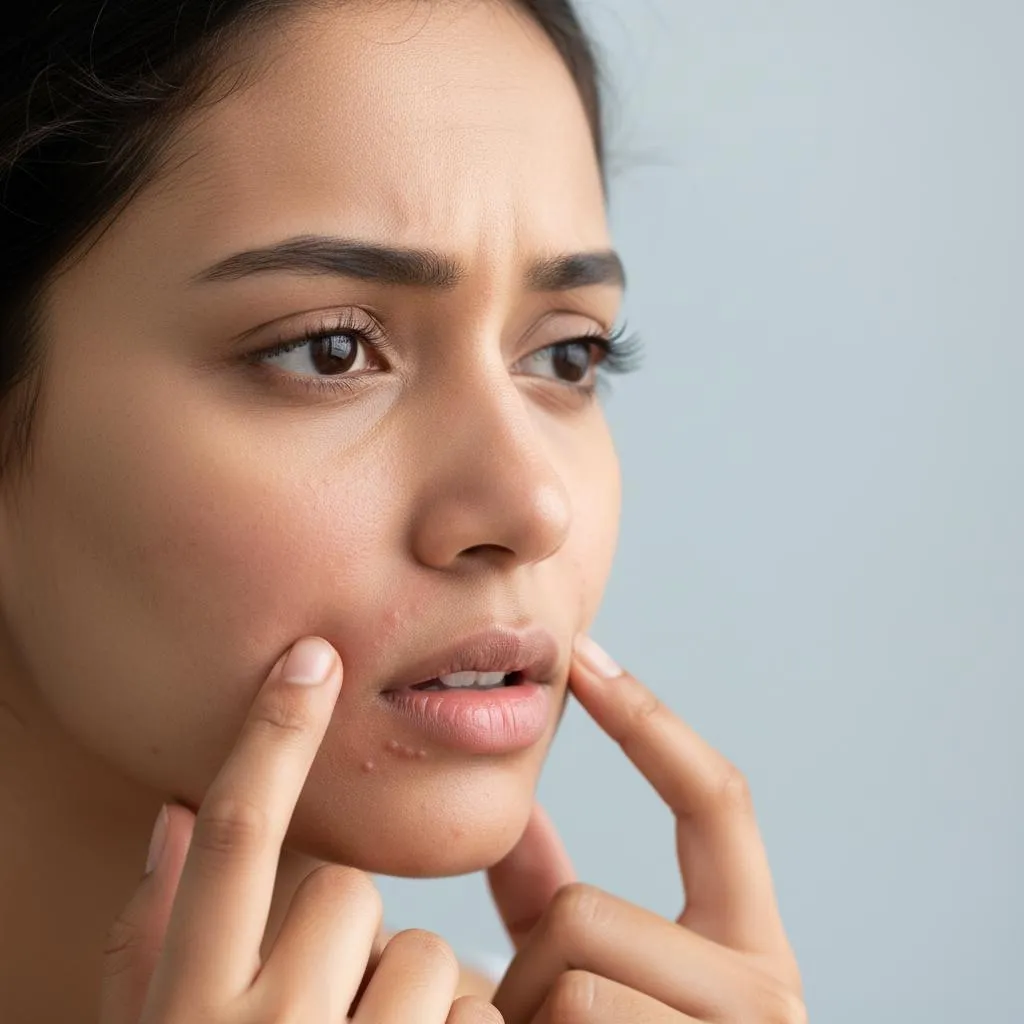
Have you ever looked in the mirror and noticed that your mouth, sometimes on either side of your nose, is red and has small red bumps? Maybe it itches a little, or it feels a little burning. Many people think that this is a normal acne problem. But in fact, this can be a little different and a condition that needs attention. Today we are talking about a skin condition called Perioral Dermatitis .
What exactly is Perioral Dermatitis?
Simply put, Perioral Dermatitis is a red, blistery skin condition that occurs around your mouth. As the name suggests, "Peri" means "around." "Oral" means "mouth." It means "inflammation of the skin around the mouth." Sometimes, it can also spread to the eyes and nose.
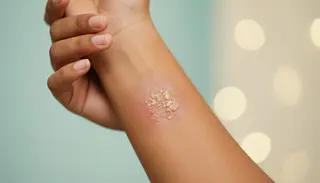
When these blisters appear, the skin may become dry and flaky. They may also appear as raised, red bumps (papules). Although they may look like pimples, there is a clear difference between the two. Usually, these red spots are not located directly on the lips, but rather have a small white area around them.
Are there other types of this?
Yes, in addition to the main type of Perioral Dermatitis, there is another type called Granulomatous perioral dermatitis. In this, instead of red blisters, yellowish bumps are seen. This condition is more common in young children than in adults.
Who gets this most often? Is it contagious?
Although this condition can develop in anyone, it is most common in women between the ages of 25 and 45. This risk is especially high in those who use steroid creams on their faces. However, it is not impossible for men and young children to develop it.
One of the things that many people worry about is whether it's contagious. Not at all. Perioral Dermatitis is not contagious in any way. So don't worry about it.
What causes Perioral Dermatitis?
Although the exact cause of this is not yet known, doctors and experts have identified several factors that may contribute to it. The main suspect is steroid creams.
Imagine, some people buy steroid cream from the pharmacy for even a minor problem on their face. Although it may feel better after a few days, this kind of problem can arise if you continue to use it or if you stop using it suddenly.
Let's look at the main reasons for this in the table below.
| Reason category | Description and examples |
|---|---|
| Use of steroids | This is the main reason . Topical steroid creams and inhaled steroid sprays can affect this. |
| Some cosmetics and habits |
|
| Other possible causes |
What are the main symptoms of this?
The main symptom of Perioral Dermatitis is the red, blistery rash around the mouth that we talked about earlier. In addition, you may see the following:
- Red, raised bumps (Papules): Small red bumps that look like pimples.
- Fluid-filled blisters: Sometimes these bumps can be filled with clear fluid (vesicles) or white pus (pustules).
- Dry skin and peeling: The skin in the blistered area may become dry and peel.
- Itching and burning: Some people may experience itching or burning sensation where these blisters are located, although not everyone does.
- Red eyes: Rarely, this condition can be accompanied by a condition called conjunctivitis (pink eye). If this happens, your doctor will refer you to an ophthalmologist.
Okay, now let's talk about treatment.
The most important and first step in treating this is to stop doing things that may be causing the condition. Your doctor will often tell you to stop doing these things:
- Stop all steroid creams: You should immediately stop using any steroid creams you are using, whether or not prescribed by a doctor.
- Stop using excessively oily face creams and moisturizers.
- Temporarily stop using cosmetics and sunscreen.
- Using a fluoride-free toothpaste instead of toothpaste containing fluoride.
- Stop chewing gum.
The most important thing: After you use a steroid cream and then stop using it suddenly, you may experience a flare-up in the first few days or weeks. Don't worry about this. This is normal. Your skin is reacting this way as it recovers. So be patient. It will subside in a few days.
After stopping these things, your doctor will prescribe treatment depending on the severity of the condition. This may include topical medications as well as oral medications.
| Treatment method | Types of medications that can be prescribed |
|---|---|
| Topical Medications |
|
| Oral Medications |
It may take several weeks or months for symptoms to subside after starting this treatment, so it is very important to be patient and complete the treatment .
How can we prevent this situation from happening again?
Perioral Dermatitis is a condition that can sometimes recur, but it can be controlled if managed properly.
- Avoid steroid creams: Do not apply any steroid cream to your face, especially without the advice of a doctor.
- Use a mild soap: After the illness has healed, use a mild, unscented soap or a soap-free cleanser (soap substitute) to wash your face.
- Remove old cosmetics: Do not reuse makeup, creams, etc. that you used before you developed this condition.
- Follow medical advice: If you experience any of these symptoms, see a doctor immediately and seek advice. Do not self-medicate.
This can be a bit annoying and embarrassing because it occurs on the face. However, with the right treatment and lifestyle changes, it can be completely controlled.
💡 Take-Home Message
- Red bumps around the mouth aren't always normal acne. It could be Perioral Dermatitis .
- The main reason for this is the application of steroid creams to the face without medical advice.
- When you stop using steroid cream as a treatment, the blisters may initially get worse . Don't be afraid of that, and continue the treatment with patience.
- If you have these symptoms, do not self-treat and see your doctor immediately .
- Treatment can take weeks or months, so it is important to be patient and follow your doctor's instructions.


Janiw kuna arsuwinakas jichhakamax uñt’ayatäkiti. Aka chiqanx amuyt’awim jan ukax jiskt’awim yapxatañamawa.