

Imagine you have a minor accident, such as a fall, a sports injury, or a car accident. As the injury slowly heals, the joint that was the victim of the accident suddenly starts to hurt and swell. Although many people don't realize it, this is what we medically call Post-Traumatic Arthritis . Simply put, "joint inflammation that occurs after an accident." Don't be alarmed by this name, most of the time it's not serious. We'll talk about it all today.
Simply put, what is Post-Traumatic Arthritis?
This is also a type of arthritis. But unlike other types of arthritis, this one occurs after an accident damages one of your joints. Osteoarthritis , which is usually caused by the wear and tear of joints that occurs with age, takes years to develop. But when an accident occurs, the wear and tear of that joint suddenly accelerates. So, this Post-Traumatic Arthritis condition can appear in a few weeks or months, rather than years.
The best part is that most of the time, this damage is not permanent . It is a temporary condition. With proper rest and simple home treatments, most people will recover completely within a few months. However, if the joint is severely damaged due to a serious accident, it can rarely become a chronic condition. In that case, surgery may be necessary.
This condition is called by several other names:
- Post-traumatic osteoarthritis
- Post-traumatic arthropathy
What are the symptoms of this condition?
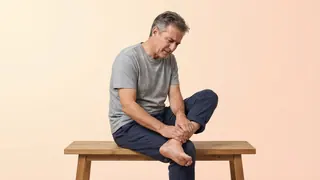
When this condition occurs in a joint that has been injured, the main thing that happens is that the joint becomes inflamed. Then you may experience symptoms like these.
| Symptom | Description |
|---|---|
| Joint pain | The joint where the accident occurred will start to hurt. Maybe even just standing there can hurt. |
| Joint swelling | The joint may be swollen and feel hot to the touch. |
| Difficulty moving | When you do things like bend or extend your elbow, you can't move it properly because it hurts. |
| Inability to bear weight | Especially if this occurs in a joint like the leg (knee, ankle), there will be severe pain when you put weight on that leg and stand. |
Which joints are most affected by these symptoms?
- Ankle joint
- Knee joint
- Hip joint
- Elbow joint
In some severe cases, pieces of cartilage in the joint can break off and become lodged inside the joint. This can cause a "cracking" sound when the joint moves, and it can even feel like something is getting stuck.
Why is this happening? What are the reasons?
The main reason for this is an accident that affects your joints. A joint is where bones meet. There is a soft membrane called cartilage to protect the ends of these bones. When an accident happens, such as a fracture, dislocation, or sprain, this cartilage can be damaged. This is when arthritis occurs.
This is most often caused by:
- Vehicle accidents: Things like falling off a bike, flipping a three-wheeler.
- Sports accidents: Injuries to the knees and ankles while playing sports like cricket, football, and netball.
- Falls: Things like slipping in the bathroom, falling off a ladder.
Who is most at risk of developing this condition?
Unlike other types of arthritis, Post-Traumatic Arthritis is more common in younger people and even children than in older people . This is because people who lead active lives and play sports are more likely to have accidents. Therefore, it is important for athletes and those who run around a lot to pay special attention to this condition.
How does a doctor diagnose this?
When you go to see a doctor, he will first ask you about the accident and examine your joint.
- They try to bend the joint and stretch it.
- Check for pain and swelling.
- Compare it to the situation before the accident.
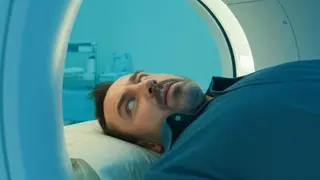
Then, you may be referred for an imaging test like this to confirm the diagnosis:
- X-ray
- MRI scan
- CT scan
These tests can accurately assess the damage to the bones and cartilage inside the joint.
How is it treated?
Most of the time, this does not require major treatment. It can be cured with simple things you can do at home.
- Painkillers: Your doctor will recommend painkillers and anti-inflammatory medications that are right for you. Do not take over-the-counter medications.
- Wearing a brace: To give the joint good rest and support, you can use a brace as directed by your doctor.
- Physical therapy: A physiotherapist will teach you simple exercises that will strengthen the muscles around the joint and help restore movement to the joint.
- Losing weight: If you are overweight, especially if you have this condition in a leg joint, losing weight can reduce the pressure on the joint and help it heal faster.
Maybe surgery is needed?
This is very rare . That is, a doctor will only consider surgery if the pain does not subside after months of treatment, and if the condition is so severe that it is impossible to perform daily activities.
There are several types of surgery:
- Arthroscopy: A minor surgery in which a small incision is made in the joint and a camera is inserted to remove damaged tissue, broken cartilage, and other debris.
- Joint fusion (Arthrodesis): The process of fusing the two bones of a painful joint together. This immobilizes the joint, thus eliminating pain.
- Joint replacement (Arthroplasty): The complete removal of a damaged joint and the replacement with an artificial joint (prosthesis) made of metal, ceramic, or plastic.
When should you seek emergency treatment?
If you have any of the following symptoms, go to a hospital's Emergency Department (ETU) immediately .
| Emergency | Description |
|---|---|
| Unbearable, severe pain | If the pain gradually increases or becomes unbearable. |
| Inability to move a part of the body | If you can't even move a part of your body that is normally movable, like an arm or leg. |
| A distorted appearance | If the injured area, such as an arm or leg, is stretched or looks different than usual. |
| New blood stains appear | Along with the symptoms mentioned above, if you see bruising that looks like new bleeding under the skin in that area. |
💡 Take-Home Message
- Post-Traumatic Arthritis is inflammation of a joint after an accident. This is common.
- Most of the time, this is temporary and will resolve in a few months with proper rest and simple treatment.
- The main symptoms are pain, swelling, and difficulty moving the joint.
- If the pain is severe, the joint cannot be moved, or it appears deformed, go to the ETU immediately.
- Don't worry unnecessarily about this. But don't ignore the symptoms either. Talk to your doctor and get proper advice.



Janiw kuna arsuwinakas jichhakamax uñt’ayatäkiti. Aka chiqanx amuyt’awim jan ukax jiskt’awim yapxatañamawa.