
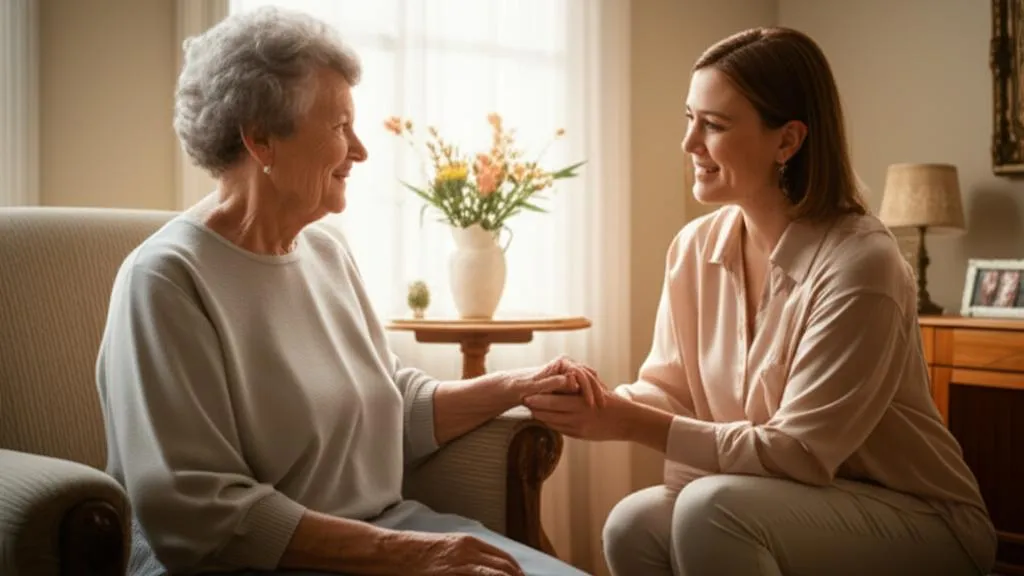
Have you noticed that your mother, father, or someone you love is slowly changing due to Alzheimer's disease? Is he not talking like he used to? Is he feeling lonely and stuck at home? This is really a very sensitive and burdensome thing. But for you to take care of such a loved one, talking about this and knowing the facts will be a great strength. So today, let's talk about how we can free our loved ones living with Alzheimer's disease from loneliness and help them be happy.
Why is it so important to keep an Alzheimer's patient social?
Simply put, as humans, we all need the love and companionship of others. This need is even greater when we are ill. Someone with Alzheimer's or another type of dementia can easily feel lonely and isolated.
Imagine, your mother, who used to smile and talk to everyone, now has difficulty finding words and is withdrawn. This loneliness can worsen their depression and anxiety . Not only that, but doctors say that this social isolation can even accelerate their cognitive decline .
In some cases, when you are away from family and friends, some of the behaviors associated with the disease may even increase. For example:
- Wandering around for no reason
- Aggression
- Seeing or hearing things that are not there (hallucinations)
So remember, spending some quality time with your loved one, talking to them, is a great help for their mental health as well as disease management.
What social activities are suitable for them?
This really depends on the stage of the disease and the patient's wishes. The most important thing is to encourage them to continue doing the things they already enjoy doing, as much as they can. As the disease progresses, we may have to modify those activities a little to suit their abilities.
You can get a good idea about this from the table below.
| Stage of the disease | Examples of activities that can be done |
|---|---|
| Early Stage |
|
| Middle Stage | |
| Late Stage |
What are the obstacles to them being social?
This is not an easy thing to do. On the one hand, the patient may try to distance himself from society because of the fear that something bad will happen to him because of the disease, or that he will slur his words when speaking.
On the other hand, sometimes even friends and relatives can become a little distant. It's not because they're doing it out of malice. Maybe they think, "He doesn't remember these things now," or "He probably wants to be alone now." Misunderstandings like these can make the patient feel even more alone and isolated.
At times like this, you have a big role as a caregiver. You can explain the illness to others in a kind way. Say, "He's forgetting things, but it's great for him to have you come and talk to him."
If your loved one is in the early stages of the disease, encourage them to:
- Tell others what social activities you find comfortable and enjoy.
- Tell them not to be afraid to ask for help when they need it.
- Focus on strengthening supportive and trusting relationships.
- Don't think too much about people who talk negatively and are unsupportive. It may take them time to learn about the disease.
You also need to think about yourself as a guardian.
This is very important. You can forget about yourself when you think about your loved one all day. Research has shown that loneliness in middle age and old age is a factor that increases the risk of developing dementia in the future.
Especially when one loses one's spouse, the daily social connection is lost. Since in our country, wives often become widows before their husbands, women may feel the impact of this loneliness more.
So, think about your own mental health. Only if you are well can you take good care of your loved one.
- When a friend calls, don't say "no" and go out for a bit. Go grab a coffee, grab a bite to eat, and talk to a friend yourself.
- Make it a habit to spend some time with friends, children, and grandchildren at least once a week.
- Volunteer for something you're passionate about. You'll meet like-minded people.
- Join a book reading group or something like the temple's dayak Sabha.
If you would like more information about this, or if you or your loved one needs psychological support, please speak to your family doctor or physician . They will be able to provide you with the right guidance.
💡 Take-Home Message
- Social interaction is essential for someone with Alzheimer's disease to reduce loneliness and stress.
- Encourage them to continue doing the things they used to enjoy, adapting them to their current abilities.
- Even in the later stages of the disease, simple things (music, touch, smell) can bring joy to their minds.
- As a caregiver, it is very important for you to take care of your mental health and social relationships.
- If you experience any discomfort during this journey, never hesitate to seek medical advice.






Janiw kuna arsuwinakas jichhakamax uñt’ayatäkiti. Aka chiqanx amuyt’awim jan ukax jiskt’awim yapxatañamawa.