
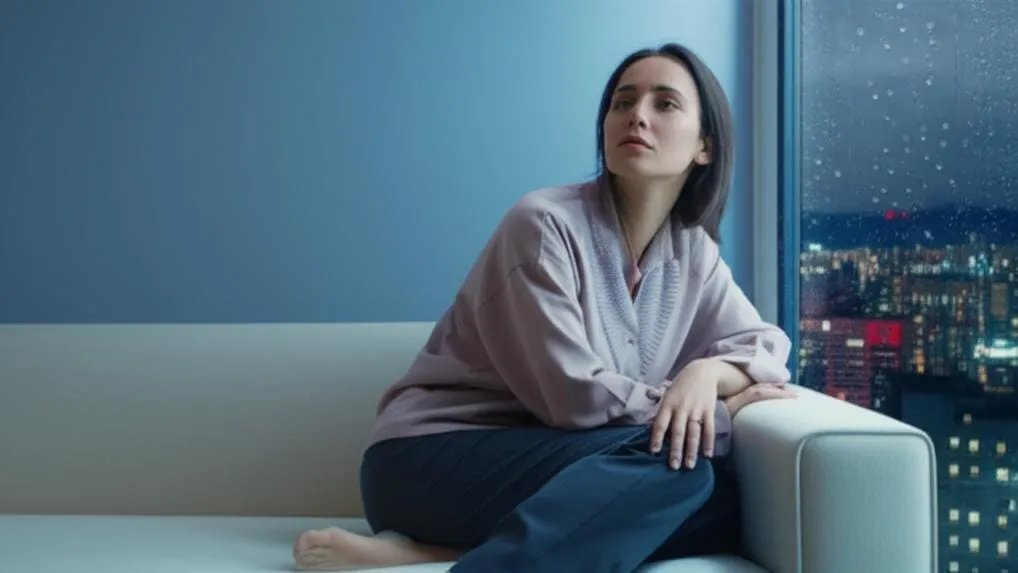
Do you sometimes feel like you're feeling very down, like you don't want to do anything, and that everything is a bit boring? Maybe you wake up in the morning feeling very down, but as the day goes on, you start to feel a little better. This is what we call depression . This is not just a feeling of sadness, but a medical condition that requires treatment. There are good treatments for this, especially medications. But it takes a few weeks for those medications to start working. So, today we are going to talk about a slightly strange, but very interesting way to get quick relief during that time. That is, to get relief from depression by not sleeping for one night.
PHQ-9 depresión uñakipaña. Mä herramienta validada 9 jiskt’awinakampi sintoma depresivo ukanaka uñakipañataki. Sapa kutiw qullirir jisktʼasiñama, ukhamatwa uka usux kunjamas uk yatiñataki ukat qullañataki.
The amazing relief from a sleepless night
This story begins more than 30 years ago. A Swiss neurobiologist named Anna Wirz-Justice prescribed a very strange treatment for an 80-year-old grandmother suffering from severe depression. That was, she was told to completely sleepless for one night. According to the doctor, the grandmother sat in one place all day, tormented by thoughts of suicide. She rarely spoke or moved.
But this strange treatment worked!
By the next morning, the grandmother had started talking and walking like a completely different person. She told the doctor, "Around two or three in the afternoon, I felt like a dark cloud had lifted from my shoulders."
So, is this really a cure for depression? That's what researchers initially thought. In fact, there's no evidence that a night of sleep deprivation can temporarily reduce symptoms of depression. According to research, nearly 60% of people with depression experience a 30% reduction in symptoms after a night of sleep deprivation . In particular, people who feel the worst of their depression in the morning but gradually feel better as the day goes on seem to benefit the most from this method.
But there was a big problem here. That is, after a good night's sleep the next day, that relief is completely gone, and depression returns to its original state . Also, continued sleep deprivation can lead to long-term health problems like high blood pressure and diabetes. So the next challenge for the researchers was to find a way to provide relief from depression by changing the sleep and wake cycles (tinkering with sleep-wake cycles) without completely depriving the patient of sleep.
How are our hormones related to this?
Now researchers are trying to use our body's biological clock, or circadian rhythms, for this purpose. Simply put, we have a natural clock inside our bodies. It controls things like when we go to sleep, when we wake up, and when we feel hungry. According to this clock, various hormone levels in our bodies fluctuate throughout the day.
Consider Thyroid Stimulating Hormone (TSH) . This hormone helps regulate our metabolism. That means it also affects our energy levels. Surprisingly, between 25% and 35% of patients with depression have been found to have low TSH levels. Researchers have found that TSH secretion decreases when we are sleeping, but TSH levels increase when we are awake all night and into the early morning.
Using this knowledge, a group of researchers in Germany conducted a groundbreaking study. They gave a group of depressed patients who had experienced relief after one night of sleep deprivation a treatment that altered their sleep patterns. This was called "Sleep Phase Advance."
Although this may seem a bit complicated, it is simply a matter of gradually returning your sleep schedule to normal. This is not something you can do on your own, and medical supervision is essential for this.
Here's what they did.
| Steps | Action taken |
|---|---|
| First night | Completely sleep deprived (relieved). |
| The next evening | Going to bed at 5pm, waking up at 12 midnight the next day (31 hours of rest). |
| All week long | Gradually return your sleep schedule to normal by moving your bedtime back by an hour each day (e.g. 6pm to 2am, 7pm to 3am the next day, etc.). |
| At the end of the week | Getting into a normal sleep pattern from 11pm to 6am. |
This result is amazing! 75% of the patients who received this treatment did not relapse into depression.That is, this method has been able to turn the temporary relief of sleep deprivation into a long-lasting one.
Is it okay to do these things alone at home?
There is a very important point that we all need to understand here. Following a treatment regimen that changes sleep patterns like this is not easy. And it is definitely not something that can be done alone at home .
The most important thing is to talk to your doctor before trying any of these treatments. Trying these on your own without medical supervision can be dangerous.
Especially if you are driving a vehicle or operating machinery, you should never do these things.
Research is also underway into other methods that can further enhance the effectiveness of this treatment.
- Bright Light Therapy: It has been found that exposure to bright light in the morning after a night of sleep deprivation can prolong the psychological relief received.
- Combining with medication: When this sleep deprivation treatment is combined with medications for depression, such as Prozac or Lithium , the likelihood of relapse is reduced.
Since antidepressants take several weeks to work, this sleep deprivation treatment can be a valuable temporary tool. That is, it can be used as a "bridge" that gives the patient mental strength and hope until the medication starts to work.
It is true that taking a pill every morning is much easier than sleeping through the night. But this treatment has special advantages. It is very inexpensive and provides very quick results . For a patient suffering from severe depression, knowing that they can recover one day gives them great hope to live again.
💡 Take-Home Message
- One night of sleep deprivation can provide rapid, but temporary, relief for some depressed patients.
- However, this relief often disappears after falling back asleep.
- Modern methods such as changing sleep patterns (Sleep Phase Advance) are attempting to maintain this relief in the long term.
- This is definitely not a treatment to be done at home alone . It should definitely be done under the supervision of your doctor.
- This method can be useful as a "temporary bridge" that gives the patient mental strength and hope until the usual medications for depression take effect.
- Always talk to your doctor for advice before making any changes to your treatment plan.





Janiw kuna arsuwinakas jichhakamax uñt’ayatäkiti. Aka chiqanx amuyt’awim jan ukax jiskt’awim yapxatañamawa.