
⚡ Herramienta Clínica de Salud uka tuqita
GAD-7 Llakisiña yant’awi & Screener Calculadora
GAD-7 ukax llakisiñ uñakipiri. 7 jiskt’awinakaru jaysaña, trastorno de ansiedad generalizada uñakipañataki. Sapa kutiw mä profesional de salud mental ukar jiskt’asiñama, ukhamat diagnostico lurañataki.
Simply put, what is a stress fracture?
A stress fracture is a very small, hair-like crack that occurs in our bones ). This is not like the bone breaking suddenly. Imagine if you were to bend a wire in the same place over and over again. After a while, the wire would break, right? Similarly, when a bone is subjected to continuous stress, the bone can no longer withstand the stress and a small crack forms. This is called a stress fracture. These are very common among athletes, especially those who play sports. Although painful, the good news is that with proper rest, these fractures heal completely in a few months .What are the symptoms of a stress fracture?
The main symptom of this condition is a dull pain that comes from the affected area. This pain usually gets worse when you exercise, walk, or stand. The pain subsides when you rest. But the pain returns when you become active again. In addition, you may notice swelling in the affected area. You may also feel pain when you touch the area.Why does this stress fracture occur? What are the risk factors ?
This condition often occurs when we suddenly start a new exercise or when we suddenly increase the intensity of an exercise. Then, our muscles get tired quickly because they are not used to the new load. The function of muscles is to absorb the pressure on the bones and protect them. When the muscles get tired, that pressure goes directly to the bones. That's when these kinds of tiny cracks start to form. This condition is commonly seen in the bones of the legs and feet when playing running and jumping sports. In fact, more than 50% of stress fractures in adults and young children occur in the bones of the lower leg. Among them, the most common are fractures in the tibia, the longest bone in our lower leg (about 24% of all stress fractures). In addition to these, stress fractures can also occur in the humerus during sports that involve repetitive motion, such as rowing, but they are very rare. Other factors that increase the risk of stress fractures include using inappropriate equipment , such as worn-out shoes.
| Weekly binge drinking | Common among women. |
| Smoking | Running more than 25 miles (about 40 km) per week. |
| Osteoporosis | Low vitamin D levels. |
| Eating disorders | Changes in the body such as flat feet. |
How does a doctor find this?
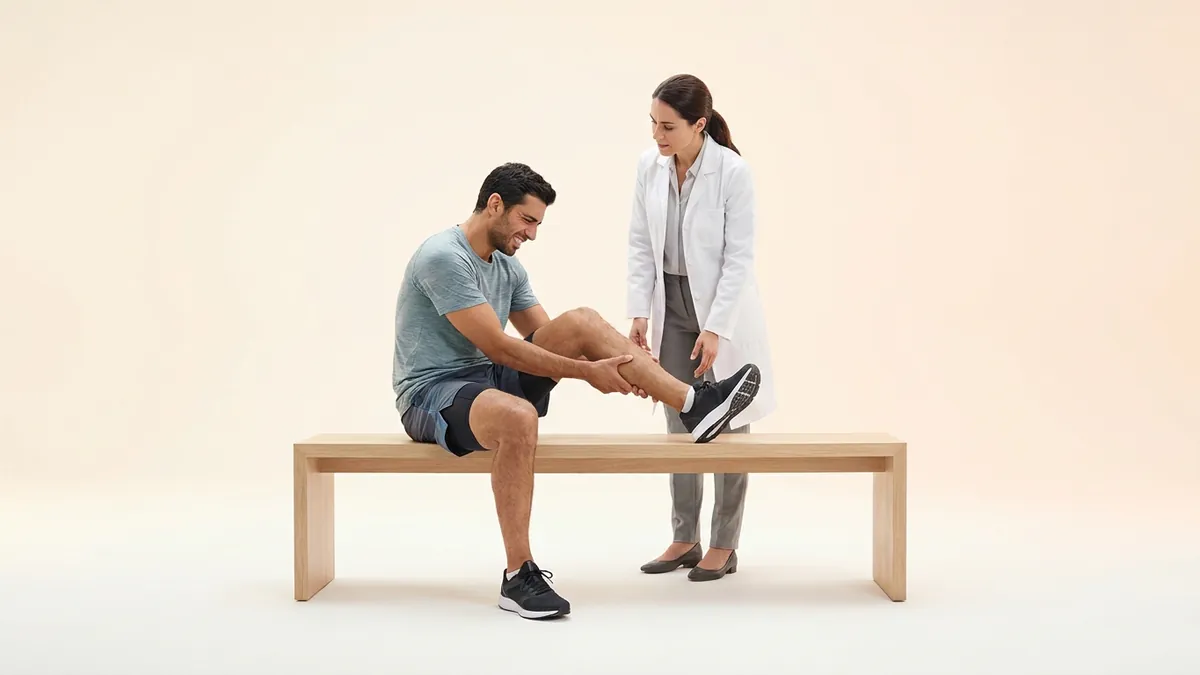
When you go to see a doctor, he will first ask you about your symptoms and examine the painful area. If a stress fracture is suspected, he may order an X-ray. But the important thing to know is that these tiny cracks may not be visible on a regular X-ray at first . Therefore, your doctor may recommend another specialized imaging method, such as an MRI (Magnetic Resonance Imaging) test or a Nuclear Bone Scan, to confirm the diagnosis.How do you treat a stress fracture?
If left untreated, the tiny crack can grow and the bone can break completely. That's why it's important to seek medical advice.First aid that can be done at home (RICE method)
There are some things you can do at home until you can see a doctor. We call this the RICE method.| Method | Description |
|---|---|
| R - Rest | Stop putting weight on the affected bone completely. Avoid activities like walking and running. If necessary, wear shoes with a sturdy sole that provides good support for the sole. |
| I - Ice melting) | To reduce swelling, apply ice for 24-48 hours. Wrap an ice pack in a towel and apply it for about 20 minutes at a time. Never put ice directly on the skin. |
| C - Compression | To control swelling, wrap the area with a soft bandage. But don't wrap it too tightly. |
| E - Elevation | Whenever possible, keep your leg or foot elevated above your heart by propping it up with pillows. This will reduce swelling. |
Medications that can be taken for pain
You can take a painkiller like Paracetamol to control the pain. However, doctors do not usually recommend Nonsteroidal Anti-inflammatory Drugs (NSAIDs) (e.g. Ibuprofen, Diclofenac). This is because some studies have shown that these drugs can slow down the bone healing process. Therefore, be sure to consult your doctor before taking any medication.When is surgery necessary?
Most of the time, a stress fracture does not require surgery. However, in some severe cases, especially when the fracture does not heal on its own, surgery may be necessary. In this case, the doctor will insert pins, screws, or plates to properly fix the broken bone.How long does it take to recover? How do I start exercising again?
A stress fracture usually takes 6 to 8 weeks to fully heal.It will take some time. After the pain subsides, your doctor may take another X-ray to make sure the fracture has healed. Once the swelling has gone down and the skin is starting to look wrinkled, you can gradually start putting weight on the area. You may need to use crutches or a cane. It is usually safe to put full weight on the area about 2 weeks after the symptoms start. This weight-bearing helps the bone heal. But remember, don't do anything that hurts.Remember, if you rush, you can get it again. Once you have a stress fracture, it is more likely to happen again. In fact, 60% of people who have had a stress fracture have had it before.Until you are completely free of pain (about 6-8 weeks), avoid the activity that caused the condition completely. If you start exercising again too soon, you may delay the healing process and possibly cause damage that never fully heals.
How to prevent a stress fracture?
"Prevention is better than cure," they say. There are several things you can do to prevent this condition from occurring.- Increase your exercise intensity gradually: Don't overload your body with too much weight all at once. Experts recommend not increasing your exercise intensity by more than 10% per week.
- Warm-up and Stretch: Before starting your workout, warm up and do some stretches for a few minutes.
- Listen to your body: If you feel pain while exercising, don't ignore it. "Push through the pain" doesn't apply here. Stop immediately.
- Use good equipment: Don't run in worn-out, old shoes. Choose shoes that provide good support for your feet.
- Take care of your nutrition: Calcium and vitamin D are essential for strong bones. Eat a balanced diet.
💡 Take-Home Message
- A stress fracture is a subtle crack in a bone caused by factors such as sudden increases in exercise.
- The main symptoms are pain and swelling that increase with exercise and decrease with rest.
- Don't ignore the pain.Rest is the best treatment.
- Be sure to see a doctor for an accurate diagnosis and treatment plan.
- Once you have recovered, you should resume exercise very slowly and gradually. Rushing can lead to a relapse.




Janiw kuna arsuwinakas jichhakamax uñt’ayatäkiti. Aka chiqanx amuyt’awim jan ukax jiskt’awim yapxatañamawa.