
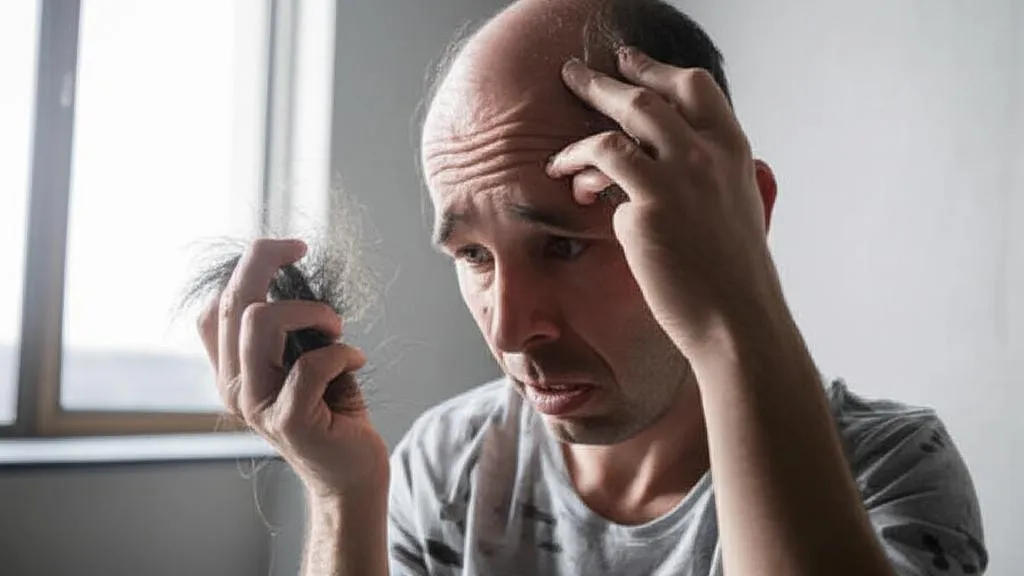
Are you also losing more hair than usual in places like your comb, bathroom floor, and pillowcase? Hair loss is a common problem for many people. For some, even a little hair loss can be a big deal. For others, it may not be a big deal until they start losing their hair. So why does this happen, what can be done about it, and let's talk about it in detail today.
Let's see first, what is this hair?
Simply put, hair is the hair on our skin. We have hair almost everywhere on our bodies, except for a few places like our palms, soles of our feet, and eyelids, but some of it is so fine that we can't see it.
Hair is made of a protein called keratin . These are produced in the hair follicles in our skin. As these hair follicles produce new hair cells, old cells are pushed out of the skin. The hair you see is actually a collection of dead keratin cells. The average adult has between 100,000 and 150,000 hairs on their head. It is normal to lose about 100 hairs a day, so there is no need to worry if you find a few in your hairbrush.
At any given time, about 90% of the hair on your head is in the growing phase. Each hair has its own life cycle. This cycle is divided into three main phases.
| Phase | Simply put... | Time |
|---|---|---|
| Anagen | The period when hair actively grows and lengthens. | 2 to 8 years old |
| Catagen | The transitional period when growth stops and the hair follicle prepares to shed. | 2 to 3 weeks |
| Telogen | It's time for the hair to rest. At the end of this period, the hair will fall out. | 2 to 3 months |
At the end of this resting phase (Telogen), the hair follicle falls out and is replaced by a new hair follicle, starting the growth cycle again. This growth rate slows down a bit as we age.
Are there different types of hair loss?
Yes, hair loss is medically called alopecia . There are different types of this too.
- Androgenic Alopecia: This is the most common type. It is a genetic condition.
- Male Pattern Baldness: It can start at a young age, perhaps as early as your 20s. The main symptom is receding hairline on both sides of the forehead and balding on the top of the head.
- Female Pattern Baldness: This is usually seen after the age of 40. Rather than balding in patches like men, there is a loss of hair all over the head. The hair on the crown of the head is particularly thin.
- Alopecia Areata: This is when our own immune system mistakenly attacks the hair follicles. This causes sudden, patchy baldness. It mostly affects children and young adults. But the good news is that about 90% of people will regrow their hair within a few years.
- Telogen Effluvium: This is a temporary condition. Imagine, after a major stressor, childbirth, or major illness, you suddenly start losing a lot of hair. What happens here is that a large number of hairs suddenly enter the resting phase (Telogen phase) and fall out. Once the cause is gone, it returns to normal.
- Traction Alopecia: Styling hair in a way that pulls the hair too tightly (tight braids, ponytails), and using hot combs can damage the hair follicles and cause permanent hair loss.
- Scarring Alopecia: Certain skin infections (cellulitis, folliculitis) or conditions such as lupus can cause scarring on the scalp, causing permanent hair loss in those areas.
Well, why is my hair falling out like this? What are the reasons?
Doctors still don't know exactly why some hair follicles have a shorter growth cycle than others, but there are several main factors that contribute to hair loss.
The most important thing is, if you suspect you're losing hair, find out the exact cause.See your doctor and get advice.
- Hormones: Hair loss can be caused by hormonal imbalances, such as androgens, which affect both men and women.
- Genes: Genes inherited from both parents have a major influence on the tendency to develop baldness.
- Stress, illness, and childbirth: As we discussed earlier, these can cause temporary hair loss (Telogen Effluvium).
- Some medications: Chemotherapy for cancer, blood thinners, some medications for high blood pressure, and birth control pills can cause temporary hair loss.
- Other medical conditions: Thyroid disease, diabetes, lupus, iron deficiency anemia, and some eating disorders can cause hair loss.
- Nutritional deficiencies: A diet low in protein, vitamins A, B, C, D, E, and nutrients like iron and zinc are also causes of hair loss.
- Hairstyle: Frequent chemical treatments (dyeing, perming) and exposure to excessive heat can weaken and break hair.
How exactly does a doctor diagnose this?
When you see a doctor with a hair problem, he will follow several steps to find the cause.
1. Medical history and examination: You will be asked about your health, whether anyone in your family has this problem, and what medications you are taking. Your skull will be carefully examined.
2. Blood Tests: You may be asked to take a blood test to check things like iron levels, vitamin D, and thyroid hormones.
3. Trichoscopy: This is a test that uses a special camera-like device to magnify the scalp and hair follicles.
4. Skin biopsy: Sometimes, a very small piece of skin is taken from the scalp and examined, especially to check for scarring alopecia.
What are the treatments for hair loss?
Treatment depends on the cause of the hair loss. Some causes will regrow when treated, but some conditions (such as Scarring Alopecia) are permanent. Treatment will stop further hair loss.
There are several main treatments for the most common condition, Androgenic Alopecia (baldness).
| Treatment method | Description |
|---|---|
| Medications | |
| Minoxidil | A liquid or foam that is applied directly to the scalp. This stimulates hair follicles and helps them grow. |
| Finasteride | This is a pill approved for men. It controls a hormone that causes hair loss. |
| Other treatments (Procedures) | |
| Hair Grafting/Transplant | Taking hair follicles from a place with good hair, such as the back of the head, and replanting them in areas where there is no hair. |
| PRP therapy (Platelet-Rich Plasma Therapy) | Plasma, extracted from your own blood, is injected into the scalp to stimulate hair growth. |
| Light Therapy | Stimulation of hair follicles with a special light beam (low-level laser). |
Remember, these treatments take time. Results may not be visible for 3-6 months. Also, be careful with various cosmetics that claim to "grow hair in 7 days." Always start treatment only under the advice of a qualified doctor.
What can we do to prevent hair loss?
Not all hair loss can be prevented, especially if there are genetic causes. However, there are things we can do.
- Eat a balanced diet:Eat foods rich in nutrients like protein, iron, zinc, and biotin (vitamin B7).
- Be gentle with your hair: Avoid pulling your hair too hard. Use a gentle shampoo and conditioner.
- Avoid excessive heat: Limit the use of curling irons, straighteners, and blow dryers (except on a low setting).
- Manage stress: Reduce your stress through things like yoga, meditation, and exercise.
💡 Take-Home Message
- Hair loss is a very common condition. You are not alone.
- It's normal to lose 50-100 hairs a day. If you're losing more than that or if you're balding in patches, pay attention.
- The most important thing is to see a qualified doctor as soon as possible if you have a problem. The sooner the cause is found, the better the chances of treatment.
- There are now very effective medical treatments for hair loss, so don't give up hope.
- If this is affecting your mental health, talk to your doctor about it too. You can get help for that too.






Janiw kuna arsuwinakas jichhakamax uñt’ayatäkiti. Aka chiqanx amuyt’awim jan ukax jiskt’awim yapxatañamawa.