
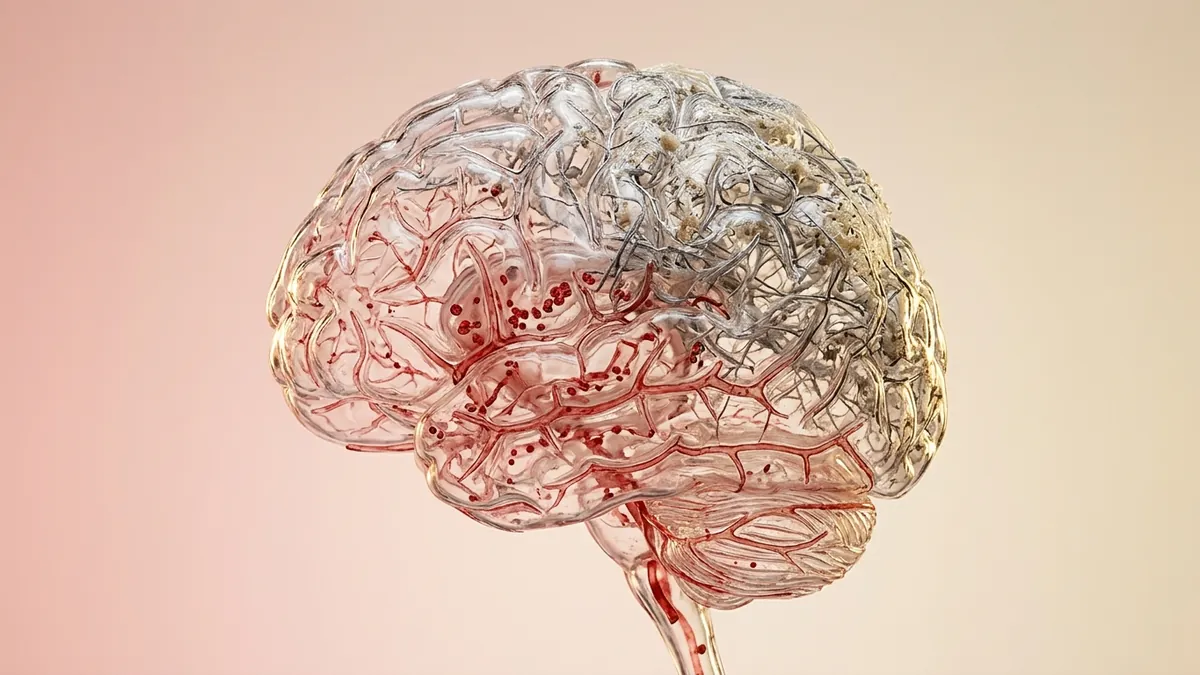
Does your elderly mother, father, grandmother or grandfather always feel tired, lifeless, and unmotivated? We often think, "Oh... that's just how it is when you get older." But it's not always the fault of age. These symptoms can be easily treated, but if ignored, they can be caused by a serious condition called " anemia ." What we are going to talk about today is even more important. The latest medical research has found that this anemia significantly increases the risk of developing Alzheimer's disease , which causes memory loss. So let's be aware of this connection.
Simply put, what is anemia?
Anemia, or what we medically call anemia, is caused by a decrease in the amount of hemoglobin, a protein in your red blood cells that carries oxygen throughout your body. Think of these red blood cells as trucks that carry oxygen throughout your body. Hemoglobin is the box that carries oxygen in those trucks. Our body needs a nutrient called iron to make this hemoglobin.
So, if for some reason the amount of iron in the body decreases, or if iron is lost from the body too quickly, hemoglobin cannot be made. Then the red blood cells cannot carry oxygen properly. This is what we call iron-deficiency anemia .
What are the causes of anemia?
- Nutritional deficiencies: This condition is common, especially in the elderly, due to poor diet. A lack of iron-rich foods (beans, red meat, spinach, beans) is a major cause.
- Bleeding: It can also be caused by things like heavy menstruation in women, internal bleeding due to stomach ulcers, and frequent blood tests.
- Pregnancy and breastfeeding: During these times, the mother's body transfers a large amount of iron to the baby, which can cause anemia in the mother.
- Other medical conditions: This condition can also be caused by things like bone marrow diseases and autoimmune conditions.
What is the connection between anemia and Alzheimer's disease?
Now let's see how these two conditions are related. There are several ways to explain this.
1. Decreased oxygen supply to the brain: The brain is the organ that requires the most oxygen of any organ in our body. The nerve cells in the brain need a constant supply of oxygen to do their job properly. Since the hemoglobin in the blood of a person with anemia is low, the amount of oxygen that reaches the brain also decreases. We call this condition hypoxia.If this continues for a long time, brain cells will start to be damaged. If someone who already has some level of memory loss has anemia, it can accelerate the damage to the brain.
2. Disruption of the nervous system: The nerve cells in our brain communicate with each other through chemicals called neurotransmitters . Also, the protective covering around the nerves that helps nerve impulses travel quickly is called myelin . The mineral iron is essential for the production of both these neurotransmitters and myelin. So, when iron is low, both of these processes are disrupted and brain function can be impaired.
3. Increased inflammation: Some types of anemia increase inflammation in the body. This inflammation has now been found to be a factor that can worsen Alzheimer's disease.
Remember, anemia is not the only cause of Alzheimer's disease, but it is a strong factor that greatly increases the risk and contributes to the progression of the disease.
Symptoms you should know about
It is very important to be aware of the symptoms of both of these conditions, so that we can quickly identify them and take the necessary measures.
| Symptom | Description |
|---|---|
| Common symptoms of anemia | |
| Extreme fatigue and weakness | Feeling extremely tired and lifeless for no reason. |
| Pale skin | Paleness, especially on the face, palms, soles of the feet, and under the eyes. |
| Dizziness and headache | Frequent dizziness , blurred vision, and headaches. |
| Difficulty breathing and chest pain | Shortness of breath and a feeling of rapid heartbeat even with a little exertion. |
| Craving for unusual foods | Craving to eat inedible things like ice cubes, dirt, and clay (Pica). |
| Cold hands and feet and brittle nails | Hands and feet are always cold, nails sink in like a spoon or break easily. |
Alzheimer's symptoms usually appear gradually in three stages.
| Stages of Alzheimer's disease | Visible features |
|---|---|
| Initial stage (Mild) | Forgetting recent events, asking the same question over and over again, taking longer to complete familiar tasks, difficulty making decisions, mood swings (being anxious, aggressive). |
| Moderate | Further weakening of memory and cognition, withdrawal from friends, difficulty speaking, reading, and writing, inability to recognize familiar people, changes in sleep, and hallucinations. |
| Severe stage (Severe) | Inability to communicate, lack of awareness of where one is or what one has recently done, difficulty swallowing food, weight loss, inability to walk, inability to control bowels and bladder, frequent sleep. |
When should you see a doctor?
The most important thing here is to take quick action.
Imagine, you know that an elderly person in your family has anemia. Meanwhile, you start to notice small changes in their behavior, speech, and memory. You think, "This wasn't like this before."
Often, people with Alzheimer's disease don't realize that their behavior is changing. It is mostly seen and understood by family and loved ones.
At such times, don't just wait and say, "This is something that happens when you get older." Tell your family doctor ) about it immediately. He will do the necessary tests to find out what is causing this. He will do things like a full blood count to find out if you have anemia, how severe it is, and what the cause is.
Also, remember, there is a big connection between heart health and brain health. Anemia can also damage the heart. Therefore, the doctor will also perform heart-related tests if necessary.
Treatment and prevention - what can we do?
The good news is that iron deficiency anemia is very easy to treat, and it can even help reduce the risk of Alzheimer's to some extent.
1. Seek medical advice: The first thing to do is to see a doctor and get a proper diagnosis. Do not self-medicate.
2. A nutritious diet: Your doctor will advise you on an iron-rich diet.
- Green leafy vegetables: spinach, kale, moringa, gotu kola
- Red meat and offal: beef, goat meat, chicken and especially liver
- Fish and dried fish
- Legumes: lentils, chickpeas, green beans, beans
- Iron-fortified foods: Iron-fortified flours, breads, cereals
3. Iron Supplements: If necessary, your doctor will prescribe you iron tablets or syrup. Never take iron supplements without medical advice. Because too much iron in the body is also harmful to your health.
Although there is still no definitive cure for Alzheimer's disease, by treating risk factors, such as anemia, and adopting a brain-friendly lifestyle, we can help our aging loved ones maintain better mental health throughout their lives.
💡 Take-Home Message
- Anemia is not just a feeling of tiredness. It is a potentially serious health condition, especially among the elderly.
- There is a proven link between anemia and Alzheimer's disease. Anemia increases the risk of Alzheimer's and can even worsen the disease.
- If an elderly person in your family notices changes in memory or behavior along with anemia, ignore the "just because they're old" excuse and see a doctor immediately.
- Anemia is often easy to treat. It can be controlled with proper nutrition and iron tablets taken as directed by a doctor.
- To protect the brain health of your loved ones, it is very important to take care of their nutrition.






Janiw kuna arsuwinakas jichhakamax uñt’ayatäkiti. Aka chiqanx amuyt’awim jan ukax jiskt’awim yapxatañamawa.