
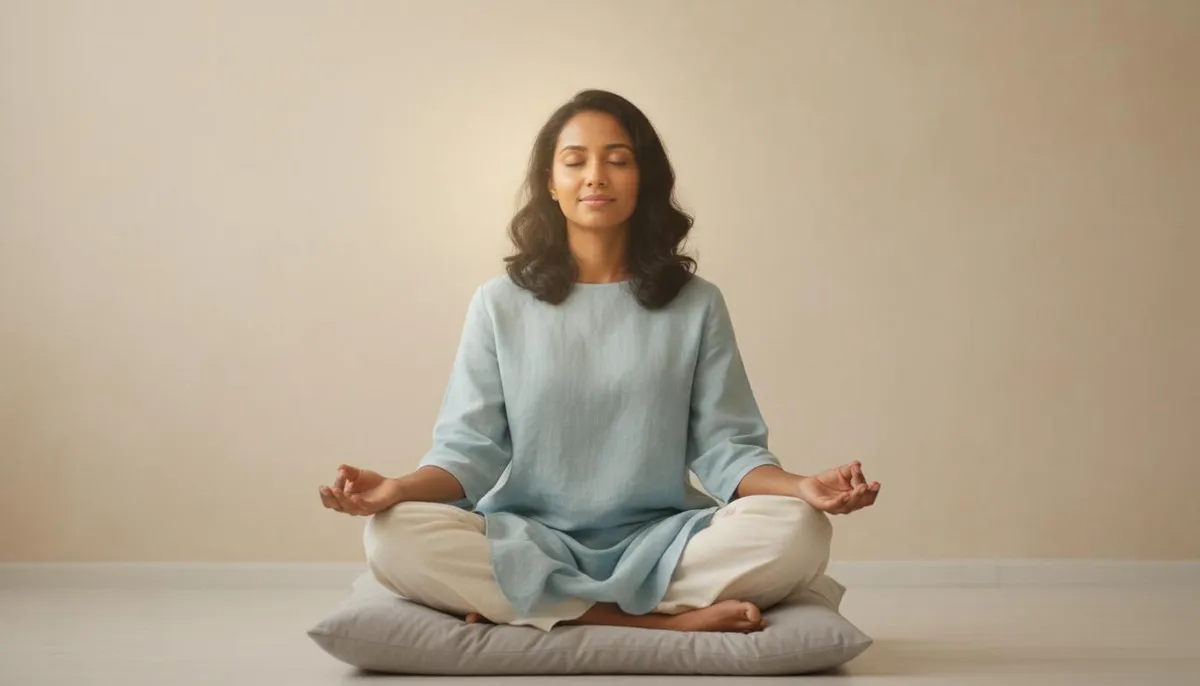
How busy are our lives today? From the moment we wake up in the morning until we go to bed at night, thoughts are constantly running through our heads. Problems at work, problems at home, money problems, problems with children... With all this, our mind does not have the slightest rest. When we continue like this, we experience things like stress and anxiety. So, as a solution to these problems, today we are talking about a very simple and very useful meditation method that can free the mind. This is called Transcendental Meditation, or TM for short.
What is this Transcendental Meditation (TM)?
Simply put, TM is a special meditation technique used to quiet your mind. It involves closing your eyes and silently repeating a "mantra" in your mind. Now, when I say "mantra," some people might be afraid that this is a religious thing. Not at all.
The mantras used in TM are not words we know, nor are they names for things. They are just special sounds. As you hold this sound in your mind, the unwanted thoughts that run through your mind gradually decrease, and your mind enters a very deep state of tranquility. This means that while your body is completely relaxed, your mind remains fully awake and alert. We call this state "restful alertness."
The ultimate goal of this meditation method is to transcend the level of ordinary thought and enter a state of pure awareness. It is like escaping from the waves on the ocean and entering a still, deep place beneath the sea.
Maharishi Mahesh Yogi, who developed this method, said that this is not a religion, a philosophy, or a particular way of life, but a science of the mind. In addition to the three states of consciousness—waking, sleeping, and dreaming—he introduced this meditative state as a fourth state.
How exactly do you learn this method?
Here's the most important thing. TM meditation is not something you can learn on your own by reading a book or watching a video. It must be learned from a certified teacher.
The reason is, this method is very subtle. This teacher will choose a mantra that is special to you and teach you the correct way to use it. This course usually lasts for several days.
- Day 1: The teacher will talk to you one-on-one and explain the meditation process in detail. That's when you will receive your mantra.
- The next three days: You meditate under the supervision of the teacher, while learning more deeply about the method.
After this training, you can meditate alone for 15-20 minutes twice a day, every day. You can start with 10 minutes at first. You can increase the time as you get used to it. If you have any questions or need help along the way, you can always seek help from the teacher who trained you.
What are the real benefits of TM meditation?
Numerous studies have proven the benefits of TM. It affects our body, mind, intellect, and emotions equally.
| Beneficiary sector | Advantages and benefits |
|---|---|
| Physical benefits |
|
| Mental health benefits |
|
| Benefits of cognitive ability |
|
| Emotional benefits |
|
What is the difference between TM and Mindfulness?
This is a question that many people ask. Mindfulness meditation is also very popular now. There is a small but important difference between the two.
- Mindfulness meditation involves paying full attention to the present moment. You simply observe your breath, your body sensations, and the thoughts that come to your mind. When a thought comes, you don't chase it, you say, "Okay, I had this thought," and you let it go and bring your attention back to the present.
- In TM meditation , you use a mantra to direct your attention inward. This means taking your mind beyond the present moment, into a deeper, quieter place.
Simply put, Mindfulness is like watching the waves of your thoughts. TM is like diving into the still water beneath those waves.
Should I talk to my doctor?
Yes, absolutely. If you have a medical condition such as high blood pressure, chronic pain, depression, or anxiety , it is very important to talk to your family doctor before starting any new treatment or complementary therapy.
TM is not a substitute for medical treatment. However, practicing it alongside your medication may provide you with additional relief. Your doctor can best advise you on how appropriate this is for your condition. He or she may also be able to provide you with information about a TM center near you.
💡 Take-Home Message
- Transcendental Meditation (TM) is a simple, non-religious meditation method that provides deep relaxation to the mind.
- This cannot be learned on your own. You must definitely receive training from a certified teacher .
- Research has shown that this provides significant relief from conditions such as stress, anxiety, insomnia, and high blood pressure.
- This is a complementary therapy. If you are being treated for a medical condition, be sure to discuss it with your doctor before starting TM.






Janiw kuna arsuwinakas jichhakamax uñt’ayatäkiti. Aka chiqanx amuyt’awim jan ukax jiskt’awim yapxatañamawa.