
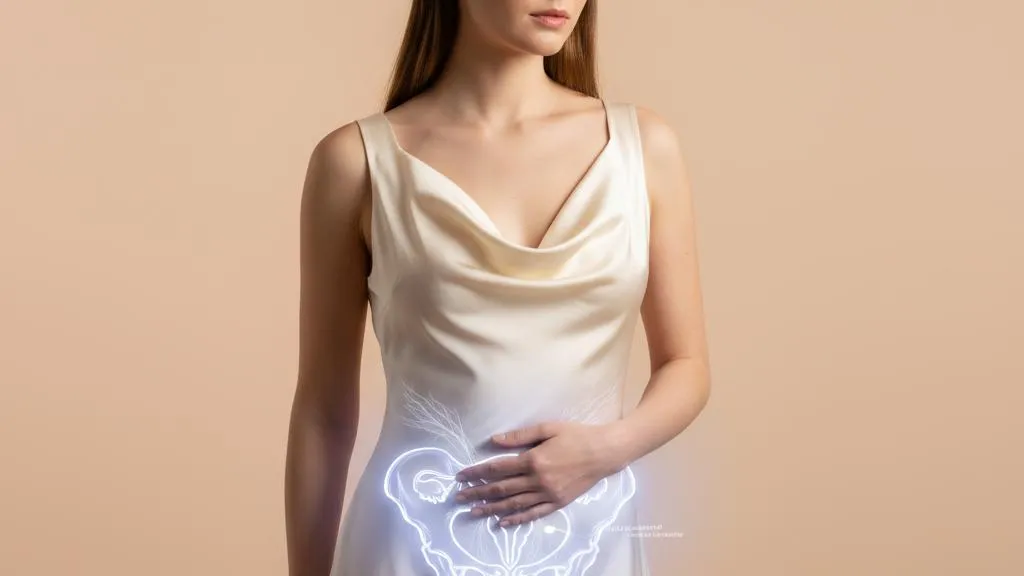
Have you ever felt a deep pain in your lower abdomen, especially during menstruation, or during sex? Sometimes we forget that these things are normal. But sometimes the cause of this could be a problem with a very important part of the body that you have never heard of. Today we are talking about the 'Uterosacral Ligament', which silently serves a great service in our bodies, especially in women's bodies, but can be very troublesome when a problem arises.
Simply put, what is this Uterosacral Ligament?
Think about it, the organs in our body aren't just floating around, are they? They're held firmly in place by various muscles and tissues called ligaments. For example, the Uterosacral Ligaments are two strong, thick bands that help hold your uterus in place.
These two ligaments connect the lower part of your uterus (cervix) to the lowest part of your spine (sacrum). Like a tent being tied to poles with ropes, these two ligaments (left and right) provide great support to keep the pelvic organs, including the uterus, in place.
What is the main function of this ligament?
Its main and most important function is to hold your uterus in place and keep it in place. Although other ligaments and muscles help with this task, the Uterosacral Ligaments are one of the most important parts of this support system. Without this support, the uterus is more likely to prolapse.
What happens to this after a hysterectomy?
You might think that this ligament would be useless after a hysterectomy. But that's not true. Doctors use this same ligament to support the top of your vagina after the surgery.
Simply put, instead of its previous function of holding the uterus in place, its new function is now to prevent vaginal prolapse. Therefore, the health of this ligament is very important even after a hysterectomy.
What are the main diseases that affect this ligament?
Unfortunately, there are several conditions that affect this important ligament. These can cause severe pain and other complications for women. Let's take a look at the most common ones.
| Condition | Simply explained |
|---|---|
| Endometriosis | A type of cell that is supposed to be in the lining of the uterus (endometrium) grows inside this ligament. Every month, with menstruation, these cells bleed, causing inflammation, scar tissue, and severe pain. |
| Pelvic Organ Prolapse | This ligament is weakened or stretched, causing organs like the uterus to descend from their original position in the pelvic cavity. We also commonly call this 'uterine prolapse'. |
| Myofascial Pain Syndrome | This is pain caused by a tightening or knot (trigger point) in the ligament or surrounding muscles. This pain can also spread to areas such as the lower abdomen, back, and buttocks. |
What are the symptoms of a problem with this ligament?
If you have a problem with your Uterosacral Ligament, you may experience one or more of these symptoms. These are definitely things to consider.
- A pain felt deep in the lower abdomen: This is not just a pain that comes from the surface, but a pain that feels like it's coming from deep within.
- Painful Intercourse: Pain may be more felt during deep penetration.
- Severe menstrual pain: Pain that is more severe than normal menstrual pain and unbearable.
- Feeling of pressure or fullness in the pelvic cavity: A feeling of heaviness in the lower abdomen, as if something is pressing down.
- Pain during bowel movements.
- Lower back pain.
The most important thing is not to ignore these symptoms. It's important to talk to your doctor about them rather than assuming they're normal.
How Endometriosis Affects This Ligament
The uterosacral ligament is the most common site of endometriosis . This is called Deep Infiltrating Endometriosis .
In this condition, cells that are normally only found on the inner wall of your uterus grow inside the Uterosacral Ligament. With each menstrual cycle, these cells thicken, break down, and bleed. But unlike the cells in the uterus, these cells have no way to leave the body. So, that blood and tissue accumulate in those areas, causing inflammation and scar tissue. This is the main cause of severe pain and even infertility.
What can we do to prevent these kinds of problems from occurring?
While we can't completely prevent some things, there are many things we can do to reduce the risk and keep our bodies strong.
For endometriosis
There is no specific way to prevent endometriosis. So the best thing you can do is to get diagnosed early . If you have any of the symptoms mentioned above, see a doctor right away. It is important to have regular checkups, especially pelvic exams .
For Pelvic Organ Prolapse (to prevent pelvic organ prolapse)
Another important function of this ligament is to provide support for the pelvic organs. As we age, especially after having children, this support can weaken. Therefore, it is essential to keep the pelvic floor muscles strong.
Here are some things you can do:
- Do Kegel exercises: This is one of the best exercises to strengthen your pelvic floor muscles. Ask your doctor or physiotherapist about the correct way to do these.
- Strengthen your core muscles: Exercises like yoga and Pilates strengthen your abdominal and back muscles, which reduces pressure on your pelvic floor.
- Avoid straining during bowel movements: If you are constipated, eat fiber-rich foods (vegetables, fruits) and drink plenty of water. Straining puts unnecessary pressure on the pelvic floor.
- Maintain a healthy weight: Being overweight also puts more pressure on the pelvic organs.
- Be careful when lifting weights: When lifting heavy objects, bend your knees and lift with the strength of your legs, not your back.
There are hundreds of ligaments in your body. The Uterosacral Ligament is one of them that we may not think about much until we have a problem with. But after reading this article, you will realize how important it is. The best part is that there are effective treatments for many problems related to this ligament.
💡 Take-Home Message
- The uterosacral ligament is a very important support that holds your uterus and pelvic organs in place.
- Pain deep in the lower abdomen, pain during sex, or unbearable menstrual pain can be symptoms of a problem with this ligament.
- This ligament is a common site for endometriosis.
- Keeping the pelvic floor muscles strong is very important, especially for mothers who have had children.
- If you have symptoms like these, don't ignore them, but definitely talk to your doctor and get the necessary advice and treatment.






Janiw kuna arsuwinakas jichhakamax uñt’ayatäkiti. Aka chiqanx amuyt’awim jan ukax jiskt’awim yapxatañamawa.