
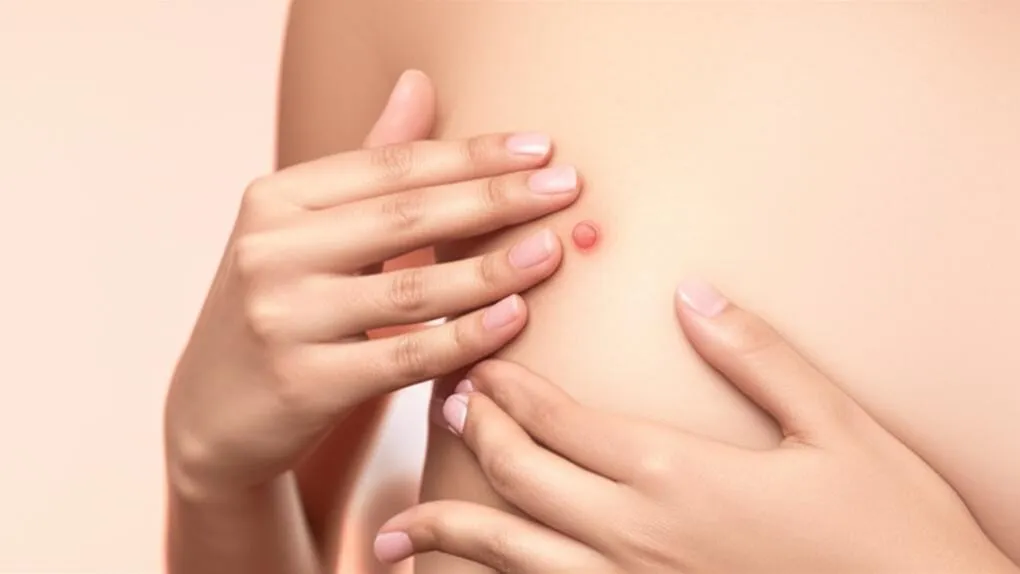
Have you ever felt a lump in your breast while washing or changing clothes? It's normal to feel a lot of fear and anxiety when you feel something like that. "Is this cancer?" is the first thing that comes to mind. But the best news is that not all lumps in the breast are cancer. In fact, most lumps are non-cancerous and harmless. Today we're going to talk about one such lump that you shouldn't be afraid of, but you should definitely be aware of. That's Fibroadenoma .
Simply put, what is Fibroadenoma?
A fibroadenoma is a non-cancerous (benign) lump that forms in the breast tissue. Breast cancer can grow over time and even spread outside the breast. However, a fibroadenoma is always located within the breast tissue.
This lump is usually about an inch in size. But sometimes it can be larger. Here's what it feels like when you touch it:
- Like a small marble: It feels like a small marble under the skin.
- Moves around easily: If you press on it with your finger, this lump moves around easily under the skin.
- Smooth edges: The edges of the lump are not rough, but smooth.
- Stiff or rubbery: It feels a little stiff or like a rubber ball.
But sometimes these bumps are so small that you may not even be able to feel them.
What are the symptoms of this?
Most of the time, a fibroadenoma doesn't cause any symptoms . You may not even know you have a lump. However, some women may experience mild pain or tenderness in the area where the lump is located, especially a few days before their period. If the lump is large, the pain may be more severe.
What causes fibroadenoma?
In fact, doctors still don't know 100% why these lumps form. But the main idea is that they are related to changing hormone levels in the body, especially the female hormone estrogen .
Think about it, during pregnancy, a woman's estrogen levels increase significantly. At that time, these lumps can become larger. Also, as we age and estrogen levels decrease after menopause, these lumps can naturally shrink and even become smaller. This is where the idea of a hormonal connection comes into play.
| Type of fibroadenoma | A simple explanation |
|---|---|
| Simple Fibroadenoma (simple type) | These are the most common type. They are small in size. When viewed under a microscope, all the cells here look the same. |
| Complex Fibroadenoma (complex type) | These are slightly larger in size and are more common in women over the age of 35. They may contain small pieces of calcium or fluid-filled sacs (cysts). |
| Giant Fibroadenoma (large type) | As the name suggests, these are large in size, reaching over 2 inches (5 centimeters) in length. |
| Juvenile Fibroadenoma (child/youth type) | These are very rare and occur in young girls and children between the ages of 10 and 18. |
The biggest question everyone has: Can these turn into cancer?
This is the most important thing. This is probably your biggest fear.
Simply put, fibroadenomas do not turn into cancer . They always remain a non-cancerous condition.
However, there is one small thing to be aware of here. Someone with the Complex Fibroadenoma we talked about earlier may have a slightly higher risk of developing breast cancer in the future than the average person. This does not mean that you will definitely develop cancer. It just means that the risk is slightly higher than others. So don't worry unnecessarily about it.
How does a doctor detect this?
If you notice any kind of lump or change in your breast, the first and most important thing you should do is see a qualified doctor immediately . No one can tell 100% what it is just by feeling it.
Doctor, you may want to do these tests:
1. Physical examination: First, the lump will be examined manually to get an idea of its size and nature.
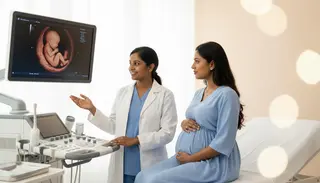
2. Scans: Depending on your age and needs, a breast ultrasound scan or mammogram may be recommended.
3. Biopsy: This is the only way to be 100% sure that it is a fibroadenoma. This involves inserting a thin needle into the lump, taking a very small piece of tissue and examining it under a microscope. This is not very painful.
What are the treatments for fibroadenoma?
In most cases, you may not need any treatment . If the lump is small, not causing any problems, and has been confirmed to be a fibroadenoma, your doctor may recommend watchful waiting to see if it gets bigger or smaller for a while, rather than removing it right away.
However, your doctor may recommend removing the lump in the following cases:
- If the lump is gradually getting bigger .
- If it causes pain .
- If there is still doubt about whether it is a fibroadenoma or not after scans and other tests.
There are two main methods for removing a lump:
- Lumpectomy: This is a minor surgery. The doctor makes a small incision in the breast and completely removes the lump.
- Cryoablation: This is a non-surgical procedure. A special device (cryoprobe) is placed on your skin and uses extremely cold air to destroy the wart from the inside. However, this method is not commonly used in Sri Lanka.
💡 Take-Home Message
- Fibroadenoma is a type of non-cancerous (non-dangerous) breast lump that is common among women.
- If you feel any lump, thickening, or change in your breast, never ignore it. See a doctor immediately for an examination.
- Most fibroadenomas do not require treatment. Your doctor may recommend surgical removal only if they become large or painful.
- Fibroadenoma lumps do not turn into cancer. However, keep in mind that if you have a 'Complex' type lump, your risk of future cancer may be slightly increased.
- Talk to your doctor, learn about the breast exam methods and schedule that are right for you, and perform them regularly.


Janiw kuna arsuwinakas jichhakamax uñt’ayatäkiti. Aka chiqanx amuyt’awim jan ukax jiskt’awim yapxatañamawa.