
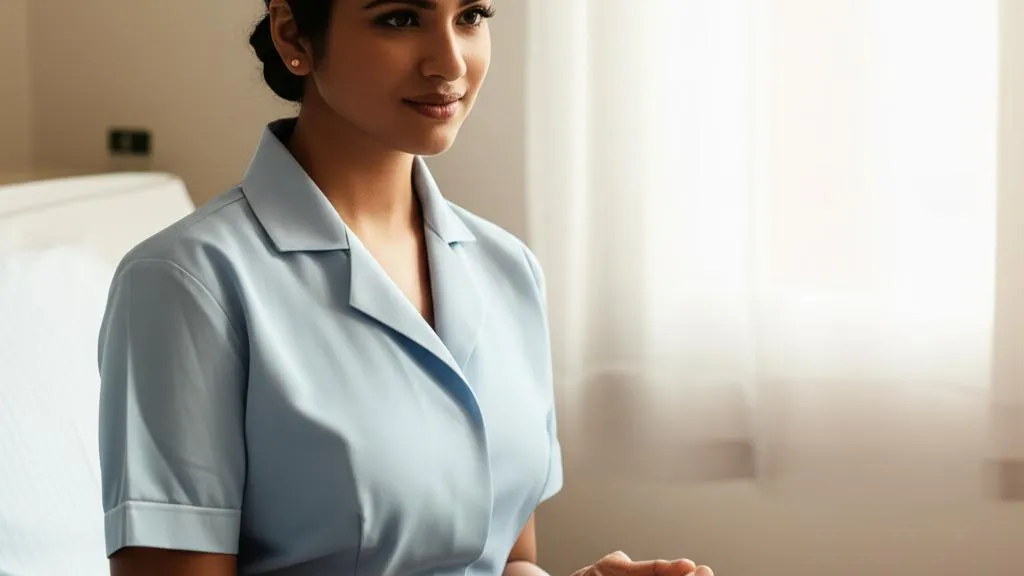
When you go to a hospital or a private clinic to see a doctor, who comes to you and talks to you before the doctor sees you? Who checks your temperature, checks your blood pressure, and writes your details in the book? That is a nurse whom we all affectionately call "Nurse Nona" or "Nurse Mister". But have you ever thought about how much greater a service and responsibility these people perform than just giving an injection or giving some medicine? Today, let's talk about these registered nurses, who are like the backbone of the medical field.
Simply put, who is a Registered Nurse?
A nurse, or what we call a Registered Nurse - RN'', is a person who has received the professional training, education, and legal license necessary to provide direct care to patients. Strictly speaking, this is a job with a very high level of responsibility. They work together with doctors, patients, and everyone else in the healthcare field.
In fact, a nurse is the most important and strongest bridge between a patient and a doctor.
They serve in various places in our country. For example:
- In government and private hospitals
- In private clinics of doctors
- Nursing homes
- In long-term care centers
- Sometimes in home care services
- In health units in schools and factories
In many places like this, we receive support from the nursing service.
What are the main responsibilities of a nurse?
A nurse's daily duties vary depending on where they work (e.g., a ward or an intensive care unit), the patient's condition, etc. But in general, their role can be divided into several parts. I'll show you this in an easy-to-understand chart.
| Responsibility | To explain simply... |
|---|---|
| Patient Care Management | When you are admitted to the hospital, helping the doctor create the care plan you need and making sure that the plan is being implemented correctly. |
| Infection control and safety | Hospitals are places where germs can spread quickly. It is their responsibility to take necessary steps to prevent the spread of infection to patients and to maintain cleanliness. |
| Health promotion | Educating you and your family about your illness, how to manage it, how to take medication when you go home, and how to take precautions. |
| Basic care and comfort | Administering prescribed medications, injections, and saline on time, constantly monitoring your condition (fever, pressure, heart rate), and helping you stay mentally and physically comfortable. |
| Keeping medical records | Accurately and systematically recording your medical history, symptoms, treatments, and changes in your condition. These records are very important for your doctor to make the right decisions. |
To do some of these things, for example, to give medication, you definitely need a doctor's order.
Is it easy to become a nurse? What are the required qualifications?
No, this is not an easy journey. To enter the nursing profession, you must undergo formal education and training. In Sri Lanka, there are two main paths to this:
1. Nursing Schools: You can enter this field by completing a three-year diploma course through government nursing schools, followed by practical training.
2. University Degrees: Some universities offer Bachelor of Science in Nursing (BSN) degrees. This is a more in-depth study.
Whichever method you choose, you must pass the exams at the end of the course and obtain registration with the Sri Lanka Nursing Council . Only after receiving that registration can they work as a licensed nursing officer. Therefore, this is a job that is performed by a group of people who have completed professional qualifications.
Specialization
Just as doctors gain expertise in various fields, nursing officers can also receive specialized training in various areas. They become experts in their respective fields.
Here are some examples:
- Emergency Treatment Unit (ETU) Nurse: The ETU is where patients are treated immediately in emergencies such as accidents and heart attacks. The nurses working here are trained to make quick decisions even under high pressure.
- Intensive Care Unit Nurse: Nurses in the intensive care unit, where critically ill patients are treated, perform complex tasks such as operating life-support machines and monitoring the patient's condition second by second.
- Theatre Nurse: During an operation, these people do things like providing the surgeon with the necessary equipment and ensuring the cleanliness of the operating room.
- Pediatric Nurse: Treating young children is a special art. These nurses have received special training to understand children and treat them with love.
- Midwifery: Midwives who assist pregnant mothers and during childbirth are a specialized part of nursing.
In other countries, nurses have the opportunity to go even higher. They can pursue a Master's or Doctoral degree and become an Advanced Practice Registered Nurse (APRN) . (Nurse Practitioner - NP) is such a person. They are allowed to examine patients like a doctor and prescribe certain types of medication. Although this system is not yet that popular in Sri Lanka, this is a good example of how the nursing profession is developing.
How do we meet a nurse?
You can't make an appointment to see a nurse directly like you can with a doctor. This is because a doctor has the full medical education and legal authority to diagnose an illness and provide a complete treatment plan.
But, whenever you see a doctor, you will definitely see a nurse as well. Before the doctor sees you, they do your initial examination, listen to what you say, and take notes of the details the doctor needs. They spend the most time with you during treatment, looking after your needs.
So, the next time you go to a hospital, look at that nurse or officer who smiles at you and helps you, and think about what a valuable and responsible service they are doing. It is the duty of all of us to respect them and appreciate their service.
💡 Take-Home Message
- A Registered Nurse is not just anyone, but a medical professional who has received formal education, training, and a license.
- Their services are not limited to giving an injection or administering a pill. Their main responsibilities include patient safety, comfort, education, and managing the care plan.
- The nurse is the main communication bridge between the patient and the doctor.
- Respect the nurse, who is a very important member of your healthcare team, follow their instructions, and appreciate their service.
- If you have any problems, don't be afraid to talk to them. They are always ready to help you.



Janiw kuna arsuwinakas jichhakamax uñt’ayatäkiti. Aka chiqanx amuyt’awim jan ukax jiskt’awim yapxatañamawa.