
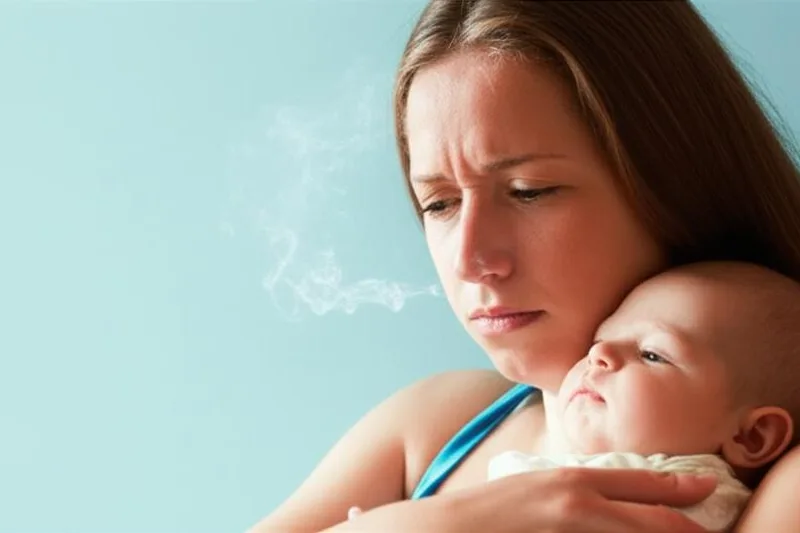
What do you think when you see someone visiting your baby, or someone close to you, lighting a cigarette? Even if you think, "Oh, it's not good for the baby," do we really know the true seriousness of it? Maybe we think, 'It's okay if you smoke from a distance.' But is that really the case? Today we are talking about the harm that secondhand smoke, which is medically known as secondhand smoke , can do to our little ones. Although this is something that many parents take lightly, it is really something that we need to be very careful about.
Simply put, what is secondhand smoke?
This is very simple. Secondhand Smoke is a combination of two parts.
1. The smoke that is emitted directly into the air from the end of a cigarette, cigar, or pipe when it is lit.
2. The smoke that a cigarette smoker exhales .
These two types of smoke are combined to form the environment. The most dangerous thing is that this smoke contains more than 7,000 extremely dangerous chemicals, including carcinogens. Of these, only 70 have been scientifically proven to be very harmful to the human body and can cause cancer. So every time a small child or an adult inhales this smoke, these toxic chemicals are absorbed into the body.
What effect does this smoke have on the baby during pregnancy?
This is an important issue, although it is not often discussed. Just as a pregnant mother smokes, her exposure to secondhand smoke can have a very negative impact on her unborn child. These toxic chemicals that accumulate in your bloodstream pass directly to your baby through the umbilical cord.
Here are some of the harms that this can cause to the child:
- Sudden Infant Death Syndrome (SIDS): The risk of a baby dying in their sleep for no apparent reason increases within the first year after birth.
- Premature birth: The baby may be born before the due date.
- Miscarriage: There is a risk of losing the pregnancy halfway through.
- Low birth weight: A baby may be born with a lower birth weight than a healthy baby.
- Developmental and behavioral problems: The child may later develop conditions such as Attention Deficit Hyperactivity Disorder (ADHD).
Therefore, completely avoiding environments where people smoke during pregnancy is one of the biggest investments you can make in your child's future.
What happens to unborn babies from cigarette smoke?
Because young babies' organs, such as their lungs and brains, are still developing, they are very sensitive to the toxic chemicals in cigarette smoke. This can cause them to develop various health problems .
| Effect/symptom | Simple explanation |
|---|---|
| Respiratory system problems | Frequent coughing, wheezing, chest congestion, and a 'cheese-cheese' sound when breathing are common. |
| Frequent illness | They get colds and other infections more often than other children. Their lung development is impaired, making them less able to resist illness. |
| Pneumonia and bronchitis | The risk of developing serious infections such as pneumonia and bronchitis, which affect the lungs, is very high. |
| Asthma | If a child already has asthma, the condition may worsen. Even a child who does not have it is at increased risk of developing asthma. |
| Ear Infections | Cigarette smoke can cause fluid to build up in the middle ear, leading to frequent ear infections. Sometimes, this can require surgery to insert ear tubes. |
| Other problems | You may also experience frequent headaches, sore throats, red eyes, and an increased risk of tooth decay. |
How can we protect our baby from this danger?
While this may seem like a big challenge, there are many simple things we can do. The most important thing is to be aware and take action.
1. Make your home a smoke-free zone
This is the most important step. Do not allow anyone to smoke inside the house. Even if you smoke on the balcony or near the window, the smoke can still enter the house. Remove ashtrays completely from the house. The "No Smoking" rule should apply to everyone in the house.
2. Never smoke inside the vehicle.
If you or someone else smokes in the car, stop smoking completely. Even if you have the windows open, the smoke won't completely escape. That smoke can go straight to the baby in the back seat.
3. Choose smoke-free daycare centers
When choosing a place to take care of your baby, make sure it is smoke-free. It is very important that the employees do not smoke.
4. Take care of the babysitter
If you have a babysitter looking after your baby, make sure that they are non-smokers. Even if they smoke somewhere else and pick up your baby, the toxic chemicals on their clothes and breath (this is called third-hand smoke) can harm your baby.
5. Avoid public places that allow smoking.
Even though some places like restaurants and parks have designated smoking areas, the smoke can still get into the air and affect others. Whenever possible, take your baby to places where smoking is completely prohibited.
If you or someone in your family needs help quitting smoking...
If you're a smoker reading this article, you're probably thinking, "This is going to be hard to quit." That's true. Smoking is not an easy habit to quit. But thinking about your child's health can be a great motivation.
If you find it difficult to do this on your own, don't be embarrassed or hesitant. Talk to your family doctor or a local doctor about this. He or she can tell you about many things that can help you quit smoking, such as medications and counseling. It may not be possible right away, but don't give up. It's worth making the sacrifice for your child's healthy future.
Take-Home Message
- Secondhand smoke has a very serious impact on the health of babies.
- This puts babies at risk of asthma, pneumonia, frequent ear infections, and sudden infant death syndrome (SIDS).
- It is your responsibility to make your home and vehicle a 100% smoke-free zone.
- Kindly but firmly ask smokers to refrain from smoking around your child.
- If you or a family member needs help quitting smoking, seek professional help. Your doctor will be the best guide for you.


💬 Comments (0)
No comments have been posted yet. Add your comment here for the first time.
Add your comment