
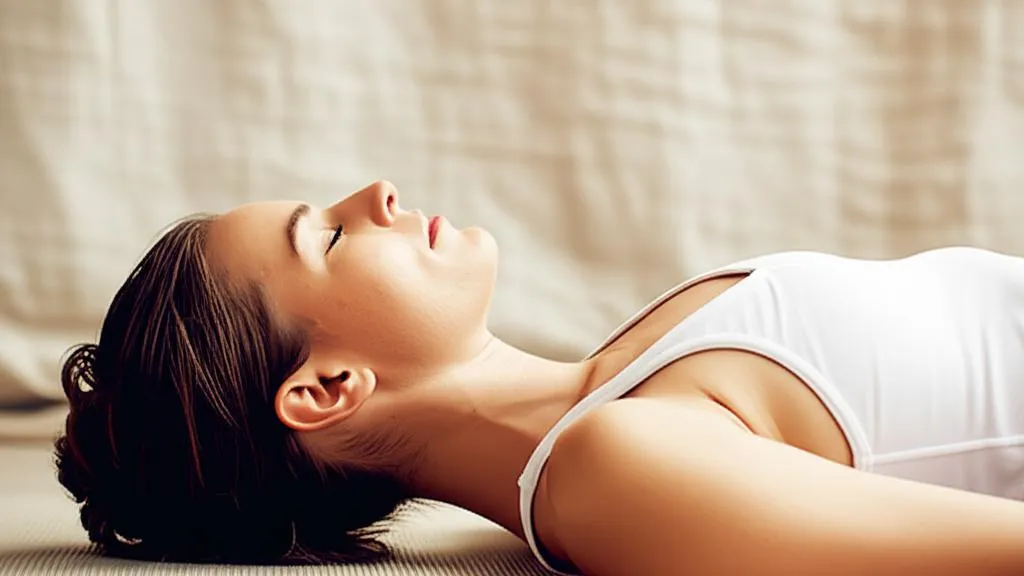
How many things do we face in our daily lives? Office work, household problems, children's education... With all this, there are no words to describe the fatigue and pressure felt in the head and body, right? So, at times like these, many people turn to yoga exercises and meditation methods. Today we are going to talk about a similar, but slightly different, method that brings amazing relief. That is 'Yoga Nidra'. This not only reduces things like mental stress and anxiety, but also helps a lot with insomnia.
What is 'Yoga Nidra'?
When you think of 'Yoga Nitra', you might think of yoga poses, which are done while bending over. But it's actually more like meditation. There are no physical exercises, postures, or anything that strains the body. In 'Yoga Nitra', we focus on completely relaxing the body and bringing the mind into a state of deep mindfulness.
This is different from regular meditation in that we do it while lying down, lying down. Also, it has a few more specific steps than a guided meditation, usually about 10 main steps. A 45-minute session is best, but if you're new to it or don't have that much time, you can do a shorter session. You can practice 'Yoga Nitra' on your own or in a class.
How does this affect our body? (The scientific side)
'Yoga Nitra' works by influencing the 'Autonomic Nervous System ' in our body. Simply put, this is the system that controls things that happen in our body without us realizing it. Think about it, things like our heartbeat, blood pressure, body temperature, and digestion are not things we do consciously. Those things are controlled by this system.
There are two main parts of this autonomic nervous system.
1. Sympathetic Nervous System: This prepares the body for the 'fight-or-flight' response in times of emergency, stress, or when we are stressed. Here are some things that happen in our body when this system is activated.
2. Parasympathetic Nervous System: This conserves energy and restores the body to normal when the body is in a normal, relaxed state.
| Characteristics of the 'Fight-or-Flight' (empathy system) activation | |
|---|---|
| Increased heart rate | Enlargement of the pupils of the eyes |
| Widening of the airways to make breathing easier | Increased muscle strength |
| Sweating palms | Temporary slowing of digestion |
Sometimes, our bodies can get stuck in this 'fight-or-flight' state. Techniques like 'Yoga Nitra' help to calm this 'fight-or-flight' state and allow the parasympathetic system (relaxation system) to take control.
Brain waves and 'Yoga Nitra'
Our brain activity is measured by the frequency of brain waves. There are 5 types of these brain waves.
| Brain wave type | State of mind |
|---|---|
| Beta waves | Awake, normal, alert state |
| SMR waves | Calm, quiet, alert state |
| Alpha waves | A state of light, calm mind |
| Theta waves | A state of deep relaxation or meditative mind |
| Delta waves | A state of deep, dreamless sleep |
What Yoga Nitra does is help our brains enter a state of Delta waves while we are awake. These Delta waves are what heal and restore our bodies during deep sleep. So imagine, Yoga Nitra can provide the mind and body with the relaxation that comes from deep sleep while we are awake .
Also, this process stimulates a small gland in our brain called the 'Pineal Gland'. The main function of this gland is to control our sleep and wake cycle (Circadian Rhythm). The hormone 'Melatonin, which helps in this, is secreted by this gland. So, when you practice 'Yoga Nitra', you also get help in secreting the hormone melatonin properly.
What are the benefits of 'Yoga Nitra'?
Research has even proven that 'Yoga Nitra' can reduce stress, anxiety, and insomnia .
- In a 2018 study, the mental states of three groups were monitored over a period of three months. One group did yoga nidra, the others did regular meditation, and the third group did nothing. The results showed that while both meditation and yoga nidra helped reduce stress, yoga nidra was more effective at reducing anxiety .
- In a 2017 study of two patients with chronic insomnia, both found that yoga nitra helped them fall asleep faster when they did it before bed . The other patient not only fell asleep faster, but also stayed asleep longer .
If you have these problems, 'Yoga Nitra' is worth trying. But remember, if you have a serious mental health problem, it is essential to consult your doctor before trying these methods.
How do I start 'Yoga Nitra'? (10 steps)
If you haven't done yoga nidra before, there are plenty of audio recordings and videos online that can help you. Don't feel like you need to do a long session when you first start. Start small.
Below are 10 simple steps to help you practice 'Yoga Nitra'. Before you begin, lie down comfortably on the floor or bed. If necessary, place a pillow or rolled blanket under your back and head. If possible, do this in a slightly darkened room. If you feel cold, cover yourself with a blanket.
1. Connect with your deepest desire: This could be your greatest dream or hope in life. Let that desire flow through your entire body.
2. Set a goal: Think about what you hope to achieve from this session. It could be something as simple as "I need to calm down."
3. Find a place that makes you feel at ease: We say go to a "happy place." Imagine a place or experience that makes you feel safe and happy.
4. Let your body feel: Bring your attention to each organ, from head to toe. Observe the sensations you feel in each place.
5. Be mindful of your breath: Allow yourself to feel each breath you inhale and exhale. Notice how the breath moves through your body.
6. Allow your feelings to be: Don't try to change them. Whatever the feeling, be it sadness, happiness, anger, whatever it is, just let it be and notice how it feels in your body.
7. Be a witness to your thoughts: Don't try to stop the thoughts that come to your mind. Let them flow like a river, and watch them as if you were standing on the sidelines.
8. Experience joy: Allow good feelings like warmth, happiness, and security to come into your mind and body.
9. Find lasting peace: Don't dwell on the feelings that come your way. Observe them and accept them as they are.
10. Reflect: At the end of the session, take a moment to look back on what you did and how you felt.
💡 Take-Home Message
- Yoga Nidra is not a physical exercise, but a deep relaxation meditation practice done while lying down.
- This can provide significant relief from stress, anxiety, and insomnia problems.
- It works by calming our nervous system and providing the body with the rest it receives during deep sleep while we are awake.
- If you want to start this too, you can start with a short, guided session online.
- If you are suffering from severe depression or anxiety, it is very important to seek advice from a qualified medical professional while trying self-help methods like these.






Janiw kuna arsuwinakas jichhakamax uñt’ayatäkiti. Aka chiqanx amuyt’awim jan ukax jiskt’awim yapxatañamawa.