
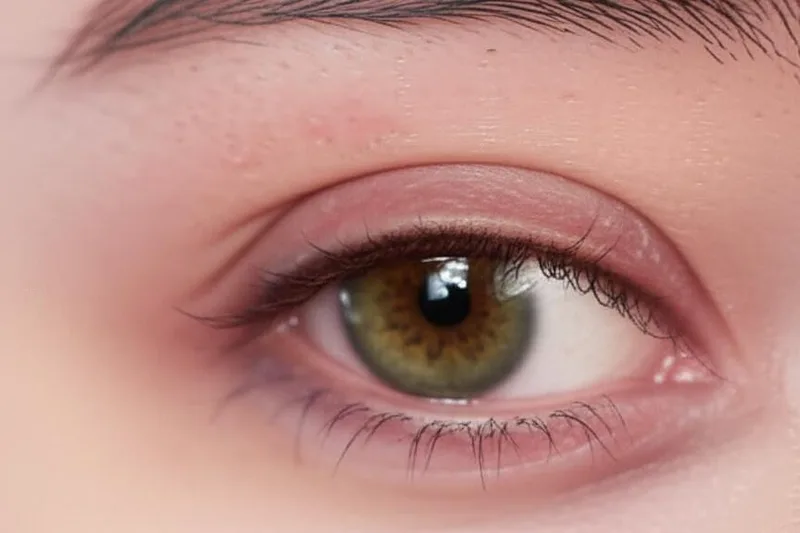
Do you sometimes wake up in the morning with swollen, red, and itchy eyelids ? Maybe your eyelids are stuck together. This is not just a common occurrence, it is called blepharitis . Let's talk about this in more detail today, because it is a condition that affects many people, but can be managed properly.
What exactly is this `(Blepharitis)`?
Simply put, `(Blepharitis)` is an inflammation of the edges of your eyelids. This means that the edges of your eyelids turn red, sometimes a little darker, become swollen, and crusty. This often affects both eyes. There can be several reasons for this. It can be due to some skin diseases, or an infection, or it can be due to blockage of the oil glands in your eyelids. Sometimes, all of these can happen at the same time.
Now you may be wondering if this is a serious condition or if you will lose your eyesight . Don't worry! Blepharitis is an inflammatory condition that can lead to an eye infection, but most cases of Blepharitis are not contagious. Also, it is very rare for it to cause blindness.
How common is this situation?
A survey of ophthalmologists and optometrists found that about half of the patients they see have symptoms of ``Blepharitis.'' So you can see how common this is. And, its symptoms can be controlled.
This condition can occur in both adults and children, and can affect both men and women. However, there is one specific type, called ``Staphylococcal blepharitis`` , that is more common in women. That is, about 80%.
Are there different types of Blepharitis?
Yes, there are two types of blepharitis, depending on where on your eyelid the inflammation is located.
1. Anterior blepharitis: This is when the front of your eyelid, where your eyelashes come out, becomes red, swollen, and sometimes causes flaking of the eyelids.
2. Posterior blepharitis: This is a condition where the oil-producing glands on the inside of the eyelid, called Meibomian glands , become clogged or become unhealthy.
What are the symptoms of Blepharitis?
If you have blepharitis, you may experience one or more of these symptoms:
- Eyelid swelling and/or a greasy feeling.
- The eyes are red, itchy, and feel burning.
- The eyelashes and corners of the eyes are crusty, and the eyelids stick together in the morning.
- The skin around the eyes and eyelids is peeling.
- Dry eyes or excessive tearing.
- Frequent blinking of eyes.
There may be some other symptoms:
- Sensitivity to light, that is, difficulty seeing light (Photophobia) .
- Blurred vision .
- Eyelashes falling out.
- Trichiasis is when the eyelashes grow inward, that is, towards the eye.
What are the causes of Blepharitis?
As we mentioned earlier, there are several main causes of blepharitis. Problems with the functioning of the Meibomian glands, which produce oil in the tears, certain skin diseases , or infections can all be the cause.
Causes of Anterior Blepharitis:
- Acne rosacea: This is a skin condition that causes inflammation of the skin on the face and can also affect the eyelids.
- Allergies: Some people are allergic to contact lens solution, eye drops, or makeup, and can develop eye inflammation.
- Seborrheic dermatitis: If you have dandruff on your scalp, the sebum can get into your eyeballs and cause inflammation there as well.
- Dry eyes: When the tear glands dry out, their ability to resist bacteria decreases, and infections can occur.
- Demodicosis: Demodex mites can clog the eyelashes and glands. One study found that 30% of people with long-term blepharitis had Demodex mites.
Causes of Posterior blepharitis:
- Meibomian gland dysfunction (MGD): When the oil from the meibomian glands does not drain properly, the eyes can become dry, inflamed, and infected.
- Acne rosacea
- Dandruff
You can also guess what type of Blepharitis you have based on your symptoms. For example:
- If you have seborrheic blepharitis, you may see oily, crusty things.
- In ulcerative blepharitis, bleeding may occur when the crusts are removed.
- Meibomian blepharitis reduces the quality of your tears.
- In Staphylococcal blepharitis, you may see eyelashes falling out or turning in the wrong direction.
Are there other risk factors for developing Blepharitis?
Yes, in addition to having acne rosacea and wrinkles, you may be at increased risk of developing blepharitis due to the following reasons:
- If you have diabetes (Diabetes Mellitus) .
- If you are a contact lens wearer.
- If you are frequently exposed to things like dust and chemicals.
- If you work or live in a dry environment (this also applies to spending more time in air-conditioned places).
- If you have an excess of microorganisms that normally live on your skin.
- If you don't remove your makeup properly.
- If you have oily skin.
- If you are taking certain medications, such as cancer treatments.
- If you are going through menopause or experiencing hormonal changes.
Does Blepharitis occur due to dirt?
Uncleanness can be a factor in causing `(Blepharitis)`. However, it cannot be simply said that only people who are unclean develop `(Blepharitis). Cleanliness is only one of the reasons why some people develop `(Blepharitis)`.
Keep in mind, most people don't clean their eyelids and eyelashes separately every night. However, for those with risk factors, keeping their eyelids and eyelashes clean should be a priority.
How is Blepharitis diagnosed?
There is no single test that can accurately diagnose blepharitis. Your eye doctor may follow these steps to determine if you have blepharitis and what type it is:
- Asks about your health history: Asks about your symptoms and other health conditions, and finds out what risk factors you have.
- External examination of the eyelids: The type and severity of blepharitis is determined by looking at the appearance of your eyelids, the intensity of redness, whether there is any discharge, and how swollen they are.
- If there is discharge, samples of it are tested (cultures of discharge): A sample of discharge taken from the eye is sent to a lab to find out what is in it, what kind of bacteria are there, and how many there are.
- A tear test can be performed: A tear sample can be taken to see if dry eyes are affecting this.
- An eyelash examination: The eyelash can be examined under a microscope to see if there are mites.
- Eyelid biopsy:This is very rare. Your doctor may need to do a biopsy to rule out skin cancer or other abnormal cells. Your eyelid will be numbed, a sample of cells will be taken with a needle and looked at under a microscope. You may feel a little bruised, but there will be no scarring.
Can Blepharitis be treated at home?
For some types of Blepharitis, home remedies can help relieve symptoms. If you think you have Blepharitis, try these things:
- Avoid applying eye makeup: It is best to avoid applying eye makeup until the inflammation is under control, as it can cause further irritation.
- Apply warm compresses: Take a clean cloth, soak it in warm water, squeeze out the excess water, and place it over your eyelids. When the cloth cools down, re-wet it. After a while, the crusts will become moist and the oily residue will be easier to remove. There are microwavable heat masks available in stores, which can be more effective because they keep the heat for a longer period of time.
- Get Omega-3s: Some studies have found that omega-3s, found in fish oil or flax seed oil, can help your eye glands function properly. It's also a good idea to eat green vegetables and fruits and avoid foods high in fat.
- Lid scrubs: These are available from pharmacies as sprays, foams, or individually wrapped towelettes. They often contain hypochlorous acid. These help to reduce the amount of bacteria on the eyelids and the skin around the lids.
You can also make your own eyelash cleanser at home. Here's how:
>
* Do not use the same cloth used to clean one eye on the other eye. Use a new, clean cloth. This can help reduce the spread of bacteria from one eye to the other.
* Make a solution by mixing 50% baby shampoo and 50% water.
* Wrap the warm, damp cloth around your index finger and apply the prepared soap solution to the cloth.
* Close the eye you are cleaning and gently wipe the cloth horizontally along the edges of the eyelids and eyelid crease several times.
* Then rinse thoroughly with a clean, warm, damp cloth.
* Do the same for the other eye.
If the crusts don't disappear after several days of thoroughly cleaning your eyelids, you should definitely see an ophthalmologist.
How does a doctor treat Blepharitis?
The treatment for your blepharitis depends on the type you have. After examining your eyelids and performing any necessary tests, your doctor may prescribe one or more of the following treatments:
Antibiotics for Blepharitis
You may be prescribed an antibiotic ointment – for example , Erythromycin , Bacitracin ophthalmic, or Polysporin® – or antibiotic eye drops – a combination of Polymyxin B and Trimethoprim , such as Polytrim® . These treatments help control the bacterial infection and reduce inflammation. Sometimes, in persistent cases, an oral antibiotic – such as Doxycycline or Azithromycin – may also be prescribed.
Anti-inflammatories for Blepharitis
If you need a little more help, your doctor may add steroid eye drops or a cream to your treatment plan. Steroids reduce inflammation. To treat the underlying cause or secondary infection, your doctor may prescribe a combination of antibiotics and anti-inflammatory medications.
Immunomodulators for Blepharitis
In cases of posterior blepharitis, adding an immunosuppressant medication, such as cyclosporine ophthalmic (Restasis®), has been found to reduce inflammation. These medications work by blocking your body's natural immune response, thereby reducing inflammation.
Treating the underlying causes of Blepharitis
In addition to relieving symptoms, it is also important to treat the underlying cause of Blepharitis. Skin conditions (such as acne rosacea) or eye conditions (such as dry eye) can cause Blepharitis to recur. In such cases, certain medications, creams, or eye drops that help dry out the eyes may help.
Clinical treatment of Blepharitis
There are now several new treatments that doctors can perform in their clinics. Some of them include:
- `(Lipiflow®)`: This warms the eyelids and removes unhealthy oils.
- Intense Pulsed Light Therapy: This involves directing pulses of bright red light at the skin.
- `(BlephEx®)`: This will clean the edges of your eyelids.
What are the possible complications of Blepharitis if left untreated?
Blepharitis cannot be cured completely. However, it can be controlled if you keep your eyelids clean. If left untreated, blepharitis can lead to more serious eye problems. It can especially affect the transparent front part of the eye, the cornea, which can be quite serious.
Complications may include:
- Chalazion: This is a small, painless lump/swelling that occurs on the eyelid.
- Corneal ulcer (keratitis): A corneal ulcer can develop due to a persistent infection or swelling of the cornea.
- Eyelid problems: With long-term ``Blepharitis,'' the eyelashes may fall out, grow strangely, or lose their color.
- Eye diseases `(Pink eye - conjunctivitis)`: Some types of `(Blepharitis)` can turn into a long-term eye disease.
- Stye: This is a red, painful lump that forms on the eyelid near the eyelid.
- Tear film issues: Tears are made up of a delicate balance of mucus, oil, and water to keep your eyes moist and protected. If dirt or oil from your skin gets in the way, you may experience dry eyes or excessive tearing. Healthy oils secreted by the eyelids help prevent tears from evaporating. When unhealthy oils are produced due to blepharitis, dry eyes can become even more common.
How to prevent Blepharitis?
Most cases of blepharitis cannot be prevented. Some risk factors for blepharitis, such as certain skin conditions, are beyond your control. However, there are some things you can do every day to help with symptoms:
- Keep your hands, face, and scalp clean.
- Avoid touching your itchy eyes or face. If you must touch it, use a clean tissue.
- Be sure to remove all eye makeup before going to bed at night.
- Wipe away excess tears or eye medication with a clean tissue.
- Wear glasses instead of contact lenses until the condition improves.
- If you have dry eyes, and your doctor agrees, use artificial tears.
- Use an anti-dandruff shampoo to wash your hair.
- Eye makeup – eyeliner, eye shadow, mascara – buy new ones. Old containers can harbor bacteria. You want to prevent re-infection.
Blepharitis, which is characterized by swollen, red, and itchy eyelids, is never a pleasant experience. However,In most cases, blepharitis is a condition that you can manage. If you can treat any underlying problems, and if you keep your eyelids clean, you can reduce the frequency of this condition.
So, what is the message we want to take home from this story?
Okay, so we've talked a lot about Blepharitis. The most important thing to remember is that although this is a common condition, it can be controlled if managed properly.
If your eyelids are constantly red, swollen, or itchy, don't just ignore them. Be sure to see an ophthalmologist for advice.
Home remedies, such as warm compresses and eye drops, can help control symptoms. It is also important to follow the treatment prescribed by your doctor. Especially, those who wear eye makeup should definitely remove it before going to bed at night. Cleanliness is a great way to prevent such conditions.
There's nothing to worry about, if you pay attention to it properly, Blepharitis is a condition that won't prevent you from living a normal life!
👩🏽⚕️ Additional questions (FAQs)
💬 What kind of disease is Blepharitis?
This means that the base of our eyelids (the part closest to the eyebrows) becomes infected and swollen due to a germ or blocked oil glands.
💬 What are the main symptoms of this disease?
Symptoms of this include excessive yellowing of the eyelids when you wake up in the morning, redness of the eyes, and an itchy, gritty sensation in the eyes.
💬 What is the treatment for this?
In most cases, the doctor will wash the eyelids with a special shampoo to keep them clean, and will also give you antibiotic drops to put in your eyes.
` Blepharitis, Eye Diseases, Eye Swelling, Itchy Eyes, Red Eyes, Eye Health




💬 Comments (0)
No comments yet. Be the first to share your thoughts here.
Add Your Comment