
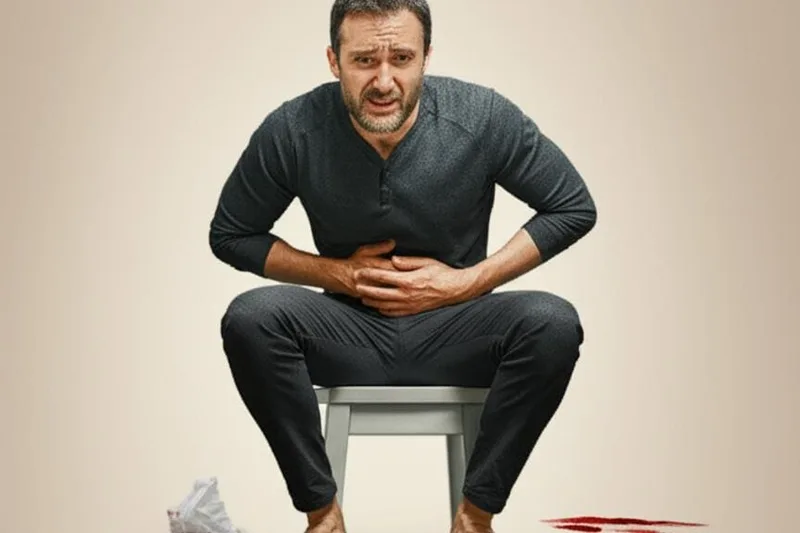
Do you also often feel uncomfortable in your stomach, like a full stomach and a burning sensation? If you sometimes pass a little blood with your stool, you should be a little concerned about it. This may be a symptom of a condition called `(Ulcerative Colitis - UC)`. Don't worry, we will talk about this simply, in a way that you can understand.
What is `(Ulcerative Colitis - UC)`? Simply put...
Simply put, Ulcerative Colitis is a lifelong condition that causes inflammation and ulcers in your colon and rectum. It is part of a larger group of diseases called Inflammatory Bowel Disease (IBD). You may have also heard of Crohn's disease, right? That too falls into the same category as IBD.
When you have UC, you may experience things like bloody stools, stomach cramps, and frequent urination . Remember, there are times when these symptoms get worse, which we call "flare-ups." And then there are other times when you can be completely symptom-free, which we call "remission."
Are there types of `(UC)`?
Yes, there are several types of UC. These are classified based on where in your colon the swelling and sores are located . Most often, it starts in the last part of your rectum, which is closest to your anus. It can start there and spread up the colon. Here are the types:
- Ulcerative proctitis: In this, the inflammation is only in the last part of your rectum.
- (Proctosigmoiditis): Here, the inflammation is in the last part of the anus (rectum) and the lower, 'S'-shaped part of the large intestine (sigmoid colon).
- (Left-sided colitis): As the name suggests, this affects the left side of the colon.
- (Pancolitis): In this case, swelling and lesions may spread throughout the entire colon .
This condition (UC) can be mild, moderate, or severe, depending on your symptoms. There is also a very severe, but very rare, type called ``fulminant ulcerative colitis''. It can sometimes be life-threatening and requires immediate medical attention.
How common is this condition called `(Ulcerative Colitis)`?
Combined with Crohn's disease, it is estimated that about one in every 250 people in North America and Europe has one of these conditions. In the United States alone, it is estimated that about 900,000 people live with UC. This condition is also increasingly seen in Sri Lanka.
What are the symptoms of Ulcerative Colitis?
Symptoms of UC often get worse over time.Yes. At first, you may notice small, minor symptoms like these:
- Abdominal distension: This may or may not occur with blood.
- Increased frequency of bowel movements: This may be four times a day or less.
- Urge to go to the toilet: An urgent need that is difficult to control.
- (Tenesmus): This is a bit of a strange word, isn't it? Simply put, it's a feeling of having to go to the toilet but not being able to, a feeling of being stuck in your stomach.
- A slight stomach ache or tightness.
Later, as the disease progresses, moderate or severe symptoms such as these may also occur:
- Having to go to the toilet frequently, more than four times a day.
- Blood, mucus, or pus in the stool. This is definitely a sign to be concerned about.
- Severe stomach ache.
- Feeling very tired (fatigue). Feeling too tired to do anything.
- Sudden weight loss.
- Feeling nauseous.
- Fever.
In fact, about half of people with UC have mild symptoms during flare-ups. But others may experience frequent fevers, bloody diarrhea, nausea, and severe stomach cramps.
Are there any other symptoms besides the colon?
Yes, don't be surprised, about 25% of people with UC can have symptoms outside the colon, in other parts of the body . This is because inflammation in the colon can sometimes spread to other parts of the body, such as the bones, joints, eyes, skin, and liver.
- Joint pain and swelling.
- Redness, inflammation, itching of the eyes.
- Painful bumps, lesions, or sores on the skin.
Why does this `(Ulcerative Colitis)` develop? What is the cause?
The exact cause of this condition is not yet known. However, doctors and researchers believe that it is a complex condition, with many risk factors coming together . Most agree that it is related to our body's immune system working incorrectly .
Think about it, the main job of our immune system is to protect our body from germs and other harmful things that come from outside. But sometimes, this immune system mistakenly starts attacking our own healthy tissues. That's when this kind of inflammation and tissue damage happens. In `(UC)`, this attack happens to the inner lining of the colon.
What are the risk factors? Who is more likely to develop it?
Although anyone can develop Ulcerative Colitis, some people are at a higher risk. See if these facts apply to you:
- Age: This disease is most often diagnosed in young people between the ages of 15 and 30, or in older people after the age of 60 .
- Race and ethnicity: Some studies have shown that people of white, especially Ashkenazi Jewish, descent are at higher risk. However, further research is needed to determine the extent to which this affects a country like Sri Lanka.
- Genetics: This is also an important factor. If someone in your immediate family (i.e., parents, siblings, children) has either UC or Crohn's disease, you are more likely to develop the condition. About 20% of people with UC have a family member who has one of these conditions.
- Gut microbiome: Our digestive system, especially the large intestine, is home to millions of microbes (bacteria, viruses, fungi). This collection is called the ``gut microbiome''. It's like a small ecosystem in our intestines. Research has shown that there are significant differences in this microbial environment in people with ``UC'' compared to people without the condition. Although the exact cause is not yet known, it is thought that this also contributes to the development of ``UC''.
One thing to remember is that your stress and your diet do not directly cause your UC. However, if you already have UC, these things can cause your symptoms to flare up. So, if you are diagnosed with UC, the best thing you can do is to keep a close eye on your triggers and avoid them as much as possible.
What other complications can occur due to Ulcerative Colitis?
Having Ulcerative Colitis increases your risk of developing several other health problems. These may require additional medical monitoring and treatment.
- Anemia: Continuous, slow, and sometimes sudden, heavy bleeding from colon injuries can lead to a decrease in the amount of blood in the body, leading to anemia, a decrease in red blood cells.
- Colon cancer: People with UC, especially those who have had the condition for many years, are at higher risk of developing colon cancer than others. Your risk depends on where the inflammation is in your colon and how long you have had UC. It's important to talk to your doctor about this and get regular checkups.
- Osteoporosis: Inflammation in the colon can sometimes affect the bones and joints, causing bone weakness, a condition called osteoporosis.
- Primary sclerosing cholangitis:This is a bit of a complicated name. Simply put, if inflammation in the colon spreads to the liver, it can cause swelling and scarring of the bile ducts in the liver. This damaged tissue can lead to impaired liver function.
- Problems with growth and development in children: If a young child has UC, the function of the large intestine may be limited, reducing the body's ability to absorb nutrients essential for growth and development. While taking medication for UC, it may be necessary to give your child vitamins in addition to other supplements.
Complications requiring emergency treatment
These complications are a bit dangerous, and if something like this happens , you should be hospitalized immediately and receive emergency treatment (ER treatment).
- Severe Dehydration: Frequent bowel movements can cause your body to lose a lot of fluid, which can lead to severe dehydration. If this happens, you may need to be given IV fluids in the hospital.
- Colon Perforation: This is a very dangerous condition. A hole in the wall of the colon is a medical emergency and requires immediate surgery.
- Severe bleeding: If there is a lot of bleeding from the wound, a blood transfusion may be necessary.
- Toxic megacolon: This is also a rare but potentially life-threatening condition. Severe swelling causes the colon to completely stop functioning, causing the colon to become enlarged (megacolon), causing toxins to leak into the bloodstream.
- Blood clots: UC increases the risk of blood clots forming in the body's blood vessels ( veins , arteries , and capillaries). Depending on where these clots occur, they can be life-threatening.
How is Ulcerative Colitis diagnosed? What tests are done?
If you suspect you have UC, your doctor will first ask you about your symptoms, perform a physical exam, and ask if anyone in your family has IBD. Then, they may order several tests to rule out other conditions that have similar symptoms to UC and to confirm UC.
- Blood tests: A sample of your blood can be taken to check for anemia. Anemia can mean that there is bleeding in the colon or rectum. These blood tests can also look for other causes, such as infections.
- Stool samples: A sample of your stool will be examined to see if there are any signs of infection, parasites, or inflammation.
- Imaging tests: Pictures may be taken to look at the inside of the colon and rectum.
- (Barium enema)It is a special type of X-ray. It can detect things like swelling in the colon.
- A CT scan (Computed Tomography scan) and MRI (Magnetic Resonance Imaging) can clearly show swelling in the colon, especially in moderate and severe cases of UC.
- A regular X-ray can also check for dangerous complications such as megacolon or perforation of the colon.
- Endoscopic tests: This is the main and most definitive test to diagnose UC. An endoscope is a thin, flexible tube with a small camera on one end. This tube is inserted through your anus and the doctor can see the inside of your colon. They can also take a small piece of tissue (biopsy) from suspicious areas and send it to a lab to confirm the diagnosis. The main endoscopic tests to diagnose UC are colonoscopy and sigmoidoscopy .
How is Ulcerative Colitis treated?
There are two main goals of treating UC. One is to reduce your symptoms (flare-ups) and put you into remission. The other goal is to maintain your remission if you are already in remission. This is done primarily with medications and sometimes surgery .
Medications
Doctors use various medications (alone or in combination) to reduce inflammation and heal wounds in the colon. When the swelling and inflammation are reduced, the tissues have a chance to heal. This also reduces your symptoms, and your pain and bowel movements are controlled.
- (Aminosalicylates): Sulfasalazine (Azulfidine®) is often prescribed for mild to moderate UC. However, if you have an allergy to sulfa, tell your doctor. Your doctor may prescribe a non-sulfa aminosalicylate, such as mesalamine (Canasa®, Delzicol®, Asacol® HD, Pentasa®, Lialda®, Apriso®).
- Corticosteroids: If you have severe UC, you may be given a corticosteroid, such as prednisone (Deltasone®) or budesonide (Entocort® EC, Uceris®). However, because these corticosteroids have some significant side effects, doctors only recommend them for a short period of time.
- Immunosuppressants: These medications are given to control your immune system from becoming overactive and attacking your own body, that is, to calm the immune system. `(6-mercaptopurine (Purixan®, Purinethol®))`, `(azathioprine (Azasan® and Imuran®))` or `(methotrexate (Trexall®))` are such medications.
- (Biologics):These are relatively new, and very effective, medications. They are used to treat moderate to severe cases of UC. These medications work by controlling the activity of specific parts of the immune system that are involved in inflammation. Biologic medications include infliximab (Remicade®), adalimumab (Humira®), golimumab (Simponi®), vedolizumab (Entyvio®), and ustekinumab (Stelara®).
- (Janus kinase (JAK) inhibitors - small molecule drugs): Drugs like `(Tofacitinib (Xeljanz®))` work by blocking the action of a specific enzyme in the body that causes inflammation. `(Upadacitinib (RinvoQ®))` is another type of `(JAK inhibitor).`
Surgery
If symptoms are not controlled despite medication, or if UC has caused severe complications, surgery may be the last resort. About 30% of people with UC will need surgery at some point in their lives. Also, about 20% of children with UC may need surgery.
There are two main types of surgery for UC. Both involve a procedure called a proctocolectomy , which involves removing all or part of your colon and rectum.
1. (Proctocolectomy and ileal pouch): This is the most common and preferred surgical procedure for UC. In this procedure, the surgeon removes your colon and the last part of your rectum, but leaves your anus. Then, a portion of your small intestine is used to create a small pouch (ileal pouch) and connect it to your rectum. After you heal from the surgery, this small intestine acts as a new rectum, allowing you to have normal bowel movements.
2. (Proctocolectomy and ileostomy): Sometimes, it may not be possible to create an ``ileal pouch''. If this is the case, your medical team may recommend a permanent (ileostomy) (without an ileal pouch). In this, the surgeon removes your entire colon, the last part of your rectum, and your anus. Then, a small hole is made in your abdomen (belly) and a pouch (ileal stoma) is attached to the outside of your body to collect stool. You will need to empty this pouch regularly.
How to prevent flare-ups of Ulcerative Colitis symptoms?
If you have UC, it's important to try to minimize your flare-ups. The best way to do this is to identify your triggers and avoid them as much as possible. Here are some tips to help you avoid common triggers:
- Managing stress:Stress can be a major cause of UC flare-ups. So, get at least 7 hours of good sleep a night, get regular exercise, and do things that calm your mind, like meditation.
- Avoid NSAIDs: If you have a fever or body aches, take a medicine like acetaminophen (Tylenol®). Nonsteroidal anti-inflammatory drugs (NSAIDs) like ibuprofen (Motrin®, Advil®) can make UC symptoms worse.
- Avoid foods that make your symptoms worse: Not everyone is affected by the same foods. What makes your symptoms worse for you may not be the same for someone else. However, many people with UC have found that dairy products and high-fiber foods trigger flare-ups. Talk to your doctor or a dietitian to create a meal plan that works for you and doesn't deprive you of the nutrients your body needs.
It's a good idea to keep a small diary of things that make your symptoms worse, such as foods and situations. When you share it with your doctor, you can decide together what are the best ways to avoid those things and manage your condition.
If I have Ulcerative Colitis, what should I expect?
The condition (UC) varies greatly from person to person. Some people may only have one flare-up in their life and never have another. Others may have chronic symptoms that are difficult to control.
However, for many people, symptoms come and go. That is, they alternate between periods of increased symptoms (flare-ups) and longer, symptom-free periods (remissions). In about 30% of people with UC, symptoms gradually worsen over time, become more frequent, and eventually require surgery.
Most people manage their UC by avoiding triggers and taking their medications as prescribed. You should also see your doctor regularly to monitor your health. For example, your doctor may recommend regular colonoscopies to check for colon cancer, depending on your risk. Your doctor will explain all of this to you.
Will Ulcerative Colitis ever be completely cured?
The only "cure" for this condition is surgery to remove your colon and rectum. However, as mentioned earlier, most people can manage the condition well with medication and, if necessary, surgery, and live a normal life. The main goal of treatment for UC is to achieve remission and maintain it for as long as possible. Your medical team will help you with this.
When should I call my doctor?
If you have `(UC)`, call your doctor immediately or go to the nearest hospital if you experience any of these symptoms:
- If you are passing stool excessively, without stopping.
- If there is bleeding from the anus, or if there are blood clots in the stool.
- If you have frequent severe pain and high fever.
Symptoms like these indicate that your condition may be worsening, so it is important to seek medical advice promptly.
What should I ask my doctor?
If you have UC, don't be afraid to ask your doctor any questions you have. The more you know about your condition, the easier it will be for you to manage it. Here are some questions you can ask:
- How does the type of UC I have affect my future health (prognosis)?
- What is my risk of developing other complications from UC?
- What treatments do you recommend for me?
- What risks or side effects can I expect from these treatments?
- How can I change my lifestyle to prevent flare-ups? (About things like diet, exercise, stress management, etc.)
- When symptoms worsen, what can I do at home to manage them?
Finally, things to remember (Take-Home Message)
Ulcerative Colitis is a life-long, somewhat debilitating condition. However, with proper medical treatment and advice, as well as making the necessary changes to your lifestyle, you can manage the condition well and live a healthy life.
It is very important to work closely with your medical team. Take your medications as prescribed by your doctor, and on time. Do not stop taking your medications even when you are symptom-free, as this can cause your symptoms to flare up again and make it harder to control your condition.
Understand your risk of complications and how that will affect your care plan. For example, you may need more frequent blood tests or colonoscopies than someone without UC. Talk to your doctor about the best ways to maintain your remission and maintain your overall health. You are not alone, and there are doctors, nurses, and loved ones who can help you on this journey.
👩🏽⚕️ Additional questions (FAQs)
💬 Is Ulcerative Colitis a disease like Hemorrhoids?
No. Hemorrhoids are simply swollen veins near the anus. Ulcerative Colitis is a more serious condition that causes ulcers to form throughout the colon and causes permanent bleeding.
💬 Is this disease the reason for blood in the stool?
This is the main cause of blood in the stool. Especially if you have severe stomach cramps during bowel movements, are losing weight, and feel the need to go to the toilet frequently, you should have a colonoscopy immediately.
💬 Is this likely to cause colon cancer?
Yes. People who have had this disease for more than 8 to 10 years have a much higher risk of developing colon cancer than the average person. Therefore, it is essential to get a scan every year.
` Ulcerative Colitis, Colon Ulcers, Stomach Pain, IBD, Crohn's Disease, Diarrhea, Blood in Stool, Digestive System


💬 Comments (0)
No comments yet. Be the first to share your thoughts here.
Add Your Comment