

Have you ever wondered how strong your bones are on the inside? Sometimes we can't see them from the outside, but our skeletal system is what keeps us upright and supports our entire body. So it's very important to know about the strength of these bones, especially to avoid some of the health problems that come with age. That's where the DXA scan (Bone Density Test) can help us.
What is a DXA scan? Simply put...
A DXA scan is a special test that measures the strength, or density, of your bones. It uses X-rays to see how thick and strong your bones are. DXA stands for ``Dual-energy X-ray absorptiometry.'' But because it's hard to remember such a long name, we all just call it a DXA scan, or a bone density test. It used to be called a DEXA scan, but doctors don't use that term much anymore.
What types of diseases is a DXA scan used to diagnose?
There are several reasons why a doctor may ask you to have a DXA scan. The main ones are:
- Identify Osteoporosis: This is a disease in which bones become brittle, weak, and easily broken. This condition often occurs with age.
- Recognize the condition of osteopenia: This is a condition where bone density is lower than normal, although not as severe as osteoporosis, and the bones are starting to thin. This can be a precursor to osteoporosis.
- Assess your fracture risk: If your bones are weak, you are more likely to break a bone even with a minor fall. This scan can help you determine your risk.
Doctors also use this test to see how your bones change over time. Think about it this way:
- Bone strength naturally decreases with age. See how fast it happens and how much it has decreased.
- Some medications (such as corticosteroids) can cause bone loss as a side effect when you start taking them . Check your bone health before starting any treatment.
- If you are already being treated for a condition called ``Osteoporosis'' or ``Osteopenia'', check to see if those treatments have improved or strengthened your bones.
Do I need to have a DXA scan?
In fact, anyone can benefit from a DXA scan to check their bone density. Your doctor will recommend this test if they have concerns about your bone density or your risk of fracture.
However, some people are naturally at higher risk of developing diseases that affect bone density, such as osteoporosis. Therefore, there are several groups that recommend regular DXA scans :
- Women over 65 years old.
- Men over 70 years old.
- People over 50 years of age who have previously broken a bone (even from a minor accident)
- People whose parents or grandparents have had osteoporosis.
- People who are one and a half inches or more shorter than they were at their peak height (usually in their 20s). (This can be a sign of bone weakness.)
Even those younger than these age limits, who are at higher risk of bone loss, may need to have regular DXA scans. Your doctor will tell you when and how often you should have this test.
What other risk factors affect bone density?
Certain health conditions and medications you take can also increase your risk of developing problems with your bone density. Here are a few examples:
- Some autoimmune diseases .
- Smoking or using other tobacco products.
- Alcohol addiction or drinking more than three units of alcohol per day.
- Vitamin D deficiency .
- Long-term use of medications such as corticosteroids .
- Some anti-cancer drugs .
- Some immunosuppressant drugs .
- Hormone suppressants .
- Medications for some epilepsy conditions .
- Proton pump inhibitors (PPIs) (these are often prescribed for conditions such as gastritis and gastroesophageal reflux disease (GERD)).
- Heparin (a drug that prevents blood clotting).
How is this bone density test (DXA scan) done?
A bone density test uses low-dose X-rays to measure the density and mineral composition of your bones. It's a bit like a regular X-ray. That's why the X in DXA stands for "X."
The most important thing is that this is an outpatient procedure . That means you don't have to stay in the hospital. There are no needles or injections. And there's no pain.
You may be able to wear your normal clothes for this test, or you may be asked to wear a hospital gown.
Here's how a DXA scan typically happens:
1. You will be made to lie down on a special X-ray table.
2. A technician (radiologic technologist) will help you position yourself properly. You may be placed under or around your legs to help keep them in place.
3. Then, the technician moves the arm-like part of the scanning machine through your body. This is what takes pictures of your bones.
4. Most often , your hip and spine are scanned. However, sometimes other bones in your body, such as your forearm bones, may also be scanned.
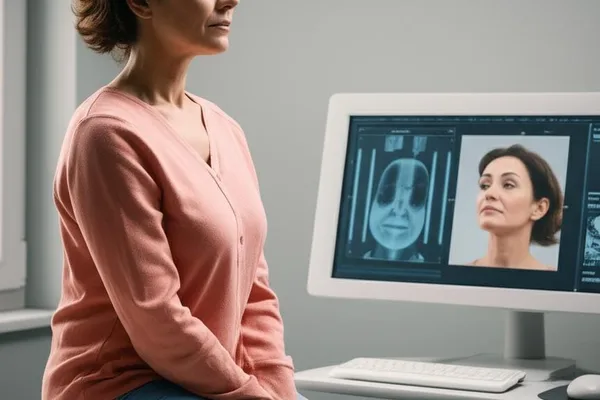
This DXA scanner uses two types of low-dose radiation to show your bone density as images and graphs on a computer screen. Your bones appear white. Fat, muscle, and other soft tissue appear as dark shadows on the images.
What should you avoid doing before a DXA scan?
For the most part, you won't need to make any major changes to your daily routine before a DXA scan. Typically:
- You can eat and drink before the test.
- You can continue to take your daily medications as usual, unless your doctor tells you otherwise.
- When you come for the test , wear comfortable, loose-fitting clothing. Try to wear clothing without metal parts (such as zippers, buttons, buckles). You will need to remove any metal clothing and jewelry before the test.
Important: If you are taking calcium supplements or other vitamins from the pharmacy, do not take them for 24 hours before the test. Tell your doctor what vitamins and supplements you are taking. He or she will tell you which ones you can and cannot take before the DXA scan.
Also, you cannot have a DXA scan within 24 hours of having some other imaging tests (e.g., a CT scan that used contrast dye). Therefore, before you schedule a DXA scan, tell the officer if you have any other tests scheduled.
How long does a bone density test take?
A bone density test usually takes about 30 minutes . This time can vary slightly depending on how many of your bones need to be scanned.
Are there any disadvantages to a DXA scan?
In fact, the risks of a bone density test are very low. You won't feel any pain or have any side effects after the scan.
However, if you are pregnant or think you may be pregnant, you should definitely tell your doctor. The level of radiation used in DXA scans is so low that it is not harmful to most people. However, if you are pregnant, it is best to avoid all types of radiation whenever possible.
Some studies have found that there can be slight variations in DXA scan results depending on the company that makes the scanner. But that's usually not something you should worry about. Your doctor will monitor your bone density over time and may order repeat tests or other tests if necessary.
What are the results of a DXA scan? What do they mean?
The results of a DXA scan show how dense and strong your bones are.
Doctors use a method called the "T score" to measure your bone density. This T score compares your bone density to the bone density of a healthy, average 20- to 30-year-old. The results are usually measured as a negative number. The closer your T score is to zero (it doesn't matter if it's a positive number), the stronger your bones are.
- Between 0 and -1: Healthy bone density. (This is a good condition!)
- Between -1 and -2.5: You have ``Osteopenia``. This may increase your risk of developing ``Osteoporosis.``
- -2.5 or less: You have osteoporosis, or very weak bones. This means you are at a very high risk of breaking a bone.
Your doctor will discuss these results with you and explain what they mean. If your bone density is lower than expected, he or she may recommend treatments to help keep your bones strong. For example:
- Exercise more: Regular physical activity strengthens your bones. Things like walking, yoga, and strength training are great for preventing bone loss.
- Supplements or special diets: Your doctor may tell you to take a vitamin D or calcium supplement. They may also tell you to eat foods that are high in certain vitamins and minerals.
- Medications: Your doctor may prescribe medications to slow bone loss and prevent fractures. Some medications for osteoporosis can also help increase your bone density.
What is the difference between a DXA scan and a whole-body bone scan?
DXA scans and whole-body bone scans are two similar tests. Both scans scan your bones, but doctors use them to check different aspects of your bone health.
- A DXA scan is a special X-ray test that measures your bone density and checks for bone-weakening diseases like osteoporosis.
- A whole-body bone scan can help doctors see if you have cancer, such as if it has spread to your bones (metastasized). It can also help determine what stage your cancer is in. It can also detect infections, bone injuries, and other problems.
Finally, things to remember (Take-Home Message)
DXA scan, DEXA scan, bone density test... whatever your doctor calls it, it's a quick, easy (and painless) test. It allows your doctor to identify conditions that affect bone density as quickly as possible. Depending on your age, family history of disease, or other risk factors you may need to have regular bone density tests.
Everyone should be concerned about their bone density as they age. Ask your doctor how often you should have a DXA scan. It's especially important for people with a family history of osteoporosis to have their bone density tested regularly.
Your doctor will help you keep your bones strong enough to support you throughout your life. So, there's nothing to worry about. If necessary, get tested and be aware of your bone health.
` DXA scan, bone density, osteoporosis, osteopenia, fractures, T score, bone health




💬 Comments (0)
No comments yet. Be the first to share your thoughts here.
Add Your Comment