
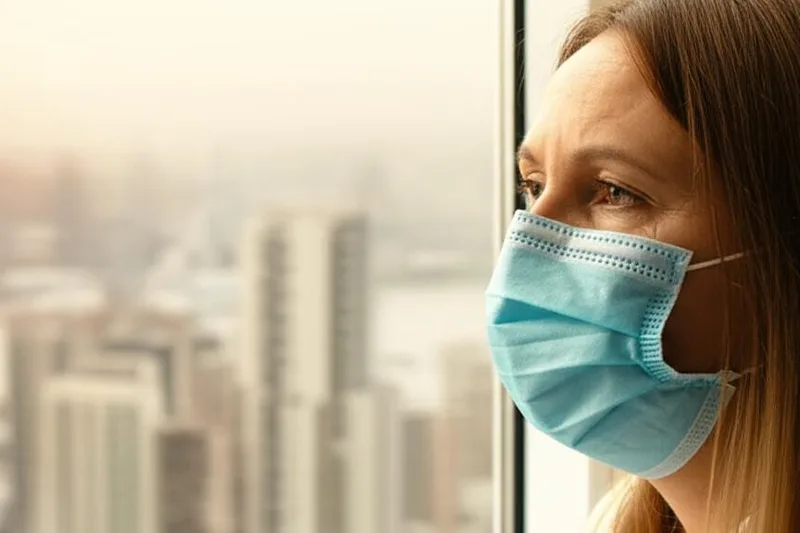
You may remember, a few years ago, there was talk about a serious disease that spread throughout the world. That was SARS. To be precise, it was around 2002 or 2003 that this became a big problem in the world. People in many countries suffered because of this, and some even lost their lives. So, today we are going to talk about this SARS disease. Let's simply understand what it is, how it originated, and what happened at that time.
What is SARS? How did it affect the world?
Simply put, SARS is a viral disease that severely affects our respiratory system, that is, the breathing system. It was first identified in late 2002. It was during 2002-2003 that this disease spread rapidly in about 29 countries around the world, infecting more than 8,000 people. At the time, it caused a lot of panic and anxiety, because it was a new disease and it affected us quite severely.
But, fortunately, thanks to the quick action taken by health authorities around the world, this was brought under control. Although a small number of people were infected again in 2004 due to an incident in a laboratory in China, that too was quickly controlled. Since then, there have been no reports of SARS in the world. Isn't that a great relief?
What are the symptoms of SARS?
Now let's look at the symptoms of SARS. Some of these may feel like a common cold or flu. But some symptoms are more serious, especially things like difficulty breathing.
The main features that can be seen are:
- Persistent high fever: A fever usually above 38 degrees Celsius (100.4 Fahrenheit). This is the main symptom that comes first.
- Chills: A feeling of coldness, like a shiver, that makes the body shiver.
- Headache : It may be a little more severe than a normal headache.
- Body aches: A feeling of pain throughout the body, especially in the muscles.
- Cough: It may start as a dry cough and then develop into a cough with mucus within a few days.
- Shortness of breath: This is a slightly more alarming symptom. It can be difficult to breathe, feel like you're wheezing, and feel like your chest is constricting.
- Diarrhea: For some people, about one in ten, diarrhea may also be a symptom.
- Sore throat: A sore throat, difficulty swallowing.
Consider, some people may only have a fever and other cold-like symptoms. But for others, these initial symptoms may develop into a cough and difficulty breathing within two to seven days. Therefore, it is very important to seek medical advice at that time for these symptoms, especially if they are accompanied by difficulty breathing with a fever.
What causes SARS?
Okay, so how does this SARS disease develop? The cause of this is the SARS-associated coronavirus , a specific virus called (SARS-CoV-1) for short. Do you know what viruses are? Simply put, these are very small, invisible genetic fragments. That is, genetic material such as (DNA) or (RNA) is covered with a protective shell made of proteins. When these viruses enter our bodies, they use the resources of our body's cells to make more copies of themselves. When the number of such viruses increases, our cells are damaged and we get sick. This (SARS-CoV-1) virus also works in the same way.
How is SARS transmitted?
Now let's look at how the SARS virus spreads from one person to another. Understanding this is very important, because it is what can prevent the spread of the disease.
It is mainly spread through respiratory droplets . That is, small droplets of liquid, such as saliva and sputum , that come out when someone with the virus coughs, sneezes, or speaks loudly. If you are near someone like that, those droplets can enter your body through your nose, mouth, and possibly your eyes, and you can get sick.
Another way is by touching surfaces that have the virus on them. For example, if a sick person touches a doorknob, table, or telephone without washing their hands, or if their saliva is sprayed on that surface, the virus may be present on those surfaces. Then, if you touch that surface and then touch your mouth, nose, or eyes with that dirty hand, the virus may enter your body. That's why frequent handwashing and cleaning surfaces are so important to prevent infectious diseases.
What happens if you get SARS? Can it be serious?
We now know that SARS is no longer spreading around the world. But during the 2002-2003 outbreak, some people got sick with it like a normal flu and recovered within a few days. However, about one in ten people (10% - 20%) developed severe disease. There are several complications that can occur when it becomes severe:
- Pneumonia: This is when the lungs become infected and the small air sacs (alveoli) inside the lungs fill with fluid. This prevents oxygen from getting in properly and carbon dioxide from getting out. It becomes very difficult to breathe.
- Low oxygen levels in the blood and tissues (Hypoxia): When the lungs are not working properly, the blood cannot absorb the amount of oxygen the body needs. This results in a lack of oxygen to the tissues throughout the body. This is a very dangerous condition.
- Respiratory failure: When the lungs become so weak that they cannot perform their function, which is the function of breathing. This is when artificial respiration is needed.
If these critically ill people were unable to breathe on their own, they had to be admitted to intensive care units in hospitals and placed on mechanical ventilation , that is, ventilators.
However, those whose symptoms were not that severe and were just normal were able to receive treatment from home. Just like we do when we have a cold or fever, we take painkillers, fever reducers, drink plenty of water, and rest.
Is there a specific treatment for the SARS virus?
A question that many people ask is whether there is a specific treatment for the SARS virus, that is, a medicine that can completely cure this disease. To be honest, no. There is no specific medicine that can completely cure the SARS virus. Also, like many viral diseases, there were no specific antiviral medications at the time, and there are none now. Treatment is mainly aimed at controlling symptoms, supporting the body (for example, giving oxygen), and preventing possible complications.
Can SARS be prevented? What should we do?
Yes, there are many things we can do to reduce the spread of viral diseases like SARS and other infectious diseases. These are generally health habits that we all know and should follow every day. These help protect not only from SARS, but also from diseases like COVID, as well as from things like the common cold and flu.
- Wash your hands often: It is very important to wash your hands thoroughly with soap and running water for at least 20 seconds. You should wash your hands after coming from the outside, before eating, before preparing food, and after using the bathroom. If soap is not available, you can use an alcohol-based hand sanitizer.
- Stay away from others when you are sick: If you have a fever, cough, or runny nose, stay home as much as possible. Avoid going to work, school, or public places. This will help prevent you from spreading the illness to others.
- Wear a mask when you are sick or think you might be sick and when you go to crowded places: This protects others from the droplets you release when you cough or sneeze.
- Cover your mouth and nose with your elbow when coughing or sneezing: It is better to cover your mouth with the inside of your elbow or a tissue than with your palm. If you use a tissue, throw it in the trash immediately after use.
- Avoid touching your face, eyes, nose, and mouth with unwashed hands.
Following these habits will help us protect ourselves from many infectious diseases, not just SARS.
How many people died from SARS?
By the time the SARS epidemic ended in 2003, 916 people had died worldwide. Then, in a small outbreak in 2004, one more person died. That brings the total number of deaths to 917. With over 8,000 people infected at the time, the mortality rate was about 10%. That is a sad situation, but given the way the disease spread, we can also assume that the rapid action taken by the World Health Organization and other countries could have prevented the death toll from increasing to some extent.
Are COVID and SARS the same disease?
This is also an important question for many people, because the names are somewhat similar. No, COVID-19 and SARS are not the same disease. They are both respiratory diseases caused by two different types of viruses . However, the names are somewhat similar because both viruses belong to the same family of viruses called Coronaviruses . The virus that causes SARS is scientifically known as SARS-CoV-1 and the virus that causes COVID-19 is known as SARS-CoV-2. Did you know that some coronaviruses can cause even minor respiratory illnesses like the common cold?
There are several key changes:
- Speed and spread: The COVID-19 virus (SARS-CoV-2) spreads much faster and more easily than the SARS virus (SARS-CoV-1). Also, millions more people have already been infected with COVID-19, a much larger number than SARS.
- Asymptomatic transmission: COVID-19 appears to be easily transmitted by both pre-symptomatic and asymptomatic individuals. However, SARS was most contagious after symptoms appeared. This makes COVID-19 more difficult to control.
- Severity: Although both can be severe, the mortality rate from COVID-19 generally appears to be lower than that of SARS, but due to the vast number of people infected with COVID-19, the total number of deaths is much higher than that of SARS.
How was the spread of SARS stopped?
Public health measures were very helpful in controlling the SARS epidemic. At that time, scientists, doctors, and health workers around the world worked together very quickly.
- Virus Identification: Scientists quickly identified the virus (SARS-CoV-1) as the cause of this new disease.
- Improving testing methods: Once the virus was identified, methods (such as PCR tests) that could test for its presence were quickly introduced.
- Identifying and isolating patients: Most importantly, SARS is most contagious after symptoms begin, so quickly identifying people with flu-like symptoms at airports and hospitals and isolating them at home or in special wards in hospitals was very successful in controlling the spread.
- Contact tracing: When a patient is found, they find out who they have been in contact with and monitor them as well.
- International cooperation: Countries shared information and worked together through organizations like the World Health Organization (WHO).
In fact, it is normal for people to feel uncertainty, fear, and anxiety when any disease, especially a new pandemic, spreads. SARS, for some, was mild, while for others it was severe, killing hundreds. But scientists, health workers, and affected communities worked together and worked hard, limiting the number of people getting sick. Health authorities in various countries worked together to quickly identify the virus and control its spread. That is why there have been no new cases of SARS since 2004.
Finally, things to remember
Okay, so I think you now have a better understanding of what we've been talking about with SARS. The most important thing to remember is that there is currently no SARS outbreak in the world. That's a real relief. But, we have a lot of valuable lessons to learn from these kinds of epidemics.
- The importance of good health habits: Even simple things like washing your hands, staying away from others when you are sick, and wearing a face mask can make a big difference in preventing the spread of infectious diseases.
- Advances in science and research: Things like this clearly show us how important science is in quickly diagnosing diseases, conducting tests, finding treatments, and developing vaccines.
- The power of unity: We also see how powerful it is to overcome global challenges like these when countries, scientists, health sectors, and the public come together and work towards a common goal.
So, even though SARS was a dangerous disease in the past, we need to be more prepared to face similar situations in the future with the lessons learned from it. The most important thing is to always take care of your health and act responsibly.
` SARS, SARS, respiratory disease, coronavirus, symptoms, viral infection, pandemic, public health


💬 Comments (0)
No comments yet. Be the first to share your thoughts here.
Add Your Comment