
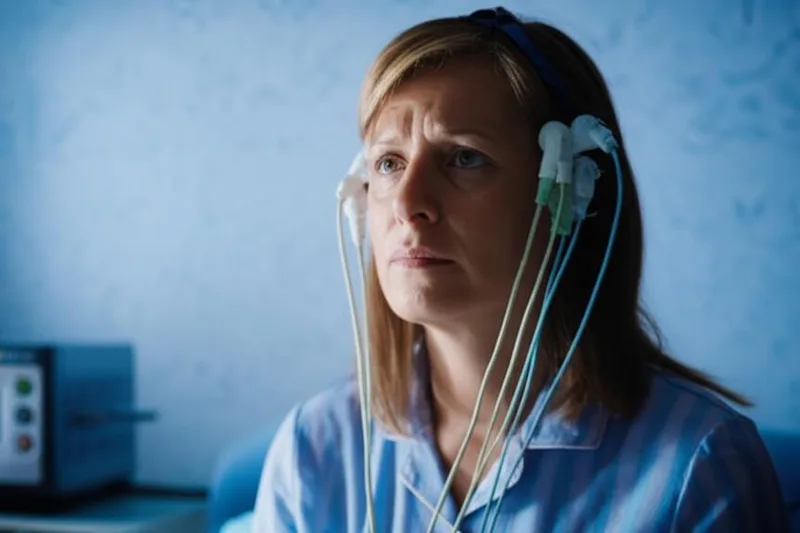
Do you sometimes find yourself unable to sleep well at night and waking up feeling tired in the morning? Or does someone in your home complain of loud snoring or shortness of breath? If you have any of these problems, perhaps a doctor can advise you to have a "sleep study." Let's talk about this in a simple way that you can understand.
What is this sleep study?
Simply put, a sleep study is a diagnostic test that checks how your body's various systems are working while you sleep. The formal name for this by doctors is a polysomnogram . It's a long word, isn't it? But it's all about getting a better understanding of your sleep. In this test, you have a few small sensors attached to your body. These record things like your heart rate, brain activity, and breathing throughout your sleep. This allows doctors to get a clearer picture of the quality of your sleep.
When is a sleep study needed?
This is also a type of diagnostic test. That is, doctors use it to find out exactly what health problem you have, or to make sure you don’t have one. Often, this test is recommended if you have symptoms that are affecting your sleep, to determine how to treat the condition, or to see if the treatment is working. These can usually be conditions that affect or interfere with your brain, nervous system, breathing, or heart function.
A sleep study can help diagnose conditions like these:
- Sleep Apnea (Sleep Apnea - Obstructive and Central)
- Narcolepsy (sudden onset of excessive sleepiness)
- Periodic Limb Movement Disorder, including Restless Legs Syndrome
- Insomnia
- Some types of seizures and epilepsy
- Night terrors / Sleep terrors
- Nocturnal panic attacks
- Sleepwalking or other sleep behavior-related disorders
- Sleep paralysis
- Other sleep disorders (Parasomnias and disruptive sleep disorders)
When is a sleep study performed?
Most of the time, this test is done while you're sleeping. Most of us sleep at night. So, most sleep labs do overnight sleep studies . However, for those who work night shifts, meaning they sleep during the day, it's possible to have this test done during the day if they want.
How common are these sleep studies?
These are actually very common tests. For example, in 2014, more than 800,000 sleep studies were conducted under Medicare in the United States alone. That means, you can imagine how much higher this number is when all the others are added together. This test is now very popular in Sri Lanka as well.
Who is doing this sleep study?
Several health professionals are involved in this test. Those who perform the test include medical technicians, technologists, assistants, and nurses (registered nurses and nurse practitioners).
After you have your test results, a specialist (such as a pulmonologist or sleep medicine specialist) will review the test results to see if there are any problems. Sometimes a neurologist or your family doctor may also be involved to learn more about your medical history. Once the results are in, these doctors will work together to provide you with the best treatment.
At-home sleep apnea testing
There is a slight difference between a sleep apnea test done at home and a polysomnography done at a sleep center. A home test usually does not use all the sensors used in a full sleep study. For example, sensors that measure brain wave activity, eye movement, or the heart's electrical activity may not be included in the home test.
The most common home tests are those that measure breathing through the nose or mouth and the movement of the muscles in the chest and abdomen involved in breathing. These are often used when a doctor strongly suspects sleep apnea, or for follow-up testing to see if sleep apnea has improved after surgery or weight loss.
How does a sleep study work?
The quality of your sleep depends on many factors, which is why this test uses different types of sensors. Since each sensor monitors a specific system or process in the body, doctors can do an in-depth analysis of your sleep. This can be a great help in accurately diagnosing some sleep-related conditions.
In a sleep study, sensors and monitoring methods such as these are used:
- Electroencephalography (EEG): These sensors are coated with a sticky, electrically conductive gel. This gel helps the sensors adhere to your head. They detect and record the electrical activity of your brain, called brain waves , while you sleep. Different types of waves occur during different stages of sleep. This is important for diagnosing sleep disorders.
- Electrocardiography (EKG or ECG): During a sleep study, a single EKG sensor is placed on your chest to measure the electrical activity of your heart. By checking your heart's activity, a doctor can see if there are any problems with your heart's rhythm or internal electrical system.
- Electromyogram (EMG): These sensors are placed on the skin, usually on your face or leg. They are used to monitor muscle movement. Unlike a regular EMG test, these sensors are only used for monitoring and do not stimulate the muscles.
- Electro-oculography (EOG): In this test, small sensors are attached to the skin around your eyes. These sensors detect eye activity. For a sleep study, four such sensors are attached, two around each eye.
- Breathing sensors: This includes sensors that detect how air moves through your mouth and nose.
- Respiratory Inductive Plethysmography (RIP) belt: A RIP belt is a device that detects the expansion of your chest and abdomen when you breathe.
- Pulse Oximeter: This is a small, sticky sensor that you attach to the tip of your index finger. It measures your pulse rate and the level of oxygen in your blood.
- Video and audio monitoring: This allows sleep center staff and doctors to see and hear what's happening while you're sleeping. Doctors use this if they get unusual or concerning readings from the sensors mentioned above. Also, because these recordings are synchronized with the sensor data, a doctor trying to interpret the sensor readings can see and hear what's happening at the same time.
What to expect before a sleep study? How to prepare?
A pulmonologist or sleep medicine specialist will usually recommend a sleep study based on your symptoms and medical history. Once they have made the recommendation, they can provide you with options for sleep labs in your area, and may even help you book an appointment directly with one.
Your sleep study will be scheduled based on your normal sleep habits, preferences, schedule, and circumstances. Doctors often recommend scheduling your test around the time you would normally sleep. These testing centers are available for people who sleep at night, as well as those who work nights and sleep during the day.
When preparing for a sleep study, you should dress as if you were staying overnight and shower and clean yourself as you would for a medical exam. While procedures and facilities vary by sleep center, it's generally a good idea to keep these things in mind:
- Follow your doctor's instructions about bathing and getting clean. It's usually recommended to shower or wash your body before the test. However, avoid using creams, lotions, or hair care products afterward. It's best to have clean skin, free of any makeup. This will help the sensors used in the sleep study adhere well and get clear readings. Also, hair gel or hair spray can make it difficult for the sticky gel on the EEG sensors to stick to your head. You should also avoid using nail polish or fake nails , as they can affect pulse oximeter readings.
- Pack as if you were staying overnight at a hotel. Bring a toothbrush, pajamas or sleepwear, clothes to wear in the morning after the test, and any other hygiene or personal care items you may need. If you have questions about what else you may need, you can ask the sleep center staff or your doctor for more information and guidance. If you wear makeup, it is also a good idea to bring makeup remover.
- Continue taking your medications as usual until your doctor tells you otherwise. Your doctor will advise you on which medications to continue taking and which to temporarily stop before your sleep study. If you have any questions about this, be sure to talk to your doctor. Some medications can have unpleasant or dangerous side effects if you stop taking them suddenly. You can avoid these by talking to your doctor.
- Tell your doctor if you have any skin allergies. Some adhesives used to attach sensors during a sleep study can cause skin irritation or an allergic reaction. If you know about these allergies in advance, your doctor can find alternatives that won't cause a reaction.
What to expect on the day of a sleep study?
Unless your doctor advises otherwise, continue with your normal routine on the day of the test. However, keep these things in mind:
- Avoid caffeine and alcohol for at least eight hours before a sleep study. Both of these can disrupt your normal sleep patterns and affect the results of the test.
- Don't nap during the day. If you nap during the day, you may have difficulty falling asleep during the sleep study.
- Stick to your daily routine as much as possible. The more naturally you sleep during a sleep study, the more accurately a doctor can interpret the results, diagnose your condition(s), and treat you accordingly.
What happens during a sleep study?
Once you arrive at the test site, the health professionals supervising the test will take you to the room where you will stay overnight. There, after you change into your pajamas, the staff will begin the process of attaching sensors to various parts of your body. Most sensors have adhesives or need to be attached with tape (if you have sensitive skin or are allergic to adhesives, be sure to tell the staff before they begin attaching the sensors).
After the staff installs the sensors, they will ask you to do a few small tasks to make sure the sensors are working properly and calibrated. These are very simple things; like moving your eyes, opening and closing your mouth, and moving your legs.
The wires on the sensors are long enough for you to move around comfortably in bed. However, if you need to get out of bed, you will need to have a staff member help you remove the wires. Do not remove the wires until a staff member tells you exactly how to do it, or it may affect the test results.
After the staff calibrates the sensors, you can relax by watching TV or reading a book before going to bed. Many people have trouble falling asleep during a sleep study. This can be because it is a new, unfamiliar environment or because the sensors are attached to your body. However, this usually does not have a significant effect on your test results.
While you are asleep, the doctors and staff monitoring the test may come in to check on you in some cases. These include:
- If a wire or sensor comes loose, the staff will usually come in, wake you up, and fix it again.
- If you notice signs of a serious problem during your sleep study, such as a seizure or other medical emergency.
What to expect after a sleep study?
When you wake up in the morning, the sleep center staff will come and help you remove all the sensors. After that, you can change into your day clothes and leave the sleep center.
What are the risks and side effects of a sleep study?
Side effects or complications from this test are very rare. The most common side effect is a skin rash or reaction to the adhesives/tapes used to attach the sensors. Another common side effect is that people may not be able to sleep properly or stay asleep as long as they usually do because they are in an unfamiliar place.
Other complications can occur, but they are very uncommon and vary from person to person. Your doctor is the best person to tell you what to expect based on your situation.
What are the results like? What do those results tell us?
After the sleep study, a doctor will review and interpret the data. That professional interpretation is very important. Because a sleep study collects a lot of different types of data about how you sleep. It takes years of education, training, and experience to get the full picture of a person's sleep data. Once the doctor understands the data, he or she can determine if you have a medical problem and diagnose it.
After the doctor understands the data and comes to a diagnosis, he or she will talk to you about what was found (or something) and recommend what to do next. Often, at a follow-up visit, they will talk to you further about your results. They will also discuss treatment options and next steps.
When will the results of a sleep study be known?
A doctor will call you with your results a few days after your test. This can vary from lab to lab, so it's best to ask your doctor when to expect your results after your test.
How long does it take for a sleep study?
For most people, it only takes one night in a sleep center (or the equivalent of one night for those who do the test during the day). Experts and doctors generally consider the test to be valid if you get at least two hours of sleep (but the more sleep you usually get, the more useful the data collected).
Some people may need to stay in a sleep center for more than one night. This can be for a variety of reasons; from a suspected medical condition to the readings taken the first night not being accurate enough to understand. Your doctor can give you more details about what is recommended for you and why.
Will someone be watching me during a sleep study?
Sleep studies use low-light cameras that can record video and audio in low light. However, the staff at the sleep center don't watch you the whole time you sleep. The cameras are there mainly so that the staff can see what happens if they get unusual or concerning readings. They also record what's happening. Then the doctors can compare the recordings with the readings from the sensors. That means that unless someone on the staff has a specific reason to look at you through the camera, they won't be watching you.
Can I get up and go to the bathroom during a sleep study?
Yes, you can get up at night to go to the bathroom during a sleep study. However, the sleep center staff will tell you whether you can do this without the help of a staff member. This will vary depending on the sleep center's equipment, policies, and room layout. If a staff member has not told you about this before your test begins, you can ask about it.
Should I do a sleep study alone?
In most cases, a sleep study is something you do alone. In some cases, such as with children or people with special needs , a caregiver or loved one may be present in the sleep center during the study. However, they will usually need to use a separate room to avoid affecting the readings and results of the test.
In rare cases, a caregiver or loved one may be able to stay in the same room, but they cannot sleep in the same bed as the person being tested. This varies by lab, type of test, and other factors, so it's best to talk to your doctor or sleep center staff.
Does a sleep study hurt?
No, a sleep study is not painful at all. You will not feel any pain from any sensors or other equipment during the test. Some sensors that are attached to the skin with tape or adhesive may feel a little discomfort when you remove them, but the staff can help reduce or eliminate this after the test is over.
A sleep study is a common diagnostic test that can help diagnose many medical conditions and sleep-related problems. Hundreds of thousands of sleep studies are performed each year. They are important for diagnosing and treating conditions like sleep apnea, narcolepsy, and restless legs syndrome.
Although many people are anxious or scared about this test, healthcare professionals and doctors who specialize in or participate in sleep studies can help you relax and be at ease. That way, doctors can help you sleep, gather information about how you sleep during the test, determine if there is cause for concern, and what they can do to help.
The most important things to remember (Take-Home Message)
Okay, so I hope you now have a better understanding of the sleep study (Sleep Study / Polysomnography) we talked about today.
- This is a painless, safe test to diagnose your sleep problems.
- If you have insomnia, excessive daytime sleepiness, snoring, or shortness of breath, talk to your doctor about it. This test may be helpful for you.
- The staff will explain everything to you and help you before and during the test, so there is no reason to be afraid.
- When you know exactly what's going on, it's easier to cope with anything. So, we hope this information is useful to you. May you have a healthy, comfortable sleep!
` Sleep study, polysomnography, sleep problems, sleep apnea, sleep test, sleep disorders, medical tests


💬 Comments (0)
No comments yet. Be the first to share your thoughts here.
Add Your Comment