

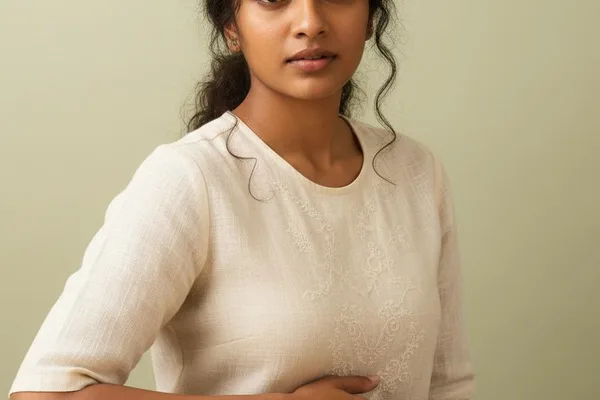
Have you ever had a strange, squeezing pain in the upper right side of your stomach after eating a very oily meal, such as a kottu or fried rice? Or have you ever heard someone in your family say "gallstones"? Today we are going to talk about this small, but very important organ in our body. That is the gallbladder, or as it is called in English, the ``Gallbladder``.
Simply put, what is this gallbladder?
Imagine that your gallbladder is a small pear-shaped organ that you can hold in your hand. Do you know where it is located in your body? It's located on the right side of your abdomen, right above, just below your liver.
Its main job is to temporarily store a liquid called bile. This substance called bile is made by our liver. But the liver has no place to make it and store it. That's when the gallbladder comes to the rescue. It works like a small storage room to temporarily store some of the bile that the liver makes.
How does bile help our body?
The gallbladder is a very important part of our digestive system . As we mentioned earlier, it stores bile. So why do we need this bile?
Simply put, bile is essential for digesting the oils and fats in the foods we eat. Imagine you eat a fatty meal. As that food passes through the stomach and into the small intestine, our brain sends a signal to the gallbladder, saying, "Okay, it's time to get to work."
When the gallbladder receives that signal, it contracts like a balloon letting out some air. When it contracts, the bile it has stored inside flows through a system of small tubes and into the small intestine. Like a water pipe system, we call this system the biliary tract .
Once in the small intestine, this bile acts like dish soap. It breaks down the large fat particles in fatty foods into smaller, easier-to-digest pieces. This is how our bodies can properly absorb fat.
Before eating, the gallbladder is full of bile. After eating, all the bile in it has been used up, so it empties like a deflated balloon. It waits for it to fill up again.
What are the main diseases of the gallbladder?
The main problem we often hear about when it comes to the gallbladder is the formation of gallstones. Apart from that, several other problems can arise. Let's see what they are.
| Medical condition | Simply put... |
|---|---|
| Gallstones | These are like small stones. They form when things like cholesterol in the bile clump together. They can range in size from as small as a grain of sand to as large as a golf ball. Most of the time, these are harmless and are found in the gallbladder. But sometimes they can cause pain, nausea, and inflammation. |
| Cholecystitis | This is when the gallbladder becomes swollen. This often happens when a gallstone blocks the bile duct. This can cause high fever and severe pain. It usually requires surgery. |
| Gallstone Pancreatitis | This is a serious condition. This happens when a gallstone breaks free from the gallbladder and travels down the bile duct, blocking the pancreatic duct. This is a condition that requires emergency treatment. |
| Gallbladder Cancer | This is a very rare condition. So don't be afraid of cancer when you have pain on the right side of your stomach. The cause of the pain can often be something else. |
Do I have a gallbladder problem? Watch out for these symptoms!
Many people have gallstones but don't show any symptoms. They don't even know they have them. But as mentioned earlier, the problems start when a stone gets stuck in the bile duct. Then you may experience symptoms like these:
- Severe pain in the upper right side of the abdomen: This is the main symptom. It can start suddenly and last for several hours.
- Pain in the middle, upper abdomen: Some people may experience pain in the middle rather than the right side.
- Pain radiating to the right shoulder or back: Along with abdominal pain, pain may radiate to the right shoulder or back.
- Increased pain after eating fatty foods: This is also a very specific symptom.
- Jaundice: A yellowing of the whites of the eyes and skin. This occurs when the bile ducts become blocked and bile accumulates in the body's blood.
- Nausea and vomiting.
- Fever and chills ( feeling cold ).
- Dark brown urine and light (gray) stools: This can happen when bile doesn't flow properly into the intestines.
If you have one or more of these symptoms, see your doctor immediately. These are conditions that should definitely be checked out by a doctor.
What are the treatments for gallbladder disease?
In most cases, the best and most permanent treatment for symptomatic gallstones is surgical removal of the gallbladder. This surgery is called a cholecystectomy .
You may be wondering, "Would I not be able to live if my gallbladder is removed?" But there's no need to worry. The gallbladder is not an essential organ in our body. That means you can live a completely normal life without it.
After the gallbladder is removed, the bile produced by the liver is not stored, but flows directly into the small intestine through the bile ducts. Therefore, the digestive process continues.
Currently, this surgery is performed in several main ways:
Laparoscopic Cholecystectomy
Many people call this "camera surgery." This involves making a few small incisions in the abdomen, inserting a camera and delicate instruments through them, and removing the gallbladder. This method is very effective. It is less painful, heals quickly, and does not leave large scars. This method is the most commonly used today.
Open Cholecystectomy
This is the traditional method. Here, the gallbladder is removed through a slightly larger incision in the abdomen. Doctors may choose this method if the gallbladder is very swollen and inflamed.
Robotic Cholecystectomy
This is a new technology. Some hospitals in Sri Lanka have this facility. Here, the surgeon performs the surgery by controlling a robot.
Is there a relationship between body weight and the formation of gallstones?
Yes, there is a clear link. People who are overweight, especially women, are at higher risk of developing gallstones.
This is because the cholesterol levels in the bile of obese people can be high. When cholesterol in the bile increases, it is more likely to clump together and form stones. Also, the gallbladder of overweight people can become larger and its function may be somewhat impaired.
Another important thing to note is that losing weight too quickly can also lead to gallstones. Therefore, if you are losing weight, it is important to do it gradually and in a healthy way.
Do I need to be careful about what I eat and drink after having my gallbladder removed?
Although the gallbladder is not essential, it helps digest fatty foods. So it's a good idea to be a little more careful about what you eat after surgery, especially in the first few weeks.
- In the early stages: Reduce oily and fatty foods (fried foods, greasy foods) as much as possible.
- Limit fat: Try to keep the amount of calories from fat in your daily diet to less than 30%.
- High-fiber foods: When re-introducing high-fiber foods like whole grains (brown rice, oatmeal), nuts, vegetables, and legumes, gradually add them back to your diet. Eating too much at once can cause bloating and gas.
Over time, your body will adjust to this change. After that, most people can eat any food normally without any problems. If you feel uncomfortable eating a certain food, talk to your doctor about it.
Take-Home Message
- The gallbladder is a small organ located under the liver that stores bile, which helps digest the fatty foods we eat.
- The main problem with the gallbladder is the formation of stones (Gallstones). Although these are usually harmless, they can sometimes cause severe pain and other complications.
- If you experience severe pain in the upper right side of your abdomen, fever, vomiting, or jaundice after eating a fatty meal, you should definitely see a doctor.
- The gallbladder is not an essential organ in our body. Even if it is surgically removed, you can still live a completely healthy, normal life.




💬 Comments (0)
No comments yet. Be the first to share your thoughts here.
Add Your Comment