Does your baby have these symptoms? Let's talk about Prader-Willi Syndrome

Does your baby have these symptoms? Let's talk about Prader-Willi Syndrome

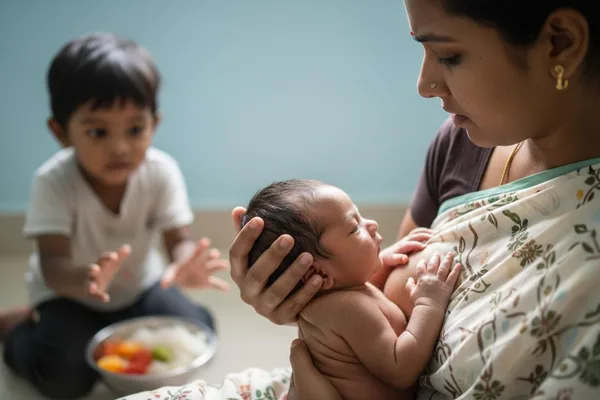
Was your little one very lethargic, lifeless, and had a hard time breastfeeding when he was first born? But when he got a little older, around the age of two or three, did he start showing an unusual appetite and a lack of appetite? You might be a little worried and scared with these changes. Today we are talking about a rare genetic condition that shows these symptoms, which many people in our country have not heard of, but which is very important to know about. That is Prader-Willi Syndrome.

What is Prader-Willi Syndrome (PWS)?

Simply put, Prader-Willi syndrome (PWS) is a rare genetic condition that is present from birth. It affects a child's metabolism, the process by which the food we eat is converted into energy. It also affects the child's development and behavior.

Two main stages can be seen in this situation.

1. Early Infancy: The baby's muscles are either lifeless or have very low muscle tone. This makes it very difficult to suckle. The baby may be sleepy and lethargic.

2. Early Childhood: Between the ages of 2 and 6, something completely different happens. That is, the child develops an uncontrollable, excessive appetite. No matter how much he eats, he does not feel full. If this excessive eating is not controlled, the child can become severely obese.

In addition to these main symptoms, the child may miss age-appropriate developmental milestones, such as crawling, walking, and talking. Puberty may also be delayed. If not managed properly, obesity can lead to life-threatening complications such as heart disease, diabetes, and sleep apnea.

Who gets this condition? How common is it?

This is a genetic condition that can affect anyone. It is most often caused by a random genetic change that occurs when the mother and father's germ cells are formed. This means that it is not due to any fault of the parents. Very rarely, if someone in the family has had the condition, there is a small chance that it will be passed down through the generations.

It is so common that Prader-Willi syndrome affects about one in 10,000 to 30,000 people worldwide. This means it is a very rare condition.

What are the symptoms of Prader-Willi syndrome?

These symptoms can vary from person to person, but there are some common symptoms. Let's categorize them in this way to make them clearer.

Characteristic type Commonly seen things
Characteristics of infancy (Infancy)
  • Having a weak crying voice.
  • Constantly feeling sleepy and lifeless (Lethargy).
  • Inability or difficulty in sucking milk.
  • Muscles are weak and limp ( Hypotonia ).
Characteristics related to body appearance
  • Almond-shaped eyes.
  • An elongated, narrow head.
  • A triangular-shaped deer.
  • Not having a height appropriate for age (Short height).
  • Small hands and feet.
  • Reduced development of reproductive organs.
  • Behavioral and developmental characteristics
  • Frequent anger, stubbornness, sudden outbursts of anger.
  • Intellectual disability.
  • Obsessive or compulsive behaviors such as picking at the skin.
  • Sleep disorders.
  • Not feeling full after eating and eating unusually large amounts of food ( Hyperphagia ).
  • The most important thing to remember here is that obesity, which is caused by `(Hyperphagia)`, can lead to many other serious diseases such as diabetes and heart disease.

    Why does this condition occur? What is the genetic cause?

    This is a bit complicated, but let's try to understand it simply.

    Each of our cells contains a package of genetic information. We call these chromosomes . We get 23 of these chromosomes from our mother and 23 from our father. Prader-Willi syndrome is caused by a problem with the part of chromosome 15 that we get from our father.

    Something special happens here. It's called `(genomic imprinting)`. Simply put, in some genes on chromosome 15, the copy from the father is switched 'on', and the copy from the mother is switched 'off'. This 'on', that is, the active copy from the father is essential for the body to function properly . In PWS, this active copy from the father loses its function.

    There can be three main reasons for this.

    Genetic cause Simply explained
    Chromosomal deletion This is the cause of 70% of PWS patients. In this case, a small part of chromosome 15, which is inherited from the father, is deleted. Therefore, the necessary genes do not function.
    Maternal uniparental disomy This is the cause of about 25% of PWS cases. What happens is that the child does not receive chromosome 15 from the father, but receives two copies of chromosome 15 from the mother. Since the relevant genes in both copies from the mother are 'off', none of the active genes are lost.
    A translocation This is very rare (less than 1%). In this case, a part of chromosome 15 breaks off and attaches to another chromosome. As a result, those genes cannot function properly.

    How does a doctor diagnose this disease?

    When you go to see a doctor because you are concerned about your child's symptoms, the first thing he or she will do is give your child a thorough physical exam. He or she will carefully observe your child's appearance, muscle tone, and behavior. He or she will also ask you about your child's eating habits and developmental delays.

    If the doctor suspects PWS based on these symptoms, they will order a genetic test to confirm the diagnosis. This is usually done by taking a blood sample from the child and identifying changes in the DNA.

    How is it treated? Is it impossible to cure it completely?

    In fact, there is no cure for Prader-Willi syndrome yet. But don't worry. There are many treatments that can help manage symptoms, prevent complications, and help your child live a good life. The main goals of treatment are to:

    • Nutritional management: Special devices such as bottle nipples can be used to help your baby drink milk during infancy. As your baby gets older, it is important to provide a low-calorie, balanced diet and strictly control the amount of food they eat. Sometimes, it may even be necessary to lock things like cupboards and refrigerators at home.
    • Hormone therapy: Growth hormone is given to help the child grow. As puberty progresses, boys may need to be given testosterone and girls may need estrogen.
    • Supportive Therapies:
    • Physical therapy: Helps strengthen muscles and improve balance.
    • Speech-language therapy: Helps overcome speech difficulties.
    • Special education: Provides support for learning activities tailored to the child's intellectual abilities.

    What will the future be like if my child has PWS?

    It's normal for parents to feel shocked and scared when they learn about this condition. But remember, with early diagnosis and ongoing treatment and support, children with PWS can live a normal life.

    Yes, there are challenges. They will need extra help with schoolwork. They will need some level of support throughout their lives. But they can also be helped to be as independent as possible and to make the most of their abilities.

    It is important to meet with a nutritionist to develop a meal plan that is right for your child, and to seek advice from a mental health counselor . Also, joining support groups with other parents who have similar experiences to yours will be a great source of strength.

    What questions should you ask the doctor?

    When you go to see the doctor, don't forget to ask these questions.

    • What should I do to prevent my child from becoming obese?
    • What treatments does the child need? How are they given?
    • What behavioral problems can I expect from my child?
    • Are there support groups we can reach out to for help living with this condition?
    • Do the rest of my family need to get genetic testing?

    It's normal to feel overwhelmed when you learn that your child has a rare, incurable disease. But you're not alone. Your child's medical team will provide you with the support and guidance you need. Your child may need a little more time and help than other children. But with the right management, your child can be happy too.

    Take-Home Message

    • Prader-Willi syndrome (PWS) is a genetic condition that occurs randomly and is not caused by any fault of the parents.
    • Early symptoms include muscle weakness and difficulty drinking milk. Later, an uncontrollable appetite develops.
    • The biggest challenge faced in this situation is controlling diet and preventing obesity and its associated complications.
    • Although there is no complete cure for this, proper management, treatment, and support throughout life can help the child live a full life.
    • If you have any concerns about your child's development or behavior, talk to your doctor immediately. Early detection is crucial for successful treatment.

    Prader-Willi Syndrome, PWS, genetic diseases, children's diseases, excessive appetite, hypotonia, hyperphagia, childhood obesity

    ⚠️ Important: The medical articles and information on Nirogi Lanka are for general awareness only, and are by no means a substitute for professional medical advice, diagnosis, or treatment. For any medical problem you have, consult a qualified physician immediately.

    💬 Comments (0)

    No comments yet. Be the first to share your thoughts here.

    Add Your Comment

    Please calculate: 8 + 6 =
    Does your baby have these symptoms? Let's talk about Prader-Willi Syndrome
    How the Body WorksJuly 7, 2026

    Does your baby have these symptoms? Let's talk about Prader-Willi Syndrome

    Was your little one very lethargic, lifeless, and had a hard time breastfeeding when he was first born? But when he got a little older, around the age of two or three, did he start showing an unusual appetite and a lack of appetite? You might be a little worried and scared with these changes. Today we are talking about a rare genetic condition that shows these symptoms, which many people in our country have not heard of, but which is very important to know about. That is Prader-Willi Syndrome.

    What is Prader-Willi Syndrome (PWS)?

    Simply put, Prader-Willi syndrome (PWS) is a rare genetic condition that is present from birth. It affects a child's metabolism, the process by which the food we eat is converted into energy. It also affects the child's development and behavior.

    Two main stages can be seen in this situation.

    1. Early Infancy: The baby's muscles are either lifeless or have very low muscle tone. This makes it very difficult to suckle. The baby may be sleepy and lethargic.

    2. Early Childhood: Between the ages of 2 and 6, something completely different happens. That is, the child develops an uncontrollable, excessive appetite. No matter how much he eats, he does not feel full. If this excessive eating is not controlled, the child can become severely obese.

    In addition to these main symptoms, the child may miss age-appropriate developmental milestones, such as crawling, walking, and talking. Puberty may also be delayed. If not managed properly, obesity can lead to life-threatening complications such as heart disease, diabetes, and sleep apnea.

    Who gets this condition? How common is it?

    This is a genetic condition that can affect anyone. It is most often caused by a random genetic change that occurs when the mother and father's germ cells are formed. This means that it is not due to any fault of the parents. Very rarely, if someone in the family has had the condition, there is a small chance that it will be passed down through the generations.

    It is so common that Prader-Willi syndrome affects about one in 10,000 to 30,000 people worldwide. This means it is a very rare condition.

    What are the symptoms of Prader-Willi syndrome?

    These symptoms can vary from person to person, but there are some common symptoms. Let's categorize them in this way to make them clearer.

    Characteristic type Commonly seen things
    Characteristics of infancy (Infancy)
    • Having a weak crying voice.
    • Constantly feeling sleepy and lifeless (Lethargy).
    • Inability or difficulty in sucking milk.
    • Muscles are weak and limp ( Hypotonia ).
    Characteristics related to body appearance
  • Almond-shaped eyes.
  • An elongated, narrow head.
  • A triangular-shaped deer.
  • Not having a height appropriate for age (Short height).
  • Small hands and feet.
  • Reduced development of reproductive organs.
  • Behavioral and developmental characteristics
  • Frequent anger, stubbornness, sudden outbursts of anger.
  • Intellectual disability.
  • Obsessive or compulsive behaviors such as picking at the skin.
  • Sleep disorders.
  • Not feeling full after eating and eating unusually large amounts of food ( Hyperphagia ).
  • The most important thing to remember here is that obesity, which is caused by `(Hyperphagia)`, can lead to many other serious diseases such as diabetes and heart disease.

    Why does this condition occur? What is the genetic cause?

    This is a bit complicated, but let's try to understand it simply.

    Each of our cells contains a package of genetic information. We call these chromosomes . We get 23 of these chromosomes from our mother and 23 from our father. Prader-Willi syndrome is caused by a problem with the part of chromosome 15 that we get from our father.

    Something special happens here. It's called `(genomic imprinting)`. Simply put, in some genes on chromosome 15, the copy from the father is switched 'on', and the copy from the mother is switched 'off'. This 'on', that is, the active copy from the father is essential for the body to function properly . In PWS, this active copy from the father loses its function.

    There can be three main reasons for this.

    Genetic cause Simply explained
    Chromosomal deletion This is the cause of 70% of PWS patients. In this case, a small part of chromosome 15, which is inherited from the father, is deleted. Therefore, the necessary genes do not function.
    Maternal uniparental disomy This is the cause of about 25% of PWS cases. What happens is that the child does not receive chromosome 15 from the father, but receives two copies of chromosome 15 from the mother. Since the relevant genes in both copies from the mother are 'off', none of the active genes are lost.
    A translocation This is very rare (less than 1%). In this case, a part of chromosome 15 breaks off and attaches to another chromosome. As a result, those genes cannot function properly.

    How does a doctor diagnose this disease?

    When you go to see a doctor because you are concerned about your child's symptoms, the first thing he or she will do is give your child a thorough physical exam. He or she will carefully observe your child's appearance, muscle tone, and behavior. He or she will also ask you about your child's eating habits and developmental delays.

    If the doctor suspects PWS based on these symptoms, they will order a genetic test to confirm the diagnosis. This is usually done by taking a blood sample from the child and identifying changes in the DNA.

    How is it treated? Is it impossible to cure it completely?

    In fact, there is no cure for Prader-Willi syndrome yet. But don't worry. There are many treatments that can help manage symptoms, prevent complications, and help your child live a good life. The main goals of treatment are to:

    • Nutritional management: Special devices such as bottle nipples can be used to help your baby drink milk during infancy. As your baby gets older, it is important to provide a low-calorie, balanced diet and strictly control the amount of food they eat. Sometimes, it may even be necessary to lock things like cupboards and refrigerators at home.
    • Hormone therapy: Growth hormone is given to help the child grow. As puberty progresses, boys may need to be given testosterone and girls may need estrogen.
    • Supportive Therapies:
    • Physical therapy: Helps strengthen muscles and improve balance.
    • Speech-language therapy: Helps overcome speech difficulties.
    • Special education: Provides support for learning activities tailored to the child's intellectual abilities.

    What will the future be like if my child has PWS?

    It's normal for parents to feel shocked and scared when they learn about this condition. But remember, with early diagnosis and ongoing treatment and support, children with PWS can live a normal life.

    Yes, there are challenges. They will need extra help with schoolwork. They will need some level of support throughout their lives. But they can also be helped to be as independent as possible and to make the most of their abilities.

    It is important to meet with a nutritionist to develop a meal plan that is right for your child, and to seek advice from a mental health counselor . Also, joining support groups with other parents who have similar experiences to yours will be a great source of strength.

    What questions should you ask the doctor?

    When you go to see the doctor, don't forget to ask these questions.

    • What should I do to prevent my child from becoming obese?
    • What treatments does the child need? How are they given?
    • What behavioral problems can I expect from my child?
    • Are there support groups we can reach out to for help living with this condition?
    • Do the rest of my family need to get genetic testing?

    It's normal to feel overwhelmed when you learn that your child has a rare, incurable disease. But you're not alone. Your child's medical team will provide you with the support and guidance you need. Your child may need a little more time and help than other children. But with the right management, your child can be happy too.

    Take-Home Message

    • Prader-Willi syndrome (PWS) is a genetic condition that occurs randomly and is not caused by any fault of the parents.
    • Early symptoms include muscle weakness and difficulty drinking milk. Later, an uncontrollable appetite develops.
    • The biggest challenge faced in this situation is controlling diet and preventing obesity and its associated complications.
    • Although there is no complete cure for this, proper management, treatment, and support throughout life can help the child live a full life.
    • If you have any concerns about your child's development or behavior, talk to your doctor immediately. Early detection is crucial for successful treatment.

    Prader-Willi Syndrome, PWS, genetic diseases, children's diseases, excessive appetite, hypotonia, hyperphagia, childhood obesity

    ⚠️ Important: The medical articles and information on Nirogi Lanka are for general awareness only, and are by no means a substitute for professional medical advice, diagnosis, or treatment. For any medical problem you have, consult a qualified physician immediately.

    💬 Comments (0)

    No comments yet. Be the first to share your thoughts here.

    Add Your Comment

    Please calculate: 8 + 6 =