
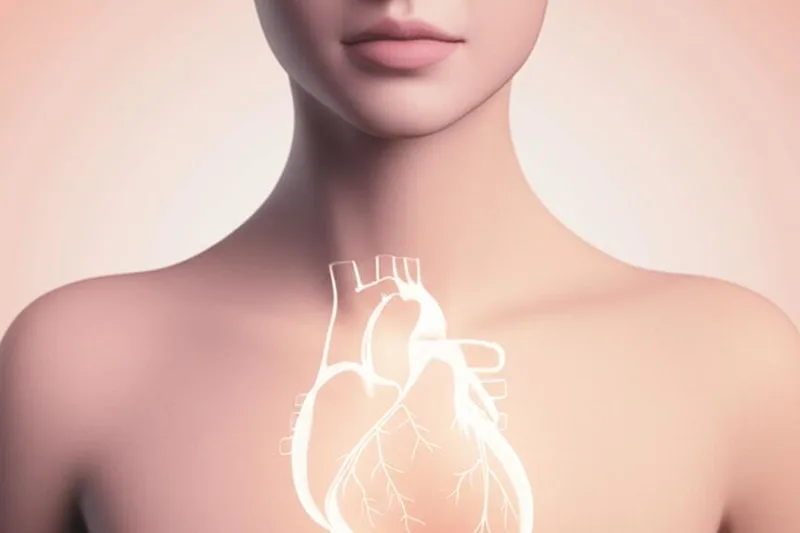
Have you ever thought about this little engine that works day and night from inside your chest? Yes, I'm talking about your heart. It's like a little motor that gives life to your entire body. So, today, let's talk a little more about this amazing organ called the heart? Are you ready to take this journey?
What is the heart? Let's understand it simply!
The heart is, simply put, a fist-sized organ. It is the main pump that pumps blood throughout your body. Just like a water pump pumps water into a tank, the heart pumps blood throughout your body. It is the main organ of your circulatory system. It is a small but very strong organ, made up of muscle and other tissues.
Your heart has four main chambers . These are like little rooms. Blood is stored in these chambers for a while before it moves forward. The heart starts beating with electrical impulses. Like a small electric current. Your brain and nervous system control the heart's function.
What are the main functions of the heart? Why is this so important?
This little heart does more than you think. Look...
- Pumping blood: This is the main thing. It carries blood throughout the body. This blood is what supplies oxygen and nutrients to every cell in your body. It also carries carbon dioxide and other waste products out of the cells and delivers them to other organs where they can be eliminated.
- Heart rate control: The heart itself controls the rate and rhythm of your heartbeat.
- Maintaining blood pressure: The heart also helps keep your blood pressure at a normal level.
The heart doesn't do this work alone. It works in conjunction with other systems to do these things:
- Nervous system: The nervous system sends signals to slow down your heart rate when you are at rest and to increase your heart rate when you are anxious or stressed.
- Endocrine system: This system releases chemicals called hormones . These hormones cause blood vessels to constrict or dilate. This affects blood pressure. For example, hormones from your thyroid gland can also increase or decrease your heart rate.
What are the parts of the heart? It's like the parts of a house!
Think of the heart as a small house. Just like the parts of a house, the heart also has parts.
- Walls: Like the walls of a house.
- Chambers: Like rooms in a house.
- Valves: Like doors to rooms, they can open and close.
- Blood vessels: Like the water pipe system in a house.
- Electrical conduction system: Similar to the wiring system that supplies electricity to a home.
Now let's look at each of these parts in a little more detail.
Heart Walls
These are the muscles that help the heart contract and relax. This contraction and relaxation allows blood to flow throughout the body. The walls of the heart are divided into right and left sides by a muscular tissue called the septum .
There are three main layers of the heart wall:
- Endocardium: The innermost layer.
- Myocardium: The thick, muscular layer in the middle. This is the heart's main pumping function.
- Epicardium: The outermost protective layer.
This `(Epicardium)` is one layer of the protective sac called the pericardium that surrounds the heart. This `(pericardium)` produces a fluid to lubricate the heart. It stops the heart from hitting other organs.
Heart Chambers
As I said before, the heart has four main chambers. Two on top and two on the bottom. These chambers are located on the right and left sides of the heart.
- Right atrium: Oxygen-poor blood enters this chamber through two large veins. The superior vena cava brings blood from the upper parts of the body. The inferior vena cava brings blood from the lower parts of the body. The right atrium then pumps this blood into the right ventricle.
- Right ventricle: This chamber, located on the lower right side of the heart, sends oxygen-poor blood to the lungs through the pulmonary artery . It is in the lungs that this blood is reoxygenated.
- Left atrium: Oxygenated blood from the lungs enters the left atrium through the pulmonary veins . This chamber, located on the upper left side of the heart, pumps blood into the left ventricle.
- Left ventricle: This is slightly larger than the right ventricle because it is where oxygenated blood is pumped to the entire body.
Heart Valves
These are like the doors between the chambers of the heart. These valves open and close to allow blood to flow in only one direction. These valves also stop blood from flowing backward.
There are two main types of valves:
- Atrioventricular (AV) valves: These are located between the upper atria and the lower ventricles.
- Tricuspid valve: The door between the right atrium and the right ventricle.
- Mitral valve: The door between the left atrium and the left ventricle.
- Semilunar (SL) valves: These valves open when blood flows out of the ventricles.
- Aortic valve: Opens as blood from the left ventricle enters the aorta (the main artery that carries oxygenated blood to the body).
- Pulmonary valve: Opens when blood from the right ventricle enters the pulmonary arteries (the only type of artery that carries oxygen-poor blood to the lungs).
Blood Vessels
The heart pumps blood through three main types of blood vessels:
- Arteries: Carry oxygenated blood from the heart to the body's tissues. The only exception is the pulmonary arteries to the lungs - they carry oxygen-poor blood.
- Veins: Bring oxygen-poor blood back to the heart.
- Capillaries: These are very fine blood vessels. Oxygenated blood and oxygenated blood exchange in these capillaries.
Coronary Arteries
The heart also needs nourishment to function. The heart receives nourishment from this network of coronary arteries . These arteries run along the surface of the heart. These are the arteries that serve the heart itself.
- Left coronary artery: This divides into two branches: the circumflex artery and the left anterior descending artery (LAD).
- Circumflex artery: Supplies blood to the left atrium and the sides and back of the left ventricle.
- Left anterior descending artery (LAD): Supplies blood to the front and lower parts of the left ventricle and the front of the heart septum.
- Right coronary artery (RCA): Supplies blood to the right atrium, right ventricle, lower part of the left ventricle, and the posterior part of the heart.
Electrical Conduction System
This is like the wiring system in a house. The rhythm and speed of the heartbeat are controlled by this system. The signals start at the top of the heart and go down.
- Sinoatrial (SA) node: The signals that cause the heart to beat begin here. This is why it is called the heart's "natural pacemaker."
- Atrioventricular (AV) node: Conducts electrical signals from the upper chambers of the heart to the lower chambers.
- Left bundle branch: Sends electrical impulses to the left ventricle.
- Right bundle branch: Sends electrical impulses to the right ventricle.
- Bundle of His: Sends impulses from the (AV) node to the Purkinje fibers.
- Purkinje fibers: These fibers cause the heart cells to contract and pump blood out.
Where is your heart located?
Your heart is located in the front of your chest. To be precise, it's located slightly behind and to the left of the sternum (breastbone) in the middle of your chest.
The heart is located slightly higher on the left side of the body, between the right and left lungs. The left lung is slightly smaller because it has to accommodate the heart in the left side of the chest. Your rib cage protects the heart.
What does the heart look like? How big is it?
The heart looks like an inverted pyramid with rounded edges. Large blood vessels enter and leave the heart. These connect the heart to the rest of the body, supplying it with blood and oxygen.
Everyone's heart is a little different. On average, your heart is about the size of your fist . An adult's heart weighs about 10 ounces (about 280 grams) . This weight can vary depending on your size and gender.
What are the common diseases that affect the heart?
Heart disease is a very common condition. In some countries, it is the leading cause of death.
Here are some common conditions that affect the heart:
- Heartbeat irregularities (Arrhythmia): A heart beat that is too fast, too slow, or has an irregular rhythm.
- Cardiomyopathy: Abnormal thickening, enlargement, or stiffness of the heart muscle.
- Congestive heart failure: The heart becomes so stiff or weak that it cannot pump blood properly.
- Coronary artery disease: Fatty deposits (plaque) in the coronary arteries narrowing them.
- Diabetes: Blood sugar levels higher than normal.
- Heart attack / myocardial infarction: A sudden blockage of a coronary artery, depriving part of the heart muscle of oxygen.
- Heart valve disease: A heart valve that does not work properly.
- High blood pressure: Blood pushes hard against the walls of the arteries.
- High cholesterol: Increased levels of fats in the blood.
- Pericarditis: Inflammation of the pericardium, the sac that covers the heart.
What are the common symptoms of heart disease? Be aware of these!
Heart disease can cause symptoms like:
- Chest pain.
- Heart palpitations.
- Dizziness.
- Shortness of breath.
- Fatigue.
- Swelling in your lower body, especially your legs and ankles.
Important: If you have one or more of these symptoms, it is very important to seek medical advice immediately. Sometimes these can be a sign of a serious condition.
What are the common tests that check heart health?
Doctors do various tests to see if your heart is healthy.
- Blood pressure measurement.
- ECG (Electrocardiogram - EKG): A test that looks at the electrical activity of the heart.
- Echocardiogram: Like an ultrasound scan of the heart. It can look at the shape, size, chambers, and function of the valves.
- Chest X-ray.
- Blood tests: Check things like cholesterol and sugar levels.
- Cardiac catheterization: A test to look for blockages in the heart arteries.
- CT scan `(Computed tomography - CT scan)`.
- Heart MRI (magnetic resonance imaging) .
- Stress test: This tests how the heart works during exercise.
What are the common treatments for heart disease?
There are many ways to treat heart disease, depending on the nature of the disease.
- Medications: Such as medications to lower blood pressure and prevent blood clotting.
- Lifestyle changes: Changing things like what you eat and drink, and how much exercise you do.
- Medical devices: For example, devices like a pacemaker.
- Procedures: Things like `(Catheter ablation)` or `(angioplasty)` (opening the arteries).
- Surgery: Like coronary artery bypass surgery or valve replacement surgery.
How can I keep my heart healthy? You can do this yourself!
If you already have heart disease, follow your doctor's treatment plan exactly. It is very important to take your medication at the right time and in the right amount.
In addition, you can make these lifestyle changes to keep your heart healthy:
- Maintain a healthy weight that suits you.
- Limit alcohol consumption (if you do, drink very little).
- Eat heart-healthy foods: Eat more fruits, vegetables, legumes, and whole grains.
- Be physically active for at least 150 minutes a week. (Exercise)
- Reduce the amount of salt (sodium) added to food.
- Manage stress: Use healthy methods like meditation and journaling.
- Quit smoking and using other tobacco products completely. Avoid secondhand smoke. If you smoke, see a doctor for help quitting.
What should I ask the doctor about my heart?
When you see your doctor, you can ask questions like these:
- How does my family history of disease affect my heart health?
- What should I do to lower my blood pressure?
- How does my cholesterol level affect my heart?
- What are the symptoms of a heart attack?
- What kind of food should I eat to prevent heart disease?
Finally, things to remember (Take-Home Message)
As the main organ of your circulatory system, your heart is what keeps you alive. It pumps blood throughout your body, bringing oxygen to your cells and tissues. Because the heart plays such an important role, it's important to take good care of it. Although heart conditions are common, you can make changes to keep your heart strong. Ask your doctor about how you can improve your heart health. Your heart, your life! Take care of it!
` Heart, heart disease, heart health, blood circulation, heart attack, heart function, healthy heart


💬 Comments (0)
No comments yet. Be the first to share your thoughts here.
Add Your Comment