

Today we are going to talk about a very important organ in our body. That is the kidneys. You may have heard about the kidneys, but do you know exactly how complex their work is and how much it affects our health? Let's talk about all this simply, in a way that you can understand.
What are kidneys?
Simply put, the kidneys are a pair of bean-shaped organs that filter and clean your blood. They are a major part of your urinary system.
Imagine, your kidneys filter about 200 liters of fluid per day. That's enough to fill a large bathtub! In this process, the kidneys remove waste products, which are excreted from the body as urine. Most people excrete about two liters of urine per day. The other 198 liters of fluid are reabsorbed back into the body.
The kidneys also help maintain a balance of fluids (mostly water) and electrolytes in your body. These electrolytes are essential minerals like sodium and potassium.
Who is at higher risk of developing kidney problems?
People with diabetes or high blood pressure are at the highest risk of developing kidney problems. In addition, accidents, car accidents, and sports injuries can also cause kidney damage.
What really happens to the kidneys?
Your kidneys perform many important functions. The most important is to filter toxins and waste products from the blood. These include nitrogenous waste products (urea), muscle waste products (creatinine), and acids. Think of it this way: about half a cup of blood is filtered through the kidneys every minute.
This is how this process happens:
- Blood flows to the kidneys through a large blood vessel called the renal artery.
- This blood is then filtered through very fine blood vessels in the kidneys.
- The blood that has been filtered in this way returns to your circulatory system through another large blood vessel called the renal vein.
- The urine that is produced travels through muscular tubes called ureters to the bladder. The bladder stores urine until you urinate.
Other things that happen with the kidneys include:
- It controls the acid-base balance (pH balance) of your blood.
- If there is not enough sugar in the blood, sugar (glucose) is made.
- It produces a protein called renin, which increases blood pressure.
- It produces two hormones called calcitriol and erythropoietin. Calcitriol is a form of vitamin D that helps the body absorb calcium. Erythropoietin helps the body make red blood cells.
On top of each kidney is an adrenal gland. This produces hormones like cortisol. Cortisol is a hormone that helps your body respond to stress.
Cortisol is also involved in:
- Controls metabolism.
- Reduces inflammation.
- Regulates blood pressure.
- Increases blood sugar levels.
How do my kidneys filter blood?
Each kidney contains more than a million filtering units called nephrons. A nephron is made up of these parts:
- Glomeruli : These are structures made up of many very fine blood vessels. The first stage of blood filtration occurs here. The filtered material is then sent to the renal tubules. This process is called glomerular filtration.
- Renal tubules : These tiny tubes reabsorb water, nutrients, and minerals like sodium and potassium. Excess acids and waste products, including water, are removed by a process called diffusion. The remaining waste products are passed through the collecting ducts of the kidneys and are eventually excreted from the body as urine.
Is it possible to live with one kidney?
Yes, you can live with just one kidney . Sometimes, doctors remove one kidney in a ``radical nephrectomy`` surgery for conditions like cancer.
These factors may influence someone to have only one kidney:
- Having one kidney removed due to cancer or injury.
- Donating a kidney to another person for a kidney transplant.
- Renal agenesis is the presence of only one kidney at birth.
- Born with two kidneys, only one is functional (kidney dysplasia).
Where are your kidneys located?
Your kidneys are located below your rib cage, behind your stomach . They are usually located on either side of your back. They are located between your intestines and the diaphragm. Each kidney is connected to your bladder by a ureter.
What are the main parts of a kidney?
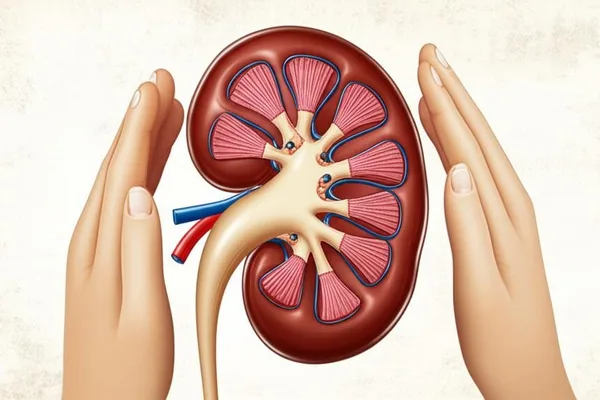
Your kidneys are a very complex organ with many parts. Here are some of the main parts of the kidney anatomy:
- Kidney capsule : This is a connective tissue or fatty tissue that covers the kidneys. It protects the kidneys from injury, increases their stability, and connects them to the surrounding tissues.
- Renal artery : This is the large blood vessel that controls blood flow to the kidneys. At rest, most people's kidneys pump a little over 5 cups (1.2 liters) of blood per minute.
- Renal cortex : This is the outermost layer of the kidney. The nephrons (blood-filtering units) begin here. The renal cortex also produces a hormone called erythropoietin (EPO). This helps the bone marrow make red blood cells.
- Renal medulla : This is the inner part of the kidney. It contains most of the nephrons, along with the glomeruli and renal tubules. The renal tubules carry urine to a place called the renal pelvis.
- Renal papilla : These pyramid-shaped structures send urine into the ureters. Dehydration and some medications, especially nonsteroidal anti-inflammatory drugs (NSAIDs), can damage these renal papillae.
- Renal pelvis : This funnel-shaped structure collects urine and sends it down the ureters. The urine travels through the ureters to the bladder, where it is stored.
- Renal vein : This vein is the main blood vessel that carries filtered blood from the kidneys back to the heart. Each kidney has a renal vein.
Let's learn a little about the color, size, and weight of the kidneys.
Your kidneys are reddish-brown in color . Each kidney is about 4 to 5 inches long, about the size of a clenched fist .
The weight of each kidney varies from person to person. This can vary depending on things like your height, weight, age, body mass index (BMI), and where you live.
- If you are male, the right kidney can weigh from 79 grams (about 1/5 pound) to 223 grams (a little over 1/2 pound). The left kidney can weigh from 74 grams (a little under 1/5 pound) to 235 grams (a little over 1/2 pound).
- If you are a woman, the right kidney can weigh from 55 grams (a little over 1/10 pound) to 274 grams (about 3/5 pounds). The left kidney can weigh from 67 grams (about 3/20 pounds) to 261 grams (a little under 3/5 pounds).
What are the causes of kidney damage?
Your kidneys perform a very important function in your body. So, they can be affected by a variety of medical conditions. Here are some common conditions that affect the kidneys:
- Chronic kidney disease (CKD) : This condition can cause the kidneys to stop working properly. CKD is usually caused by diabetes or high blood pressure.
- Kidney cancer : Renal cell carcinoma is the most common type of kidney cancer.
- Kidney failure / renal failure : Kidney failure can come on suddenly (acute) or can be a long-term decrease in kidney function (chronic). End-stage renal disease is when the kidneys have completely stopped working. This requires dialysis (a treatment that filters the blood instead of the kidneys).
- Kidney infection (pyelonephritis) : Kidney infections can occur when bacteria travel up the urinary tract and enter the kidneys. These infections cause sudden symptoms. Doctors treat them with antibiotics.
- Kidney stones : Kidney stones are crystals that form in the urine and can block the flow of urine. Sometimes these stones pass on their own. Otherwise, doctors can treat them by breaking them up or removing them.
- Kidney cysts : These are fluid-filled sacs that form in the kidneys. These cysts can damage the kidneys. Doctors can remove them.
- Polycystic kidney disease (PKD) : This condition causes many cysts to form in the kidneys. PKD is a genetic condition. It can cause high blood pressure and kidney failure. People with PKD need regular medical supervision.
Apart from this, many other medical conditions can affect the kidneys. Some of them are:
- Acidosis : Excess acid builds up in the kidneys, which can cause many health problems and can even be life-threatening.
- Acute or interstitial nephritis : After exposure to certain antibiotics, the kidneys may become inflamed and eventually fail.
- Azotemia : Nitrogenous wastes accumulate in the kidneys. If left untreated, it can be fatal.
- Caliectasis : Excess fluid causes the calyces (where urine begins to collect) to swell. If left untreated, it can lead to kidney failure.
- Diabetes-related nephropathy or hypertensive nephropathy : Kidney damage occurs due to uncontrolled diabetes or long-term high blood pressure.
- Glomerular diseases : These diseases cause inflammation or damage to the glomeruli, which can lead to kidney failure.
- Minimal change disease and nephrotic syndrome : These conditions cause excess protein to be excreted from the kidneys in the urine.
- Papillary necrosis : Pieces of kidney tissue die in the medulla and papilla. This tissue can rupture and block the kidney, causing kidney failure.
- Proteinuria : This means that your kidneys have high levels of protein. This can be a sign of kidney damage.
- Pyelonephritis : This is a sudden kidney infection that causes swelling (edema) in the kidneys. It can be life-threatening.
- Uremia : Toxins that are normally excreted in urine accumulate in the blood. If left untreated, it can be fatal.
What are the first signs of kidney problems?
Many kidney problems don't show any major symptoms in the early stages. As kidney damage progresses, you may notice things like:
- Cramping muscles : Muscles become stiff due to electrolyte imbalances.
- Dark-colored urine or bloody urine : When the filters in the kidneys are damaged, blood cells leak into the urine.
- Foamy urine : If there are bubbles in the urine, it could be a sign of excess protein.
- Itchy, dry skin : The skin becomes itchy due to an imbalance of minerals and nutrients in the blood.
- Frequent urination : Problems with waste filtration can cause you to need to urinate frequently.
- Swelling around the eyes or swelling in the ankles and feet : When kidney function decreases, the body can retain protein and sodium, which causes swelling.
- Insomnia, fatigue, and loss of appetite : If toxins build up in the blood, your sleep, appetite, and energy levels may change.
What are the common tests done to check the health of my kidneys?
Doctors use several tests to measure kidney function and detect kidney problems. Your doctor may recommend tests like these:
- Advanced imaging : X-rays, CT scans, MRIs, ultrasounds, or nuclear medicine images can show abnormalities or blockages in the kidneys.
- Blood tests : Blood tests show how well your glomeruli are filtering blood.
- Kidney biopsy : In a kidney biopsy, the doctor takes a small sample of your kidney tissue and examines it under a microscope.
- Ureteroscopy : The doctor passes a tube (an endoscope) through your urethra into your bladder and ureters to check for abnormalities.
- Urinalysis : A urinalysis analyzes your urine. It measures specific substances, such as protein or blood.
How can I keep my kidneys healthy?
It's important to have regular medical checkups and blood and urine tests to monitor the health of your kidneys. You can do the following to reduce your risk of developing kidney problems:
- Stop or avoid smoking and using tobacco products (your doctor can help you find ways to quit).
- Reduce excessive salt consumption , as this can affect the mineral balance in the blood.
- Drink plenty of water .
- Increase daily exercise , this can reduce high blood pressure.
- Limit the use of non-steroidal anti-inflammatory drugs (NSAIDs) , as taking too much of these can damage the kidneys.
- Maintain a healthy weight .
- Monitor your blood pressure levels .
- If you have diabetes, take care of your blood sugar levels .
Is drinking a lot of water good for the kidneys?
Yes, drinking enough water is very good for your kidneys . Water helps your kidneys flush out toxins and waste products through urine. It also helps keep your blood vessels healthy, which allows your blood to carry nutrients to your kidneys more easily.
Also, drinking plenty of water is a good idea to prevent kidney stones and urinary tract infections (UTIs). When your kidneys have enough water, you are less likely to develop kidney stones. When you drink a lot of water, you are also less likely to develop UTIs because you urinate more often. This is because when you urinate, the bacteria that cause UTIs are washed out.
"Generally, you can tell whether you're drinking enough water by the color of your urine. If you're drinking enough water, your urine should be light yellow or clear. If you're dehydrated, your urine will be dark yellow."
How much water should I drink to keep my kidneys healthy?
On average, men should drink about 13 cups (3 liters) of water per day. Women should drink about 9 cups (a little over 2 liters) of water per day.
Is it possible to drink too much water? What happens if you do?
Yes, it is possible to drink too much water. If you do, you may develop a condition called water intoxication or hyponatremia (primary polydipsia). If left untreated, these conditions can lead to seizures, coma, altered mental status, and even death.
Is this kidney pain or back pain? How do you know?
People get confused between kidney pain and back pain because they sound similar. Okay, let's see how to understand this.
Back pain usually occurs in your lower back area.
Kidney pain is felt deep inside the body, in the upper back . You will often feel the pain on either side, in the middle to upper back area (often under the ribs, on the right or left side of the back). This pain may also spread to other areas, such as the abdomen or groin area.
Kidney pain is caused by swelling or blockage in the kidneys or urinary tract. Symptoms include fever, nausea, vomiting, and pain when urinating.
When should I talk to a doctor about my kidneys?
Kidney conditions can cause different symptoms. If your kidneys are not working properly, you may experience one or more of the following symptoms:
- Changes in urine or urination habits (such as going to the bathroom more often).
- Confusion or difficulty concentrating.
- Dry or itchy skin.
- Severe fatigue.
- High blood pressure (hypertension).
- Muscle twitches.
- Loss of appetite or a metallic taste in food.
- Stomach pain or vomiting.
- Swelling, especially around the hands or ankles.
If you have any of these conditions, you should have your kidney function checked regularly:
- If anyone in the family has a history of kidney disease.
- Diabetes.
- Heart disease.
- High blood pressure.
- Obesity or overweight.
- If you regularly use certain medications, such as blood pressure medication.
So, the final take-home message:
So, now you know that the kidneys are two small but vital organs in our body. From purifying the blood, to balancing the body's fluid levels, mineral salts, and hormone production, these two kidneys help with a lot of very important things.
Therefore, it is very important to keep your kidneys healthy . You can take care of your kidneys by doing simple things like drinking plenty of water, reducing salt intake, exercising, and avoiding smoking.
If you are at risk of developing kidney disease, or if you have any of the symptoms mentioned above, it is best to see a doctor without being shy or afraid . Remember, early detection can cure many diseases!
"Just as your kidneys will take care of you throughout your life, you should take care of them with love!"
` Kidneys, kidney diseases, healthy kidneys, urinary system, blood purification, kidney function, kidney health




💬 Comments (0)
No comments yet. Be the first to share your thoughts here.
Add Your Comment