
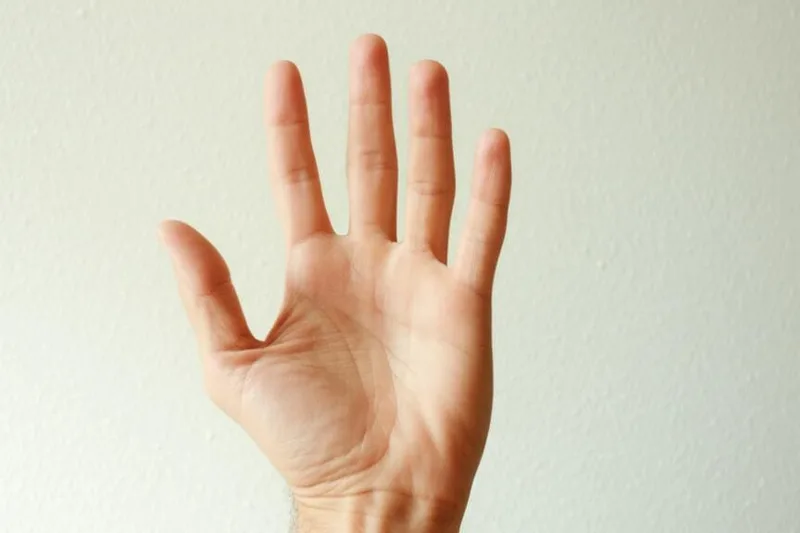
Today we are going to talk about some of the discomforts we feel in our hands, wrists, or fingers. Have you ever felt numbness, pain, or some strange sensation in your hands? It is normal to feel a little scared when this happens. But when we know exactly what causes these things, it is easier for us to face them. So today we are going to talk about an important nerve in our body that can affect the occurrence of such symptoms, namely the median nerve .
What is this median nerve? What does it do?
Simply put, your median nerve is a major nerve that helps your lower arm, wrist, hand, and fingers function properly, as well as providing sensation to those areas. Think of it this way, the part of your arm from the elbow down is what we call your forearm. So, the movement and sensation of your forearm, wrist, hand, and several fingers are controlled by this median nerve.
To be precise, this nerve allows you to do the following things:
- This nerve is what allows you to bend and extend your wrist, thumb, index finger, middle finger, and part of your ring finger .
- This is what helps you turn your forehead and palms down (like turning your hand from face to face).
Not only that, but things like touch, pain, and heat are also felt through this nerve. Specifically:
- This provides sensation to the palmar side of your thumb, index finger, middle finger, and ring finger .
- Your forehead is feeling itchy.
- The sensation is coming to the thumb side of your hand .
- This median nerve provides sensation to the nail side of the index and middle fingers (to be precise, where the nail is located).
Just think, how important this nerve is when you grab something, write, or lift a cup!
Where exactly is the median nerve located?
This median nerve is a bit of a complicated journey. It starts in your armpit. You may have heard of a nerve network called the brachial plexus . This is a complex system of nerves that run from our neck down to our arms. This is what allows our shoulders and arms to move and feel. So, the median nerve is a major branch of this brachial plexus.
The brachial plexus is made up of nerve roots from the C5 to C8 vertebrae in your neck, the cervical spine, and the T1 vertebra in your upper chest . The median nerve starts in the brachial plexus and travels behind your collarbone (also called your collarbone), through your armpit.
There are two median nerves in our body, one on the left side and one on the right side. This nerve starts in the armpit:
- On the inside of your upper arm, between the tendons of your bicep and triceps muscles, runs alongside your main arm artery, the brachial artery.
- And then this is a triangular space in front of your elbow, we call it the cubital fossa , and it goes under a band of connective tissue called the bicipital aponeurosis .
- It travels along your forearm with the ulnar nerve , dividing into smaller nerve branches.
- Finally, it passes through your wrist and into your hand through a small tunnel called the carpal tunnel . Inside this carpal tunnel is the median nerve and a small tendon that flexes your fingers.
See, this is like a mini highway inside our hands!
What are the main branches of the median nerve?
This median nerve doesn't just run straight. It branches off into smaller branches to perform different functions. We can mainly talk about three branches:
- Deep - volar interosseous branch: This controls the deep muscles in the front of your forearm.
- Muscular branch: This controls the movements of the muscles that are close to the skin of your forehead, that is, on the surface.
- Palmar branch: This sends and receives sensory information to your palm, thumb, and several other fingers.
All of these branches work together to help you accurately perform the fine movements and sensations in your hand.
What are the diseases and conditions that affect the median nerve?
Sometimes this median nerve can become compressed or pressured. When this happens, we call it nerve entrapment or neuropathy . There are several conditions that can occur due to this type of nerve compression. Let's see what they are.
- Carpal Tunnel Syndrome: This is the most common condition that many people suffer from. I mentioned earlier that the carpal tunnel is a passageway through the wrist. When the tissue inside this tunnel becomes inflamed, it compresses the median nerve, which runs through it. This is when symptoms such as finger pain, wrist pain, and numbness occur.
You know, sometimes this condition is common among people who work on the computer for a long time or who do repetitive manual tasks. Some housewives can also experience this discomfort while doing things like wringing clothes or washing dishes.
- Anterior interosseous nerve syndrome: This occurs when the anterior interosseous nerve, a branch of the median nerve that controls movement, is damaged. This can cause weakness or numbness in your thumb and index finger. You may not be able to grip something properly.
- Pronator teres syndrome: This condition is caused by the pronator teres muscle, which is located near your elbow, compressing the median nerve. It is characterized by a dull, aching pain in the forearm.
There are many reasons why this condition can occur. This may include prolonged strenuous work, certain accidents, or other medical conditions (such as diabetes mellitus or thyroid disorders).
How do you know if you have a problem with the median nerve? What are the symptoms?
Okay, now you're probably thinking, "I don't know if I have something like this." So let's take a look at some of the common symptoms that can occur when the median nerve is pinched or has a problem with it.
- Pain, numbness, tingling, or a tingling sensation in the hand or wrist .
- Waking up from sleep due to pain in the hand, especially at night . Many people say that when they go to sleep at night, their hand becomes numb and painful, and then they wake up with a thud, and then they have to move their hand to get it back.
- Feeling pain, burning, or numbness in your forehead .
- Difficulty holding something, writing, or using the computer keyboard . Sometimes things in your hand may simply fall to the floor.
- Feeling pain when you touch a spot on your elbow or forehead .
- A rare condition is loss of muscle at the base of the big toe . This is a more serious condition.
If you have one or more of these symptoms, don't ignore them. Because it's easier to treat if identified early.
When should I see a doctor?
If you have one or more of these symptoms that last for several days, seem to be getting worse, or are affecting your daily activities to the point where you can't do your daily activities, you should definitely see a doctor . Especially if:
- If you have difficulty lifting or holding something .
- If you have pain, numbness, or weakness in your wrist, thumb, or other fingers .
- If you have difficulty performing simple everyday tasks like buttoning your shirt or combing your hair .
- If you have pain in your elbow, forearm, or wrist for no reason .
The doctor will examine you and, if necessary, conduct further investigations to find out exactly what kind of condition you have. They will then give you a treatment plan that suits you. These conditions may be treated with medication, physiotherapy exercises, or in some cases, even minor surgery.
Remember, you don't have to live with this pain. You can get help.
So, what did we learn from this? (Take-Home Message)
You probably now understand that the median nerve we talked about today is essential for the function and sensation of our hand, wrist, and fingers.
- If pressure is placed on this nerve, nerve compression conditions such as ``Carpal Tunnel Syndrome'' can occur.
- The pain, numbness, and weakness that this causes can have a major impact on your daily life.
- Therefore, do not ignore symptoms like these.
- If you feel unwell, seek medical advice . They can diagnose your condition and provide the necessary treatment to relieve your symptoms.
So, take care of your body. Because health is the greatest wealth!
` Median Nerve, Numbness in the Hand, Carpal Tunnel Syndrome, Nerve Disorders, Hand Pain, Wrist Pain


💬 Comments (0)
No comments yet. Be the first to share your thoughts here.
Add Your Comment