

Hello! Today we are going to talk about a very amazing and very important part of our body. That is a network of tiny blood vessels inside our kidneys. We call these peritubular capillaries . Although the name is a little complicated, the work these do is very big, like the silent servants of our body.
What are these peritubular capillaries? What do they do?
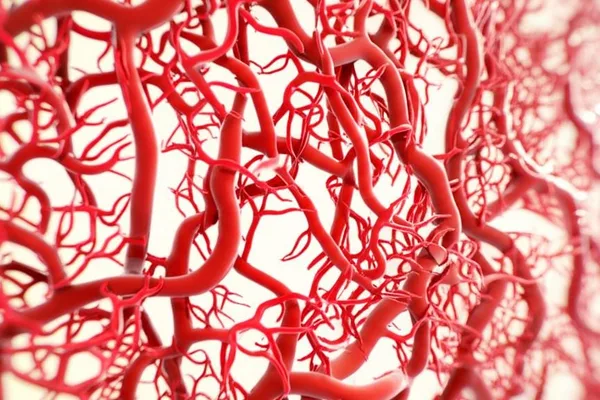
Simply put, these `(Peritubular Capillaries)` are a system of very fine blood vessels, not even as thick as a hair in your kidneys. The word ``peritubular`` means ``around the small channels.'' So these veins are located around a system of small channels in the kidneys. Think of them as vines wrapped around these channels.
Now let's see what the main tasks of these little friends are:
1. Elimination of waste: One of their main jobs is to help our urinary system and eliminate unwanted waste from the body. This waste is what ultimately comes out when you urinate (pee).
- Urea: This is a nitrogenous waste product that is produced when our bodies break down proteins.
- Creatinine: This is a waste product that comes from our muscles.
- Acids: Extra acids that accumulate in the body are also removed through this process.
These ``Peritubular Capillaries`` help to carry these waste products and extra water from the body through the filtering units ``Nephrons`` in the kidneys.
2. Reabsorption of nutrients: These ``Peritubular Capillaries`` are what absorb the nutrients our body needs and needs to function back into the blood. Think of it like taking valuable things back in instead of throwing them out with the garbage.
- Amino acids
- Minerals
- Blood sugar (glucose)
3. Supplying blood and oxygen: Another important function of these `(Peritubular Capillaries)` is to supply blood and oxygen to the cells in the tubular system of the kidneys.
Where exactly are these `(Peritubular Capillaries)`?
Now let's see where exactly these are. Did you know, in one of our kidneys, there are about a million units called nephrons . A nephron is like a tiny filter unit in the kidney. It's like a water filter in our house, but much more complex.
Each nephron has a glomerulus (when there are many of these, they are called glomeruli) that filters the blood, and a system of channels that reabsorbs the filtered substances back into the body. Around those channels is a network of peritubular capillaries. It's like the streets in a city are lined with shops.
What do these `(Peritubular Capillaries)` look like?
These `(Peritubular Capillaries)` are so small that we can't see them with our eyes. We have to look at them with a `(microscope) .` These are a very special type of blood vessel. These are called `(fenestrated)` blood vessels. That means, these blood vessel walls have very small holes `(pores) .` Like a filter.
These holes are what allow fluids, minerals, and waste products to move easily between these veins and the surrounding tissue. Each hole has a thin membrane . It opens and closes, allowing even large particles to pass through. Isn't this an amazing design?
How do the Peritubular Capillaries receive blood?
Now let's see how blood gets into these `(Peritubular Capillaries)` and how it leaves again. This happens in a very orderly manner, like a well-designed traffic system:
1. First, blood comes to the kidneys through large blood vessels called the renal arteries .
2. These large arteries divide into smaller blood vessels called afferent arterioles . These are the ones that carry blood to the nephrons.
3. Then, the blood is filtered by the glomerulus inside the nephron.
4. The filtered blood passes through another series of fine veins called 'Efferent arterioles' before entering our protagonist, the 'Peritubular Capillaries'.
5. Blood leaves the peritubular capillaries, passes through gradually larger veins, and finally exits the kidney through the main renal vein .
Although it may seem very complicated, this is a very systematic and wonderful process, isn't it?
What are the common diseases and conditions that affect `(Peritubular Capillaries)`?
Well, what kind of diseases can damage the ``Peritubular Capillaries'' that perform such an important function? The sad thing is, even these tiny veins can have problems.
Some health conditions, diseases, especially inflammation and scarring, can damage these delicate veins. When this damage occurs, the density of these veins decreases. This is called peritubular capillary rarefaction . Simply put, the number of veins decreases and their function becomes impaired.
These damaged `(Peritubular Capillaries)` have a very low ability to recover. So, this `(Peritubular capillary rarefaction)` condition contributes greatly to the development of serious conditions like Chronic Kidney Disease (CKD)` and High Blood Pressure `(Hypertension ). These are very common diseases. If left untreated, kidney disease can progress to kidney failure . Therefore, it is very important to be aware of this.
Other conditions that can cause or accompany kidney disease include:
- Glomerular diseases, for example, Glomerulonephritis.
- Kidney infection.
- Ureteral obstruction.
What are the common characteristics of conditions associated with `(Peritubular Capillaries)`?
Now you might be wondering, if there is something wrong with these `(Peritubular Capillaries)`, what are the signs that we can know about it. Sometimes these conditions can be present without any symptoms . That is the most dangerous thing. However, if symptoms appear, you may see things like this:
- Flank pain.
- Fever.
- Nausea and vomiting.
- Feeling very tired and exhausted `(Fatigue)`.
- A change in your urination habits. This means:
- Frequent urination is the need to urinate frequently.
- Difficulty urinating.
- Blood in the urine (hematuria) .
- Or pain when urinating (dysuria) .
- Urine appears cloudy.
- Swelling (edema) , especially in the legs and ankles.
- Recurrent urinary tract infections (UTIs).
If you have one or more of these symptoms, it is best to seek medical advice.
What are the common tests that check the health of the `(Peritubular Capillaries)`?
If your doctor suspects there is a problem with these ``Peritubular Capillaries'', he or she may recommend several tests, such as:
Kidney function tests
This may include:
- A urine test (urinalysis) .
- Blood tests. For example:
- The 'Blood Urea Nitrogen' (BUN) test .
- 'Creatinine clearance test' (`(Creatinine clearance test)`) .
- Tests that measure the 'estimated Glomerular Filtration Rate' (eGFR) .
Imaging tests
These are painless tests that allow you to see inside the body:
- CT scan (`(CT scan - Computed Tomography scan)`) .
- MRI (Magnetic Resonance Imaging) test.
- Kidney ultrasound examination (`(Kidney (renal) ultrasound)`) .
These tests can give a good idea of the condition of the kidneys.
How do we keep these `(Peritubular Capillaries)` healthy?
Okay, so how do we keep these tiny but very important ``Peritubular Capillaries'' healthy? The good news is, there are things we can do.
Sometimes it can be difficult to prevent further damage to these veins. However, by taking care of your overall health , you can reduce your risk of kidney problems and other diseases. Here are some things you can do to help:
- Eat a healthy diet every day. Fruits, vegetables, and clean water are the kidneys' best friends. Drink plenty of water when you feel thirsty.
- If you have chronic diseases like Diabetes Mellitus and Hypertension, control them well and follow your doctor's instructions exactly.
- Maintain a healthy weight that suits you.
- If you smoke, quit today . Smoking and other tobacco products damage your blood vessels and cause vascular disease (vasculopathy) .
The most important thing we need to take home from this story!
You probably understand now how important these tiny ``Peritubular Capillaries'' inside our kidneys are. They are essential to keeping our bodies healthy. They help filter waste products from the blood and reabsorb nutrients needed by the body.
Your kidneys have millions of these tiny capillaries. Just like these tiny capillaries, we need to take care of our overall health to keep every other part of our body functioning properly.
Remember: drink plenty of water, eat a nutritious diet, get regular medical checkups, and maintain a healthy weight for you. Then these little friends will happily do their job, and you will be healthy too!
` Kidney, peritubular capillaries, blood vessels, nephrons, kidney diseases, urinary system, health




💬 Comments (0)
No comments yet. Be the first to share your thoughts here.
Add Your Comment