
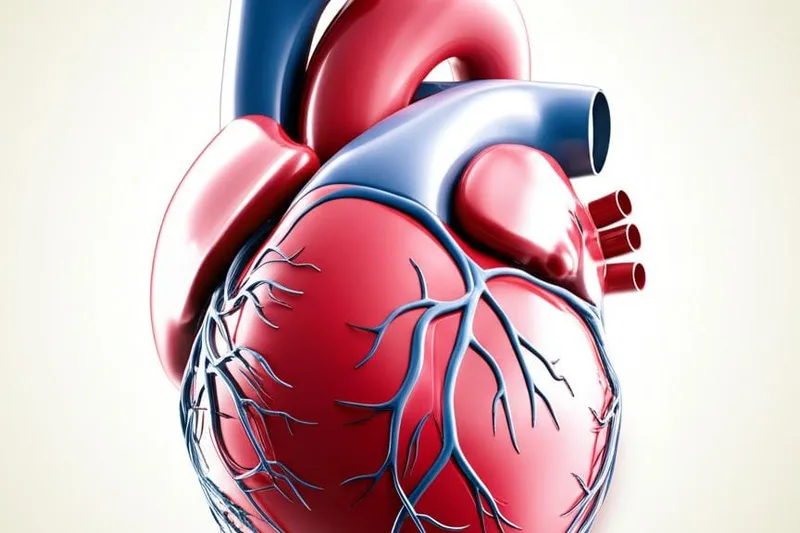
Today we are going to talk about a very important and, although it may seem a little complicated, very simple to understand part of our body. That is the (Ascending Aorta) . Simply put, this is the first part of the main blood vessel, the (Aorta) , that starts from our heart and distributes blood to the whole body. It is like the piece that is set in the main pipeline that brings water from a water tank to the house. So, let's see what this (Ascending Aorta) is, what happens to it, what kind of diseases it can cause, and how to keep it healthy.
What is (Ascending Aorta)? What does it cause?
Imagine that our body is like a big city. Every house, every shop, every place in this city needs water. In the same way, every cell in our body needs clean, oxygen-filled blood. Who pumps this blood throughout the body? Our heart. The blood that the heart pumps is carried throughout the body by the main, largest blood vessel (Aorta) , or great aorta.
Now this (Aorta) has several parts.
1. (Ascending Aorta): This is the part that goes up as it exits the main blood-pumping chamber called the Left Ventricle on the left side of the heart. This is our protagonist today.
2. (Aortic Arch): Then this tube bends upwards like the handle of a stick. It is called (Aortic Arch).
3. (Descending Aorta): Then this tube goes down, through the chest, through the abdomen. That part is called the (Descending Aorta).
So, the main function of the (Ascending Aorta) is to take the oxygen-rich blood pumped by the heart and start distributing it to the (Aortic Arch) and from there to the entire body. In particular, the two very important blood vessels called the Coronary Arteries that supply blood to the heart start from this (Ascending Aorta). Imagine, a water pump also needs some water to work, that's how it works.
Where is this (Ascending Aorta) located? How does it look?
This (Ascending Aorta) is located in our chest, specifically the large bone in the middle of the chest, behind the (Sternum) , to the left of the heart. It is directly connected to the (Left Ventricle) of the heart and extends upwards.
In terms of appearance, the entire aorta looks like a single small rod. The ascending aorta is the shortest part of the rod that starts near the heart and goes up. The aortic arch is the part that bends like the handle of the rod.
The Ascending Aorta is usually between 5 and 8 centimeters (about 2 to 3 inches) long and about 3 to 4 centimeters wide. It gradually decreases in width as it moves down the chest.
What are the parts of the Ascending Aorta? How is it formed?
The entire aorta is divided into two main parts: the thoracic aorta and the abdominal aorta . The thoracic aorta is formed by the ascending aorta, the aortic arch, and the descending aorta.
The Ascending Aorta begins near the Aortic Heart Valve, which is located behind the Left Ventricle. This Aortic Valve is like a door. It opens and closes to allow blood to flow from the Left Ventricle into the Aorta. The Ascending Aorta ends just before the Brachiocephalic Artery, the first major branch that branches off the Aortic Arch.
The Ascending Aorta has two main parts:
1. (Aortic Root): This is the root of the (Ascending Aorta), the part closest to the (Aortic Valve). Inside this are small bulb-like cavities called (Aortic Sinuses) . These are where the right and left (Coronary Arteries) (arteries that supply blood to the heart) begin. This is also where the (Sinotubular Junction - STJ) is located. The STJ is where the (Ascending Aorta) becomes a normal tube.
2. Tubular (Ascending Aorta): This begins after the STJ and continues up to the Aortic Arch. No other blood vessel branches off from this part.
Like the other parts of the aorta, the ascending aorta is made up of three layers of tissue. Think of it like a pipe, with three layers:
- (Tunica Intima): This is the innermost layer. Blood flows through this.
- (Media): This is the middle layer. It has many elastic fibers. These allow the (Aorta) to contract and stretch according to blood pressure. However, over time, these fibers can become weak and the wall can become thinner.
- (Adventitia): This is the outermost layer. It contains tiny blood vessels that supply nourishment to the wall of the (Aorta).
Simply put, the Ascending Aorta is a very important, strong 'piece of pipe' that first receives blood from the heart and begins to send it throughout the body.
What diseases affect the Ascending Aorta?
Unfortunately, this very important part can also develop various diseases. Let's see what the main ones are:
- Aortic Aneurysms: This is a very common problem. An aneurysm is a weakening of the wall of a blood vessel, causing it to bulge like a balloon. More than 50% of aortic aneurysms in the chest occur in the ascending aorta. They can occur in either the aortic root or the tubular ascending aorta. Aortic aneurysms are life-threatening conditions. This is because the aneurysm can cause tears in the layers of the blood vessel – a condition called aortic dissection . Or, if it ruptures completely, severe bleeding can occur inside the body. This is an emergency.
- (Aortic Valve Stenosis): Although the (Aortic Valve) is not part of the (Ascending Aorta), it is connected to the inner side of the (Ascending Aorta) wall. (Aortic Stenosis) is a narrowing of the (Aortic Valve) between the (Aortic Root) and the (Left Ventricle). Then the heart has to work harder to pump blood into the (Aorta). This can cause the heart muscle to enlarge.
- (Aortic Valve Regurgitation): This occurs when the (Aortic Valve) does not close properly. Then, instead of going forward into the (Aorta), blood leaks back into the (Left Ventricle). This causes the heart to pump more blood than normal. Over time, the heart can become weak. (Aortic Valve Regurgitation) can also occur due to the (Ascending Aorta) becoming dilated.
- Bicuspid Aortic Valve (BAV): Some people are born with two leaflets in their aortic valve instead of three. People with this type of valve are at increased risk of developing ascending aortic aneurysms. BAV can often cause aortic stenosis, aortic regurgitation, or both.
- Connective Tissue Diseases: People with diseases like (Marfan Syndrome) , (Loeys-Dietz Syndrome) , and (Ehlers-Danlos Syndrome) can develop problems like (Aneurysms) because the wall of the (Aorta) can become weak.
- Inflammatory Disorders: Conditions such as Giant Cell Arteritis and Penetrating Atherosclerotic Ulcers can also damage the wall of the aorta.
Although these symptoms may seem a bit scary, they can be controlled if identified early and treated properly .
How can I keep my Ascending Aorta healthy?
The same things you do to keep your heart and circulatory system healthy are also good for the health of the Ascending Aorta.
- Eat a healthy, balanced diet: Eat foods that are low in sodium (salt), cholesterol, and saturated fats. Eat more fruits, vegetables, whole grains, and fiber.
- Exercise regularly: Do something like walking, running, or swimming for at least 30 minutes a day. It strengthens the heart and controls blood pressure.
- Quit smoking and tobacco products completely: Smoking is a major enemy of blood vessels. It weakens the wall of the aorta and increases the risk of aneurysms.
- Reduce or stop alcohol consumption: Excessive alcohol consumption can also increase blood pressure and damage the heart and blood vessels.
- Get regular medical checkups: It is very important to get regular checkups as directed by your doctor, especially if you have problems like high blood pressure, cholesterol, diabetes, or if someone in your family has had aortic problems.
When should I see a doctor?
If you have been diagnosed with Ascending Aortic Syndrome or another heart condition, see your doctor immediately if you develop new symptoms or if your existing symptoms worsen.
Also, if you experience one or more of the following symptoms, it could be a sign of an aneurysm bursting and you should seek emergency medical attention immediately:
- Dizziness or fainting (fainting).
- Rapid heartbeat.
- Severe pain in the chest or upper back.
- Difficulty breathing.
Don't ignore symptoms like these. Getting treatment early can save a life.
Take-Home Message
The ascending aorta is the first part of the largest blood vessel in our body, the aorta. It connects to the heart and plays a very important role in helping to distribute oxygenated blood pumped by the heart to the entire body.
Some problems with the Ascending Aorta, such as a ruptured aneurysm, can be life-threatening. So, if someone in your family has a history of heart disease, or if you are over 65, talk to your doctor about ways to reduce your risk of developing problems with the Ascending Aorta. The best way to protect yourself is to live a healthy lifestyle. Take care of your heart, because it keeps you alive!
` Ascending aorta, aorta, heart disease, blood vessels, aortic aneurysm, heart health, heart


💬 Comments (0)
No comments yet. Be the first to share your thoughts here.
Add Your Comment