

We all do a lot of work with our hands every day, don't we? From holding small objects to lifting heavy weights, our hands help us. So, do you really know about the arm muscles that help these hands do so many things and give them strength? These muscles do a lot more than you might think. Let's talk about them in a little more detail today.
What are arm muscles? Why are they important to us?
Simply put, there are more than twenty muscles in your upper arm (from your shoulder to your elbow) and your lower arm (from your elbow to your wrist). Isn't that amazing? These muscles help us perform very fine motor movements . Think of things like wiggling your fingertips or buttoning a shirt. They're also essential for larger movements like extending your elbow, raising your arms above your head, and doing push-ups.
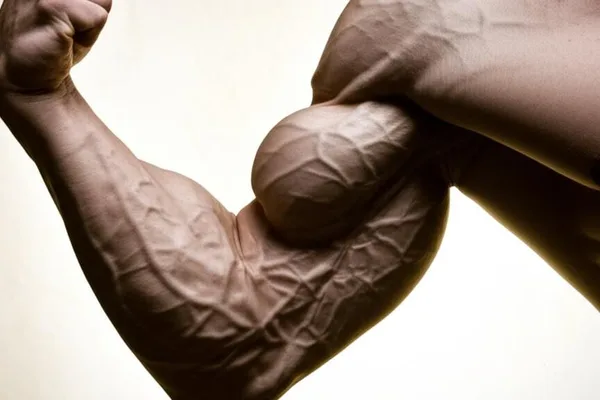
Some muscles are deep inside your arm. Others are closer to the skin, so you can see their shape when you flex them. These muscles are attached to the bones in your arm and shoulder by soft tissues called tendons .
We often hear about muscle strains in the arm . These occur when a muscle is overstretched or torn. This often happens from overuse or lifting a weight that is too heavy. Therefore, it is very important to warm up before exercising and stop as soon as you feel pain.
What really happens to the muscles in the arm?
The muscles in our upper and lower arms help us move our hands, palms, fingers, and thumbs. Some muscles help with very fine tasks, like threading a needle. Others help with large movements, like throwing a ball.
What happens to the muscles of the lower arm?
The muscles on both the top and bottom of your forearm (from your elbow to your wrist) are responsible for:
- It helps to bend and extend your wrists and fingers.
- It helps you move your arm to the side and away from the body.
- Helps to turn the hand under the palm.
The muscles deep inside the forearm also have a special function:
- You control the joints on your fingers.
- The thumb joint is moving.
- Helps turn the palm up or down.
What happens to the upper arm muscles?
The muscles in your upper arm (from your shoulder to your elbow) help you move your entire arm. What they do depends on where they are located. These muscles do the following:
- Helps to pull the arm to the side.
- The elbow helps to extend the forearm.
- It helps to bend your arm at the elbow (like touching your ear).
- The upper part of the upper arm is moved from the shoulder to the elbow.
- Helps to raise the arm above the head.
- Helps turn the hand palm up.
Where exactly are the muscles of the forearm located?
As we mentioned before, there are a lot of muscles in the forearm (from the elbow to the wrist). Some are on the top, some are on the bottom. Let's see what they are.
Superficial forearm muscles
There are several muscles on the underside of your forearm, close to the skin. Most of them start below the elbow and run all the way down to the wrist. They are:
- `Flexor carpi ulnaris`
- `Palmaris longus` (This muscle is only 25% absent in humans)
- `Flexor carpi radialis`
- ``Flexor digitorum superficialis''
- `Pronator teres`
These are the superficial muscles on the upper side of the forearm:
- `Anconeus`
- `Brachioradialis`
- `Extensor carpi radialis longus` and `brevis`
- `Extensor digitorum communis`
- `Extensor digiti minimi`
- `Extensor carpi ulnaris`
Deep forearm muscles
These muscles are located on the underside of the forearm, just below the superficial muscles mentioned earlier. They are:
- `Flexor digitorum profundus`
- `Flexor pollicis longus`
- `Pronator quadratus`
These are the muscles located deep under the skin on the upper side of the forearm:
- `Abductor pollicis longus`
- `Extensor pollicis brevis`
- `Extensor pollicis longus`
- `Extensor indicis`
- `Supinator`
Now you probably understand how much muscle mass we have in our lower arms!
Where are the muscles of the upper arm located?
There are four main muscles in your upper arm, that is, in the area between your shoulder and elbow. They are:
- `Biceps brachii` : This is the most famous muscle in the middle of your upper arm. We call it the "biceps." This is a superficial muscle that is close to the skin.
- `Brachialis` : This is located deep under the `Biceps` muscle.
- `Coracobrachialis` : This is also a muscle located under the `Biceps`. It is connected to your shoulder bone (`scapula`).
- `Triceps brachii` : This muscle is located on the back of the arm, just above the elbow. It is called the "triceps". Like the `biceps`, it is also a muscle located under the skin.
What do arm muscles really look like?
The muscles in your hand are part of your musculoskeletal system . They belong to a type of muscle called skeletal muscle . These skeletal muscles are made up of many very fine fibers. These fibers are bundled together, giving them a striated appearance.
What diseases and conditions affect the muscles of the hand?
There are several conditions that can affect the muscles of the hand:
- Muscle strain : This condition occurs when the fibers of a muscle are stretched too much. In some severe cases, the muscle can even rupture. You can pull a muscle in your hand while lifting a heavy object or engaging in strenuous activity. These are very common. They can also be caused by overuse.
- `Rhabdomyolysis` : This is a rare but potentially life-threatening condition. It is a breakdown of muscle fibers. `Rhabdomyolysis` (also known as rhabdo) is usually caused by overexertion and strenuous exercise. It is most common in people like long-distance runners.
What are the common symptoms of these conditions?
If you have a problem with your hand muscles, you may experience symptoms like:
- Muscle pain , stiffness, and stiffness. The pain can be sharp or dull. It can start small and gradually increase.
- Muscle weakness or decreased range of motion.
- Muscle spasms or cramps.
- A bruised feeling in the hand or a feeling of pain when pressed.
How does a doctor detect these?
Doctors can usually diagnose muscle strains through a physical examination. Your doctor will look for swelling and tenderness. They may also move your hand and fingers.
To see exactly if there is damage to the muscles, tendons, or other soft tissues, the doctor may order an imaging study, such as an ultrasound or MRI scan. These can help make an accurate diagnosis.
What are the treatments for hand muscle disorders?
Depending on the location and severity of the injury, your doctor may suggest treatments such as:
- Acupuncture : Dry needling and acupuncture can help reduce both acute and chronic pain caused by muscle injuries. These treatments can also speed up the healing process.
- Massage therapy : Massage can help relieve muscle strain. It can also reduce pain and increase flexibility and range of motion.
- Medications : The doctor may prescribe over-the-counter or prescription painkillers, such as nonsteroidal anti-inflammatory drugs (NSAIDs) , to relieve pain and reduce swelling.
- The `RICE` method : For minor muscle strains and sprains, the `RICE` method, which stands for `Rest, Ice, Compression, and Elevation`, can help. Applying ice or something cold for about 20 minutes can help reduce pain. Ask your doctor about this and do it right.
- Physical therapy (PT) : Whether after a muscle strain or a sprain, a physical therapy program can help strengthen the muscles in your hand. Your doctor will tell you when to start PT after an injury.
- Stretching : Gentle stretching exercises can help reduce the pain and stiffness that comes with a pulled muscle. Ask your doctor what types of stretches you should do.
- Surgery : If a muscle is severely torn, the doctor may recommend surgery.
Remember, it is best to consult with your doctor to determine whether these treatments are right for your condition.
How to keep your arm muscles healthy?
To prevent problems with your arm muscles, it is important to stretch and warm up before using them. Once you have warmed up, your muscles will not be as easily pulled or torn. When exercising, increase the intensity gradually rather than starting too hard. Don't lift weights that you can't handle, and stop if you feel pain.
When do you need to see a doctor?
See a doctor if you notice a sudden change in the appearance of your hand, or if you have muscle pain or weakness that doesn't go away after a few days. Also, see a doctor immediately if you have any of the following along with your muscle pain:
- If your hand feels numb or tingling.
- If you have severe muscle weakness.
- If the muscles are swollen.
- If your urine is very dark, red, or brown.
Remember this as a summary.
The muscles in our hands help us move our arms, hands, fingers, and thumbs. There are many muscles in the upper and lower arms. They help us make large movements, like swinging a baseball bat, and fine, precise movements, like writing your name. To prevent injury, warm up before exercising. Don't lift weights that you can't lift. See a doctor if you have muscle swelling, severe pain, numbness, or tingling.
` Hand Muscles, Arm Muscles, Muscle Strain, Hand Pain, Exercise, Physical Therapy, Rhabdomyolysis




💬 Comments (0)
No comments yet. Be the first to share your thoughts here.
Add Your Comment