

Have you ever wondered if there are little warriors inside our bodies that do a great job of protecting us from diseases? Well, neutrophils are a very important part of our bodies. In this article, we will talk about what exactly neutrophils are and how valuable they are to our bodies.
What are neutrophils? Why are they so important to us?
Simply put, neutrophils are a type of white blood cell . You know that our blood contains both red blood cells and white blood cells (Leukocytes). Among those white blood cells are these neutrophils. These are like the first line of defense in our body. If an infection or disease tries to enter the body, these neutrophils are the first to run and fight it.
These neutrophils belong to a type of white blood cell called ``Granulocytes.'' This means that they have small granules inside their cells. These granules contain various chemicals that help fight germs.
Although white blood cells make up about 1% of the cells in our blood, the majority of those white blood cells are neutrophils. This means that neutrophils play a big role in keeping us healthy . Doctors can tell a lot about your health by looking at your neutrophil levels.
What exactly do neutrophils do inside our bodies?
Neutrophils are a very important and indispensable part of our immune system . Their main job is to fight infections.
Think of your immune system as a military commander, the one who leads the body's defenses. It is always ready to protect us from enemies like `(Bacteria)` (Bacteria), `(Viruses)` (Viruses), `(Fungi)` (Fungi) who are trying to enter the body. And these white blood cells, especially neutrophils, are like soldiers patrolling our blood vessels and tissues. They are always looking for danger, for an enemy somewhere.
When an infection occurs, neutrophils are the first to rush to the scene . They're like the first police team to arrive. They grab the germs, the microorganisms like bacteria, and destroy them. In this way, they neutralize the enemy. This is when we sometimes get redness and swelling around a wound. This means that there's a battle going on inside the body. During that battle, neutrophils also start to repair damaged tissue.
Imagine, when you cut your finger, the area around the wound becomes red, maybe a little swollen, and feels warm, right? That's when your neutrophils get there and start working!
Where are these neutrophils produced in our body? Where are they located?
Neutrophils are produced and grow in our bone marrow . Bone marrow is the soft part inside our large bones. It's like a factory, where many of these blood cells are produced.
Once they are fully developed and mature, neutrophils leave the bone marrow and enter our blood. They then travel throughout the body with the blood. Not only that, but these neutrophils are also found in our tissues and lymph nodes. Lymph nodes are those little lumps in your neck and armpits. You may have noticed that they swell when you have an infection.
What does a neutrophil look like? What are its special features?
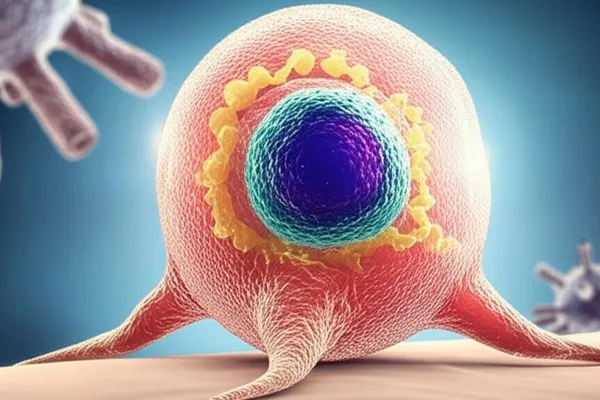
Neutrophils are actually colorless, transparent cells . So when doctors look at them under a microscope, they add a special dye to make them visible. That's when they get a color and become visible.
Normally, when they're at rest, that is, when they're not fighting, a neutrophil is spherical, like a small marble. But when they have to fight an infection, they can change their shape . This is a very amazing ability. This ability to change shape is what allows them to escape from the bloodstream and quickly travel to the site of the infection.
How many neutrophils are there in our body?
Neutrophils are the most common type of white blood cell in our bodies. Imagine, between 55% and 70% of your total white blood cells, that is, more than half, are neutrophils.
These neutrophils have a very short lifespan. They live for less than 24 hours. This means that our bodies are constantly making new neutrophils. It is said that a healthy adult produces more than 100 billion neutrophils per day! Isn't that an incredible number? Because they are produced and die so quickly, it is as if our bodies are constantly preparing a new army for battle.
What are the diseases associated with neutrophils?
For our bodies to function properly, the number of these neutrophils needs to be within a certain range. That is, a certain amount. If this number decreases or increases, various health problems can occur.
- A decrease in the number of neutrophils is called neutropenia.
- An increase in the number of neutrophils is called neutrophilia.
Decrease in the number of neutrophils - Neutropenia
If your neutrophil count is low, which is called neutropenia, your body's ability to fight disease is reduced. You may get infections more often. Sometimes, even a small infection can become serious. There are many reasons for this. Some medications, vitamin deficiencies, bone marrow problems, and some types of cancer can cause a low neutrophil count.
Neutrophilia - Increased number of neutrophils
An increase in the number of neutrophils, a condition called neutrophilia, usually indicates that your body is fighting an infection. It can also be caused by stress, injury, certain medications, smoking, and some types of leukemia.
How do we know exactly what the normal neutrophil level is?
A blood test can tell you exactly how many neutrophils you have in your blood. This is called the ``Absolute Neutrophil Count - ANC'' test. Normally, a healthy adult should have between 2,500 and 7,000 neutrophils per microliter of blood. If this number is higher than 7,000 or lower than 2,500, it indicates that there may be a problem with the neutrophils. Then the doctor will do more tests to find out what the cause is. A blood test called the ``Complete Blood Count - CBC'' can also give you an idea of the number of neutrophils.
What are the symptoms of a deficiency or problem with neutrophils?
Whether your neutrophil levels are low or high, you may experience some symptoms. It's best to see a doctor if you experience any of these:
- Frequent fatigue
- Frequent fever
- Recurrent infections (for example, frequent throat infections, lung infections, skin infections)
- Swollen lymph nodes or joints
- Non-healing wounds (especially those in the mouth or around the anus)
If you have these symptoms, your doctor will examine you and do blood tests, especially the CBC and ANC, to check your neutrophil levels. Depending on the results, they may do further tests to find the underlying cause.
So, what should we do to keep these precious neutrophils healthy? (Take-Home Message)
Now you know how important neutrophils are to our body's defenses. They are the first line of defense against infections and injuries. So it's our responsibility to keep these little soldiers healthy.
Okay then, what should we do?
- Stay clean: Regular hand washing with soap and clean food and drink can go a long way in preventing infections from entering the body. This will also prevent neutrophils from having to fight unnecessarily.
- If you get injured or infected, seek immediate treatment: Clean even a small wound thoroughly and apply medication if necessary. If you have any signs of infection (such as fever, swelling, pain), seek medical advice immediately. This will allow the neutrophils to do their job more easily.
- Eat a well-balanced, nutritious diet: Eating foods rich in vitamins and minerals (vegetables, fruits, legumes, grains) strengthens our entire immune system. It is also very good for neutrophils.
Remember, every step we take to stay healthy is a great help to our immune system, especially our neutrophils!
So, think about these silent workers in your body and try to keep them healthy. Then you too can be healthy and happy!
` Neutrophils, white blood cells, immune system, infections, neutropenia, neutrophilia, blood tests




💬 Comments (0)
No comments yet. Be the first to share your thoughts here.
Add Your Comment