

Do you sometimes feel dizzy,
What is this `(Videonystagmography - VNG)`? Simply put...
Okay, now let's see what this `(VNG)` test is. Simply put, it checks your eye movements . Specifically, it checks if you have a condition called `(Nystagmus)`. `(Nystagmus)` is when our eyes move rapidly and slowly up and down or side to side without our control.
Think about it, if you suddenly turn your head to one side, your eyes might move a little. That's normal. But, if your eyes move uncontrollably like this even when you're just standing still, or for a long time , it could be a sign that there might be something wrong with the vestibular system in our inner ear, which is responsible for balance.
When is this `(VNG)` test required?
If you have one or more of the symptoms below, your doctor may suggest that you have a VNG test. This is because these symptoms can be caused by problems with the inner ear.
- Balance problems: Like difficulty standing, feeling unsteady when walking.
- Dizziness: A feeling of spinning or spinning in the head.
- Pressure or fullness in the ear: A feeling of heaviness, as if something is stuck in the ear.
- Lightheadedness : Feeling very light-headed and fainting.
- Tinnitus: A continuous ringing or buzzing sound in the ears , without anyone else present.
- Vertigo: This is similar to vertigo, but it is a more severe condition that feels like things around you are spinning rapidly.
If you have something like this, it's definitely best to seek medical advice.
What does the `(VNG)` test find?
Doctors use this ``(VNG)`` test to diagnose various conditions related to balance in the inner ear. Here are a few examples:
- Acoustic neuroma: This is a non-cancerous tumor that develops on a nerve inside the ear.
- Benign Paroxysmal Positional Vertigo (BPPV): This is a condition that affects many people and causes sudden dizziness when they move their head from side to side. Labyrinthitis: An infection or inflammation of the labyrinth in the inner ear.
- Ménière's disease: This can cause symptoms such as vertigo, ringing in the ears, and hearing loss.
- Vestibular neuritis: An inflammatory condition of the nerve involved in balance.
Remember, just because you have these symptoms doesn't mean you have these diseases. Tests like `(VNG)` are done to find out for sure.
What is the difference between `(VNG)` and `(ENG)` tests?
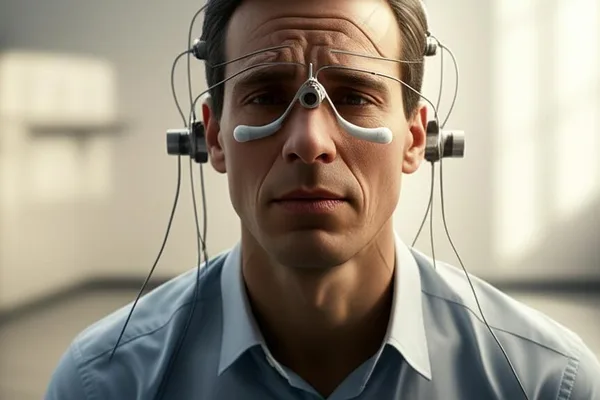
You may have heard of a test called `(ENG)` or `(Electronystagmography)`. The `(VNG)` test uses a special set of glasses and a set of infrared cameras . However, the `(ENG)` test involves placing several small electrodes around your eyes.
Both of these tests provide the doctor with similar information about the functioning of your inner ear nerves (vestibular nerve) and balance system. VNG is a relatively new technique.
Who is doing this `(VNG)` test?
There are several specialist doctors who can perform this test.
- Audiologists: People who specialize in diseases related to hearing and balance.
- Otolaryngologists: As the name suggests, these are the people who treat diseases related to the ear, nose, and throat.
- Neurologists: Specialists in diseases related to the brain and nervous system.
The doctor will refer you to someone based on your symptoms.
How does this `(VNG)` test work?
During the VNG test, you will be placed in a chair in a dark room . You will then be asked to wear a special pair of goggles . These goggles have a camera inside them that can record your eye movements.
Then, the doctor or technician will tell you to look at lights on a TV screen, or to move your head and body in different positions . Sometimes, they may also send a stream of hot or cold water or a stream of air into your ears . While you do all this, they will record your eye movements through the mirror. That is, they will watch how your eyes respond to these ``stimuli``.
Do you need to prepare in advance for the `(VNG)` test?
Usually, no special preparation is needed. However, your doctor will give you some special instructions about it.
The most important thing is to tell your doctor about all the medications you are taking (both those prescribed by your doctor and those you buy from the pharmacy), vitamins, and supplements . You may be asked to stop taking some medications a few days before the test, so it is important to inform your doctor in advance.
What should you expect during the `(VNG)` test?
On the day of the test, after you sit in the room as instructed and put on the glasses, the doctor will take you through the three main parts of the test.
1. Ocular testing: This involves keeping your head still and looking at different dots or lights on a screen . This means tracking the way your eyes follow the lights.
2. Positional testing: Here, the doctor will ask you to turn your head or body into different positions . For example, lying on a bed and turning to one side, or lowering your head.
3. Caloric testing: This is where a stream of hot or cold water or air is sent into your ears as mentioned above . This should usually cause the eye movement called ``Nystagmus''. This may be a bit of a strange experience, but it is an important part of the test.
The complete `(VNG)` test usually takes about 60 minutes, which is about an hour .
What happens after the `(VNG)` test?
You may feel a little dizzy during and after the test. This is normal. Most of the time, this will go away quickly. However, if the dizziness persists, it is best to have someone drive you home . Therefore, it is wise to have someone with you when you go.
What do the results of the `(VNG)` test say?
If your eyes don't move as expected during the `(VNG)` test, it can suggest a problem with your inner ear or balance system . Depending on your results, your doctor may order more tests or start treatment right away.
Is the `(VNG)` test difficult? Does it hurt?
To be honest, the `(VNG)` test is not very painful . However, you may feel a little discomfort. This is especially true when water/air is put in your ear during the caloric test, and when you feel a little dizzy after the test. Also, you may feel a little discomfort when you wear those glasses for a long time.
But don't worry, all of these discomforts will go away soon . The doctors and staff will tell you more about this and reassure you.
Remember the most important thing (Take-Home Message)
Videonystagmography (VNG) is an important test that checks eye movements related to your inner ear's balance system (vestibular system). Your doctor may recommend this test if you have frequent tinnitus, dizziness, or balance problems.
If your eyes don't move as expected during the test, it could be a problem with your inner ear or balance. This is not a very painful test, so there's no need to worry. The most important thing is to talk openly with your doctor about your symptoms and follow their instructions. Only then can you find the exact cause and start the necessary treatment.
` Videonystagmography, VNG test, vertigo, eye movement, nystagmus, inner ear diseases, balance test




💬 Comments (0)
No comments yet. Be the first to share your thoughts here.
Add Your Comment