
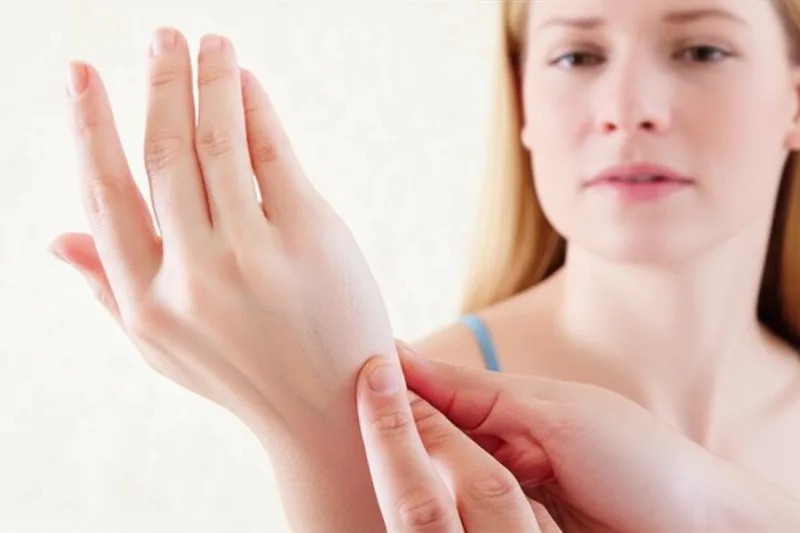
Sometimes we feel numbness in one of our hands or feet, like a tickling sensation, right? Sometimes this can just be a symptom, but sometimes it can be due to a problem with a nerve inside our body. In such cases, there is a simple test that doctors use, which is called Tinel's Sign . Shall we talk a little about this today?
What is Tinel's Sign?
Simply put, Tinel's Sign is a "tingling" or "pins and needles" sensation that you feel when your doctor gently taps on your skin where a nerve runs. It feels like a slight tickle, like an electric shock . This sensation can be a sign that the nerve in the area being tapped is either pinched or damaged.
What exactly are you looking for in this?
This test (Tinel's Sign) is used by doctors to assess whether a nerve has been damaged or irritated in a specific area. That is, the purpose of this test is to try to find out if the nerve in that area is being compressed in some way or if its function is being impaired.
Are there other names? Who invented this?
Yes, sometimes doctors call it the Hoffmann-Tinel sign . Both names come from the names of the two people who first described the sign in 1915. They were physiologist Paul Hoffmann and neurologist Jules Tinel. So the name is used in honor of them.
When do doctors use this (Tinel's Sign) test?
If a doctor suspects nerve damage or nerve irritation, they may perform this test (Tinel's Sign). If you have persistent numbness, pain, or weakness in a certain area, this can help determine if it's due to a nerve problem.
Let's look at some examples?
There are several situations where this (Tinel's Sign) sign is useful. Let's see what they are:
- Carpal Tunnel Syndrome: You may have heard of this. This condition occurs when the median nerve, which runs through our wrist, is compressed. This can cause numbness, pain, and sometimes loss of strength in the hand and fingers. Imagine, someone who types on a computer all day or does heavy manual work is likely to have this condition. Then, if the doctor taps the wrist properly and feels numbness, it could be Carpal Tunnel Syndrome.
- Cubital Tunnel Syndrome: This occurs when the ulnar nerve in our elbow - some call it the "funny bone" - is damaged or compressed. This can cause numbness and pain in the hand (especially the little finger and ring finger) and fingers. Some people, who have a habit of keeping their elbows pressed against the table, or who have had an accident with their elbows, may develop this condition.
- Tarsal Tunnel Syndrome: This is when the Posterior Tibial Nerve, which runs along the inside of our ankle, becomes compressed. This can cause pain, numbness, or loss of sensation in our feet, especially the soles of our feet. Sometimes, this nerve can become compressed when we wear ill-fitting shoes or when we have an injury to our ankle.
Important: These are just a few examples. This test (Tinel's Sign) can help identify many other nerve problems.
What are the symptoms of a pinched nerve or nerve damage?
If you have a pinched or damaged nerve, you may experience one or more of these symptoms:
- Burning sensation
- Numbness or complete loss of sensation
- Pain (can be sharp or dull)
- Tingling sensation
- Weakness in the relevant area, that is, a decrease in strength.
If you have these symptoms, don't just wait for them to go away. It's best to see a doctor.
Who performs the Tinel's Sign test?
Any healthcare provider who suspects a pinched nerve, whether it's your family doctor or a specialist, can perform this test (Tinel's Sign). It's very simple.
Do you need to prepare for this test in advance?
No, there is no need for any special preparation. You can have this test done right there when you go to see your doctor as usual.
What happens before the test?
The doctor will first ask you a complete description of your symptoms. For example, where you have numbness, when you feel it the most, and what kind of activities make it worse. Then, as part of the physical examination, this (Tinel's Sign) is checked.
What happens during the test?
This is a very simple procedure. The doctor will gently tap the area of your skin where they think the nerve is, using their finger or a small hammer. The doctor will ask you how you feel when they tap. This is not painful, so there is no need to be afraid.
What do the test results say?
- A positive result: If you feel a tingling or prickling sensation when the doctor taps you, it means that there may be some damage or irritation to the nerve in that area.
- Negative result: If you do not feel any numbness when tapped, it is a negative result. However, there is an important thing to remember here. A negative result does not mean that there is no nerve compression. Sometimes, even if the nerve is compressed, this (Tinel's Sign) may not show it.
Therefore, this (Tinel's Sign) test is only an aid to the doctor in understanding your condition. A complete decision is made in conjunction with other symptoms and medical history.
What happens after the test?
Depending on the results of the Tinel's Sign test, your other symptoms, and the findings of the medical examination, your doctor may recommend several other tests. For example:
- Electromyography (EMG): This tests the electrical activity of nerves and muscles. This helps determine if there is any nerve damage and to what extent.
- MRI scan: This can clearly see the nerves and surrounding tissues. This is important to find out what is causing the nerve to be compressed (e.g. a tumor, swelling).
- X-ray: This can help to see if the nerve is being pinched by a problem with the bone (e.g., a fracture, a bone deformity).
Are there any risks with this (Tinel's Sign) test?
No, there is no risk. This is a very simple, safe test. It's just a little tapping. So don't be afraid of anything.
How long does it take to get the test results?
The best part is that you can see the results right away . You can tell right away if you feel any numbness or tingling when you tap on it. Then the doctor will talk to you and discuss what to do next.
When should I see a doctor?
If you have symptoms that suggest you have a pinched or irritated nerve (e.g., burning, numbness, weakness, persistent pain), be sure to see a doctor. Don't ignore these as simple things. Getting treatment early can help prevent the condition from getting worse.
Can I try this (Tinel's Sign) at home?
It's fair to ask this. However, it's best to have a doctor do this test. Because it takes medical knowledge to understand exactly where the nerve is, how to tap it, and the results. You can go and do it yourself and come to the wrong conclusion. So, if you have any doubts, see a doctor and get this done.
The most important things for you to remember (Take-Home Message)
Okay, so, here are the most important things you need to remember from what we've talked about today:
- Tinel's Sign is a simple, quick, and painless test that indicates nerve compression or damage.
- If you have symptoms like numbness, pain, or weakness in your limbs, don't suffer with them. Don't ignore them.
- If you experience these symptoms, see a doctor immediately to discuss your symptoms, treatment options, and ways to find relief at home.
- Remember, with early diagnosis and proper treatment, you can recover quickly.
I hope you find this information useful. Stay healthy!
` Tinel's sign, nerve compression, numbness, carpal tunnel, cubital tunnel, tarsal tunnel, nerve damage


💬 Comments (0)
No comments yet. Be the first to share your thoughts here.
Add Your Comment