
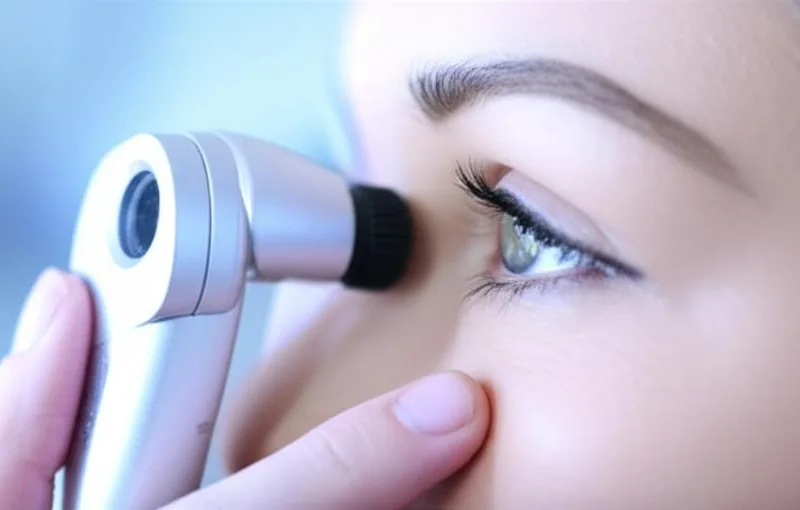
Have you ever had an eye exam? When you did, you probably had a test where you were given a small window of air or a small instrument to look at your eye. That's what we often call tonometry. This is a really important test , especially for early detection of eye conditions like glaucoma. So, let's talk about this in a little more detail today, shall we?
What is tonometry? Simply put...
Tonometry is a special eye test that measures the pressure inside your eye, called intraocular pressure . It's like checking your blood pressure, but it's specific to your eyes. It's one of the most important tests for diagnosing glaucoma. There are several ways to do this test. All of them are quick and painless.
What time is this test done?
Tonometry is most often performed by eye specialists, namely ophthalmologists and optometrists. There are several reasons for this:
- Check and diagnose glaucoma: This is the main cause. Glaucoma is a disease in which increased pressure in the eye damages the optic nerve and can lead to vision loss.
- As part of routine eye exams: If you have regular eye exams, this can be part of that checkup.
- When there are potential eye injuries or symptoms: This test can be done when something happens to the eye, or when you notice something different in your eyes than usual.
- When taking certain medications: If you are taking medication for another condition, this is also done to check if eye pressure is increasing as a side effect of that medication (ocular hypertension).
- To monitor treatment for people with glaucoma: If you already have glaucoma, this test is done regularly to see if your treatment is working and your eye pressure is controlled. Sometimes doctors recommend devices that you can use to measure your eye pressure at home.
How does this (Tonometry) test work?
Very simple. Tonometry measures the pressure in the anterior chamber of your eye. This chamber is located behind the cornea. It contains a liquid called aqueous humor. The pressure from this liquid is what keeps our eyes spherical. The unit of measurement for this pressure is millimeters of mercury (mmHg) . It's the same unit used to measure blood pressure.
Now let's see what are the different methods of performing this test.
What are the different tonometry methods?
Your eye specialist can use several methods to perform this test:
- Applanation tonometry: "Applanation" means "to flatten." In this method, a small, flat, disc-like device is gently pressed against the surface of your eye. This measures how much pressure is applied before the surface of your eye begins to flatten. This is said to be the most accurate method . It is used to confirm abnormal results from other methods.
- Continuous monitoring: In this method, you wear a sensor, such as a contact lens, on your eye. Researchers are also investigating this wearable sensor, as well as a method of surgically inserting a sensor into the eye.
- Dynamic contour tonometry: These devices have a small sensor tip that touches the eye, but does not make an indentation.
- Electronic indentation tonometry: The equipment used in this method has a small probe that is touched to the surface of the eye until an indentation is created.
- Non-contact tonometry: This is what many people know as the "air puff" test. These devices direct a stream of air against the cornea of your eye. As the air hits and bounces back, they measure the tiny changes in the shape of the cornea that occur over a period of seconds. Air puff tonometers use a small puff of air, while ocular response analyzers use a stream of air.
- Rebound tonometry: In this method, a small, plastic ball-like object is rapidly brought into contact with the eye and stops as soon as it touches the surface. The device measures intraocular pressure when the ball touches the surface slowly and painlessly. Some devices that use this method may also be recommended for you to use at home.
Just think, all of these methods are designed to measure eye pressure as accurately as possible, without causing you any discomfort or pain.
How should we prepare for this?
There is usually no special preparation required for a tonometry test. The only thing you should do is not wear anything that constricts your neck (e.g. a tight collar) during the test. If possible, wear a different shirt or loosen the collar a little. The pressure around your neck from clothing can cause your intraocular pressure readings to appear slightly higher.
What should you expect when taking the test?
What you experience during a tonometry test can vary slightly depending on the method used. For example, if you are having applanation tonometry, your doctor will inject an anesthetic and a dye called fluorescein into your eyes. However, many other methods, such as non-contact tonometry, do not require either of these.
Most of the methods used take only a few seconds to perform the test. To get the best results from these quick methods, it is best to take several measurements and average them. So don't be surprised if your doctor takes several measurements or think you did something wrong. Some methods, such as applanation tonometry, can take several minutes. Your eye care professional will tell you more about what to expect during the test.
After the test?
The doctor can tell you the results as soon as the test is done.
If you have been given anesthetic eye drops, do not put anything in your eyes until the numbness wears off. The anesthetic will prevent you from feeling any pain, so you are more likely to injure your eyes while they are numb.
Does this hurt?
Tonometry is not painful , although the method used may involve some contact with your eyeball. If you feel any pain during the test, tell your eye doctor. You can also ask him or her about the pain, how long it will last, and what can be done about it.
What should the normal blood pressure level be?
For most people, a normal range is considered to be between 10 mmHg and 21 mmHg . If your results are outside this normal range, there are a few things that could be happening.
What if the results are too high?
If simple tests show that your pressure is high, your eye doctor will likely recommend an applanation tonometry test to confirm the measurement. If your pressure is still high from applanation tonometry, your doctor may monitor it closely or suggest treatment options. They may also bring you in for regular follow-up checkups.
Your eye specialist may also advise you to measure your eye pressure at home. If so, be sure to ask what to do if your readings are outside the normal range. If your readings are just a little higher than normal, you may need a follow-up with a specialist. However, if your readings are much higher than that, you may need emergency medical attention .
Important: Increased pressure in the eye due to angle-closure glaucoma is a medical emergency that requires immediate treatment. If not treated promptly, this condition can quickly lead to eye damage and permanent vision loss.
Other steps may vary depending on your specific situation and needs. Your eye care professional will tell you more about what to expect based on your situation.
What if the results are very low?
Low intraocular pressure is also a concern, as it can also damage the eye and cause vision loss. Low intraocular pressure is usually less than 5 mmHg or 6 mmHg . If your eye pressure is very low, your eye specialist will talk to you about treatment options and follow-up visits to monitor your eye health.
Can I drive the car after the test?
You may or may not be able to drive after an eye pressure test. This depends on several factors. One important factor is whether your pupils were dilated (in a typical eye exam, the pupils are dilated after a tonometry test). Dilating your eyes can make you more sensitive to light, and it may be difficult to see or read things up close. These effects usually last for a few hours.
Eye specialists often have disposable shades that you can wear after the exam (if you wear glasses, these shades can often be worn over your glasses). These shades can help you see and stay a little more comfortably by reducing the brightness and glare of the light. Many people find that they can still drive after dilating their eyes. However, if you have any doubts about whether you can drive after an eye exam, it is a good idea to consider alternative transportation options for your trip to and from your eye specialist .
Finally, things to keep in mind
Yes, you may not like the wind or the idea of holding a handheld device so close to your eyes. But there's a good reason for that. Glaucoma is a common condition, but the high pressure in the eye that causes it can usually be detected before you experience symptoms or permanent damage.
If you have high pressure in your eyes, your eye specialist is here to help. Their support may be just what you need to control the pressure inside your eyes. It can also help reduce the stress you feel about your overall eye health. Therefore, it is important to get your eyes checked regularly, without fear or laziness.
` Glaucoma, Tonometry, Eye Pressure, Eye Exam, Eye Health, Eye Disease, Ophthalmologist


💬 Comments (0)
No comments yet. Be the first to share your thoughts here.
Add Your Comment