
Are you aware of the small but powerful blood vessels (Arterioles) in our body?

Are you aware of the small but powerful blood vessels (Arterioles) in our body?
Have you ever wondered how blood travels through our bodies? In this journey that takes blood from the heart to every part of the body, there are some small but very important groups that play an invisible role. They are called `(Arterioles)`. Simply put, these are very small blood vessels. Today, we will talk about these `(Arterioles)`, the work they do, and how to keep them healthy.

What are `(Arterioles)`? Where are they located?

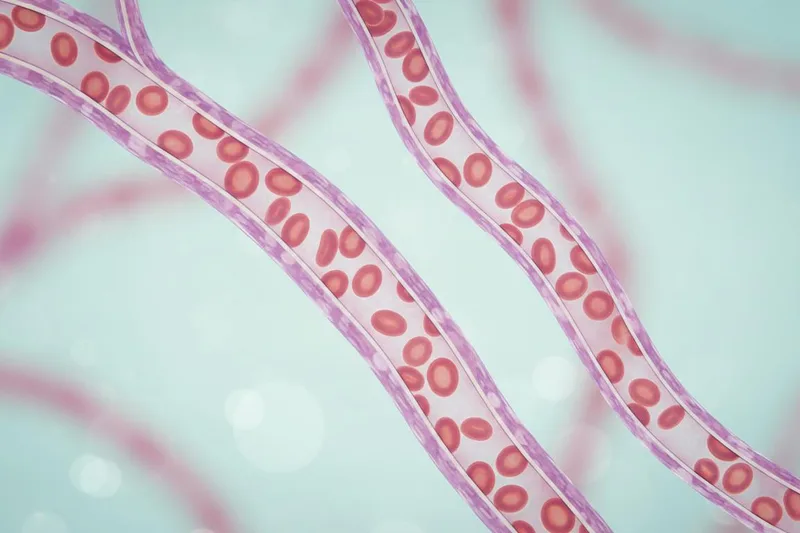
Okay, let's first see what these `(Arterioles)` (pronounced as `arterioles') are. You know that blood flows from our heart to the body through large blood vessels, that is, arteries. Those large arteries are divided into much smaller, finer blood channels, not even as thick as a hair. They are called `(Arterioles).` Just like small side roads that divide from a large road. These `(Arterioles)` are the even finer, smallest blood channels that carry blood to the `(Capillaries)`. Imagine, these `(Capillaries)` are like exchange centers. That is where the tissues and organs of our body receive the oxygen and nutrients they need from the blood, and the waste products in those tissues are returned to the blood. To help with this exchange, the smallest veins, called venules (these are the ones that carry blood back to the heart), are also connected to these capillaries. So, where are these arterioles located? Actually, everywhere in our body! Because every cell and tissue in our body needs oxygen and nutrients. Therefore, these small channels are spread throughout the body like a network. To put it simply, the diameter of arterioles is about 100 to 7 micrometers. That is, a very small value, about 0.30 to 0.01 millimeters. The thickness of the wall is about 0.02 millimeters. Although small, their work is very big.

What is the main function of these small `(Arterioles)`?

These little `(Arterioles)` do a lot more than you think. The main thing is to control blood flow and blood pressure throughout our body. Just think, these `(Arterioles)` create 80% of the resistance that occurs when blood flows through our body's blood vessel system! In other words, these little channels manage and control how fast and with what force our blood moves throughout the body, and how much blood goes to our tissues at any given time. Do you know how this happens? The walls of the `(Arterioles)` have muscles. These muscles can contract (tighten) and dilate (widen). Just like squeezing a water pipe changes the speed of the water.
  • These ``(Arterioles)`` can withstand the pressure of the blood coming from the heart.
  • They can also compress (contract) blood as it travels from the heart to other parts of the body. This is how a constant, steady blood pressure is maintained.
Another thing is that it acts as a link between the large arteries and the very small capillaries, that is, it acts like a "middle man". These "Arterioles" help to deliver oxygen and nutrients from the large arteries to the tissues through such capillaries, and to collect waste products from the tissues back through the capillaries and deliver them to the veins, called "Venules".

How do `(Arterioles)` help our other organs?

As I said before, `(Arterioles)` are found throughout the body, so they help every organ in our body. Here are some examples:
  • In our skin: Some of the `(Arterioles)` constrict and help keep blood inside the body. Then we feel less cold, and the body stays warm. Also, when the `(Arterioles)` in the skin expand (dilate), they increase blood flow to the skin and limbs. Then the heat from the body is released, and we feel cool.
  • Kidneys : The glomerulus (a small blood vessel that filters blood) in the kidneys is connected to a network of blood vessels called afferent arterioles. These can dilate, allowing more blood to be filtered. The efferent arterioles also carry blood back from the glomerulus.
  • Lungs : When the lungs are not getting enough oxygen , the arterioles there constrict. This causes blood to be diverted from areas with low oxygen levels and directed to areas of the lungs with high oxygen levels.
  • Brain: Arterioles in the brain can dilate, increasing the amount of blood flowing to the brain. This allows the brain to receive better oxygen and nutrients.

Some surprising facts about `(Arterioles)`!

There are some very surprising facts about these little ``Arterioles''.
One is that every smooth muscle cell in an arteriole has its own neuron, or nerve cell. Normally, several nerve cells come together to send signals to a bunch of muscle cells. But here, every muscle cell receives a message directly!
What this means is that if our nervous system receives a signal to enlarge or reduce the diameter of an `(Arteriole)`, it can do so very quickly and very accurately. This helps to control blood pressure and the amount of blood flow very precisely. Another amazing thing is that if the diameter of an `(Arteriole)` is reduced to half, that is, if it is folded exactly in half, the amount of blood flowing through it decreases to one-sixteenth (1/16)! This means that even a small change in diameter has a big impact on the amount of blood flow.

What are `(Arterioles)` made of?

Arterioles are not just tubes. They are flexible, thick-walled channels made of muscle. This is why they can maintain blood pressure and control the amount of blood that flows through them. They are more muscular than veins. This is because they have to contract and dilate more effectively to withstand the high blood pressure that the heart pumps and to control the flow of blood. Arterioles have three main layers: 1. Tunica intima: This is the innermost layer. It is made up of epithelial cells. This layer communicates with the muscle layer in the middle. 2. Tunica media: This is the middle layer. It contains smooth muscle cells and elastic tissue. The arterioles contract and dilate because of this layer. 3. Tunica adventitia: This is the outermost layer. It is made up of connective tissue, collagen fibers, and nerve endings.

What are the common diseases that affect `(Arterioles)`?

Arterioles are also blood vessels. So, conditions that affect our cardiovascular system can also affect arterioles. Here are some such conditions:
  • Hypertension : Constantly high blood pressure damages the arterioles.
  • Smoking : Smoking damages the inner lining of blood vessels and reduces their flexibility.
  • High cholesterol : When cholesterol levels in the blood increase, it can build up in the arteries, narrowing the blood vessels. This is called atherosclerosis.
  • Chronic Obstructive Pulmonary Disease ( COPD ): This disease can affect the arterioles in the lungs.
  • Inflammatory bowel disease
  • Blood clot `(Thrombosis)`
  • Arthritis
  • Cystic fibrosis
  • Vasculitis: This means swelling and inflammation of the blood vessel walls.
  • Arteriolosclerosis: Protein deposits in the walls of blood vessels, especially in the arterioles of the kidneys.
  • Small strokes:It can be caused by a blockage of an ``Arteriole'' or ``Aneurysms'' (a bursting of a blood vessel).
  • Diabetes-related microangiopathy: Diabetes causes damage to the arterioles, which are deprived of oxygen.
Most importantly, when the walls of the arterioles are damaged, they cannot contract or dilate properly. This has a major impact on blood pressure and blood flow.
Some of the symptoms of diseases that affect the arterioles may include:

Vasculitis (blood vessel inflammation)

  • Weight loss
  • Fever
  • Feeling tired often
  • Skin rashes, such as rashes and bruises

`(COPD)` (Chronic Obstructive Pulmonary Disease)

  • Difficulty breathing
  • Wheezing
  • Frequent coughing

Blood clots

  • Difficulty breathing (if the clot is in the lungs or heart)
  • Chest pain (if there is a blood clot in the heart)
  • Difficulty speaking (if there is a blood clot in the brain)
  • Swelling in the legs (most blood clots start in the veins of the legs)

Inflammatory bowel disease

  • Stomach pain
  • Bleeding (with stool)
  • Diarrhea
  • Nausea and vomiting
If you have these symptoms, it is very important to seek medical advice.

Methods for checking the health of `(Arterioles)`

Your doctor can use various imaging methods to check the health of your arterioles. Some of these include:
  • CT angiogram: This can take detailed pictures of the blood vessels, including the arterioles.
  • MR angiogram: This is also a method of looking at blood vessels using magnetic waves.
  • Doppler ultrasound: This can see the speed and pattern of blood flow through blood vessels.
These tests can detect any blockage or damage to the arterioles.

What are the treatments for `(Arterioles)`?

Your doctor can prescribe medications to help your cardiovascular system – including your arterioles – function better.
  • Antihypertensives.
  • Cholesterol-lowering medication.
  • Medicines that reduce inflammation (for conditions such as ``Vasculitis'', for example).
  • Quitting smoking is a very important treatment as well as a preventive measure.

Simple Lifestyle Tips for a Healthy Arteriolar System

You can keep your `(Arterioles)` healthy by following these simple habits:
  • Reduce the amount of salt you eat.
  • Reduce foods high in saturated fat.(Things like oily, fried foods, fatty meats)
  • Exercise regularly. Walking for at least 30 minutes a day is also good.
  • Do not use tobacco products. Quit smoking completely.
  • Maintain a healthy weight that suits you.

Finally, things to remember

So, now you understand how important these tiny, invisible `(Arterioles)` are to our bodies. They are the ones who manage the blood flow and blood pressure in our bodies. We may not think about them much, but they silently perform a great service.
When you eat healthy, exercise regularly, and live a good lifestyle, you can keep your entire cardiovascular system, including these ``Arterioles,'' healthy.
Some cardiovascular diseases may not show any symptoms in the early stages. Therefore, it is very important to have regular medical check-ups. Then, if there is any problem, it can be identified before it becomes a big problem. Take care of your `(Arterioles)`, they will take good care of you!
Arterioles, blood vessels, blood pressure, heart health, blood circulation, health habits, body function
⚠️ Important: The medical articles and information on Nirogi Lanka are for general awareness only, and are by no means a substitute for professional medical advice, diagnosis, or treatment. For any medical problem you have, consult a qualified physician immediately.

💬 Comments (0)

No comments yet. Be the first to share your thoughts here.

Add Your Comment

Please calculate: 7 + 6 =
Are you aware of the small but powerful blood vessels (Arterioles) in our body?
How the Body WorksFebruary 18, 2026

Are you aware of the small but powerful blood vessels (Arterioles) in our body?

Have you ever wondered how blood travels through our bodies? In this journey that takes blood from the heart to every part of the body, there are some small but very important groups that play an invisible role. They are called `(Arterioles)`. Simply put, these are very small blood vessels. Today, we will talk about these `(Arterioles)`, the work they do, and how to keep them healthy.

What are `(Arterioles)`? Where are they located?

Okay, let's first see what these `(Arterioles)` (pronounced as `arterioles') are. You know that blood flows from our heart to the body through large blood vessels, that is, arteries. Those large arteries are divided into much smaller, finer blood channels, not even as thick as a hair. They are called `(Arterioles).` Just like small side roads that divide from a large road. These `(Arterioles)` are the even finer, smallest blood channels that carry blood to the `(Capillaries)`. Imagine, these `(Capillaries)` are like exchange centers. That is where the tissues and organs of our body receive the oxygen and nutrients they need from the blood, and the waste products in those tissues are returned to the blood. To help with this exchange, the smallest veins, called venules (these are the ones that carry blood back to the heart), are also connected to these capillaries. So, where are these arterioles located? Actually, everywhere in our body! Because every cell and tissue in our body needs oxygen and nutrients. Therefore, these small channels are spread throughout the body like a network. To put it simply, the diameter of arterioles is about 100 to 7 micrometers. That is, a very small value, about 0.30 to 0.01 millimeters. The thickness of the wall is about 0.02 millimeters. Although small, their work is very big.

What is the main function of these small `(Arterioles)`?

These little `(Arterioles)` do a lot more than you think. The main thing is to control blood flow and blood pressure throughout our body. Just think, these `(Arterioles)` create 80% of the resistance that occurs when blood flows through our body's blood vessel system! In other words, these little channels manage and control how fast and with what force our blood moves throughout the body, and how much blood goes to our tissues at any given time. Do you know how this happens? The walls of the `(Arterioles)` have muscles. These muscles can contract (tighten) and dilate (widen). Just like squeezing a water pipe changes the speed of the water.
  • These ``(Arterioles)`` can withstand the pressure of the blood coming from the heart.
  • They can also compress (contract) blood as it travels from the heart to other parts of the body. This is how a constant, steady blood pressure is maintained.
Another thing is that it acts as a link between the large arteries and the very small capillaries, that is, it acts like a "middle man". These "Arterioles" help to deliver oxygen and nutrients from the large arteries to the tissues through such capillaries, and to collect waste products from the tissues back through the capillaries and deliver them to the veins, called "Venules".

How do `(Arterioles)` help our other organs?

As I said before, `(Arterioles)` are found throughout the body, so they help every organ in our body. Here are some examples:
  • In our skin: Some of the `(Arterioles)` constrict and help keep blood inside the body. Then we feel less cold, and the body stays warm. Also, when the `(Arterioles)` in the skin expand (dilate), they increase blood flow to the skin and limbs. Then the heat from the body is released, and we feel cool.
  • Kidneys : The glomerulus (a small blood vessel that filters blood) in the kidneys is connected to a network of blood vessels called afferent arterioles. These can dilate, allowing more blood to be filtered. The efferent arterioles also carry blood back from the glomerulus.
  • Lungs : When the lungs are not getting enough oxygen , the arterioles there constrict. This causes blood to be diverted from areas with low oxygen levels and directed to areas of the lungs with high oxygen levels.
  • Brain: Arterioles in the brain can dilate, increasing the amount of blood flowing to the brain. This allows the brain to receive better oxygen and nutrients.

Some surprising facts about `(Arterioles)`!

There are some very surprising facts about these little ``Arterioles''.
One is that every smooth muscle cell in an arteriole has its own neuron, or nerve cell. Normally, several nerve cells come together to send signals to a bunch of muscle cells. But here, every muscle cell receives a message directly!
What this means is that if our nervous system receives a signal to enlarge or reduce the diameter of an `(Arteriole)`, it can do so very quickly and very accurately. This helps to control blood pressure and the amount of blood flow very precisely. Another amazing thing is that if the diameter of an `(Arteriole)` is reduced to half, that is, if it is folded exactly in half, the amount of blood flowing through it decreases to one-sixteenth (1/16)! This means that even a small change in diameter has a big impact on the amount of blood flow.

What are `(Arterioles)` made of?

Arterioles are not just tubes. They are flexible, thick-walled channels made of muscle. This is why they can maintain blood pressure and control the amount of blood that flows through them. They are more muscular than veins. This is because they have to contract and dilate more effectively to withstand the high blood pressure that the heart pumps and to control the flow of blood. Arterioles have three main layers: 1. Tunica intima: This is the innermost layer. It is made up of epithelial cells. This layer communicates with the muscle layer in the middle. 2. Tunica media: This is the middle layer. It contains smooth muscle cells and elastic tissue. The arterioles contract and dilate because of this layer. 3. Tunica adventitia: This is the outermost layer. It is made up of connective tissue, collagen fibers, and nerve endings.

What are the common diseases that affect `(Arterioles)`?

Arterioles are also blood vessels. So, conditions that affect our cardiovascular system can also affect arterioles. Here are some such conditions:
  • Hypertension : Constantly high blood pressure damages the arterioles.
  • Smoking : Smoking damages the inner lining of blood vessels and reduces their flexibility.
  • High cholesterol : When cholesterol levels in the blood increase, it can build up in the arteries, narrowing the blood vessels. This is called atherosclerosis.
  • Chronic Obstructive Pulmonary Disease ( COPD ): This disease can affect the arterioles in the lungs.
  • Inflammatory bowel disease
  • Blood clot `(Thrombosis)`
  • Arthritis
  • Cystic fibrosis
  • Vasculitis: This means swelling and inflammation of the blood vessel walls.
  • Arteriolosclerosis: Protein deposits in the walls of blood vessels, especially in the arterioles of the kidneys.
  • Small strokes:It can be caused by a blockage of an ``Arteriole'' or ``Aneurysms'' (a bursting of a blood vessel).
  • Diabetes-related microangiopathy: Diabetes causes damage to the arterioles, which are deprived of oxygen.
Most importantly, when the walls of the arterioles are damaged, they cannot contract or dilate properly. This has a major impact on blood pressure and blood flow.
Some of the symptoms of diseases that affect the arterioles may include:

Vasculitis (blood vessel inflammation)

  • Weight loss
  • Fever
  • Feeling tired often
  • Skin rashes, such as rashes and bruises

`(COPD)` (Chronic Obstructive Pulmonary Disease)

  • Difficulty breathing
  • Wheezing
  • Frequent coughing

Blood clots

  • Difficulty breathing (if the clot is in the lungs or heart)
  • Chest pain (if there is a blood clot in the heart)
  • Difficulty speaking (if there is a blood clot in the brain)
  • Swelling in the legs (most blood clots start in the veins of the legs)

Inflammatory bowel disease

  • Stomach pain
  • Bleeding (with stool)
  • Diarrhea
  • Nausea and vomiting
If you have these symptoms, it is very important to seek medical advice.

Methods for checking the health of `(Arterioles)`

Your doctor can use various imaging methods to check the health of your arterioles. Some of these include:
  • CT angiogram: This can take detailed pictures of the blood vessels, including the arterioles.
  • MR angiogram: This is also a method of looking at blood vessels using magnetic waves.
  • Doppler ultrasound: This can see the speed and pattern of blood flow through blood vessels.
These tests can detect any blockage or damage to the arterioles.

What are the treatments for `(Arterioles)`?

Your doctor can prescribe medications to help your cardiovascular system – including your arterioles – function better.
  • Antihypertensives.
  • Cholesterol-lowering medication.
  • Medicines that reduce inflammation (for conditions such as ``Vasculitis'', for example).
  • Quitting smoking is a very important treatment as well as a preventive measure.

Simple Lifestyle Tips for a Healthy Arteriolar System

You can keep your `(Arterioles)` healthy by following these simple habits:
  • Reduce the amount of salt you eat.
  • Reduce foods high in saturated fat.(Things like oily, fried foods, fatty meats)
  • Exercise regularly. Walking for at least 30 minutes a day is also good.
  • Do not use tobacco products. Quit smoking completely.
  • Maintain a healthy weight that suits you.

Finally, things to remember

So, now you understand how important these tiny, invisible `(Arterioles)` are to our bodies. They are the ones who manage the blood flow and blood pressure in our bodies. We may not think about them much, but they silently perform a great service.
When you eat healthy, exercise regularly, and live a good lifestyle, you can keep your entire cardiovascular system, including these ``Arterioles,'' healthy.
Some cardiovascular diseases may not show any symptoms in the early stages. Therefore, it is very important to have regular medical check-ups. Then, if there is any problem, it can be identified before it becomes a big problem. Take care of your `(Arterioles)`, they will take good care of you!
Arterioles, blood vessels, blood pressure, heart health, blood circulation, health habits, body function
⚠️ Important: The medical articles and information on Nirogi Lanka are for general awareness only, and are by no means a substitute for professional medical advice, diagnosis, or treatment. For any medical problem you have, consult a qualified physician immediately.

💬 Comments (0)

No comments yet. Be the first to share your thoughts here.

Add Your Comment

Please calculate: 7 + 6 =