
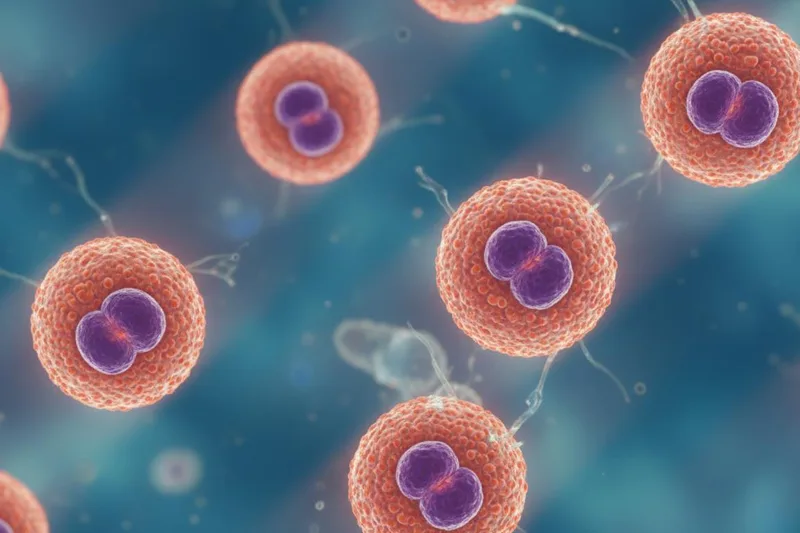
Have you ever heard the word 'Eosinophil'? Maybe a doctor has mentioned it to you after looking at your blood test results, or maybe this name is new to you. However, these eosinophils are very important soldiers in our body. They do a great job in keeping our body healthy. So, today we will talk in detail about this type of cell called eosinophil, what they do, and what happens if they become too low.
Who is this eosinophil?
Simply put, an eosinophil is a type of white blood cell in our blood. As you know, white blood cells (leukocytes) are the main soldiers of our body's immune system, the system that protects us from diseases. There are different types of these white blood cells. Just like there are different regiments in an army.
There are three main types of white blood cells:
1. Granulocytes
2. Lymphocytes
3. Monocytes
Our protagonist, the eosinophil, belongs to the group called `granulocytes`. The name `granulocytes` is derived from the fact that these cells have small granules inside them. In addition to eosinophils, there are also two other types of granulocytes called `neutrophils` and `basophils`. All of these cells work together to fight off the enemies that enter our bodies.
The role of eosinophils in particular is to stop the growth of foreign organisms, especially parasites, that hide inside our cells and make us sick.
What do these eosinophil cells do?
Imagine, when something foreign, such as a germ or an allergen, enters our body, our white blood cells immediately spring into action. Like specially trained soldiers, they seek out and destroy the invader before it can harm our other cells.
Eosinophil cells are similarly trained to leave our bone marrow and enter our tissues to serve as security guards. Inside these cells are the little grains of sand we mentioned earlier. Inside these granules is a toxic protein . When an invader comes, these granules release that toxic protein, destroy the invader, and eat it.
Eosinophils mainly protect our bodies from:
- Parasitic infections: For example, things like strongyloidiasis, pinworms.
- From organisms that grow inside our cells: Some types of bacteria (intracellular bacteria) hide inside our cells and cause disease. Eosinophils also help fight against them.
- These cells also help control immediate hypersensitivity reactions ( allergens) caused by exposure to allergens .
Where are the most eosinophil cells found?
Eosinophils are a type of white blood cell that lives in our body's tissues. They are most commonly found in:
- In the blood
- In the bone marrow
- In adipose tissue (the places where fat is stored in our bodies)
- In the lungs
- On the skin
- In the stomach
What do eosinophil cells look like?
These eosinophil cells are very small, and can only be seen under a microscope. They are spherical. Normally, in our bodies, they are colorless, meaning they have no color. But when viewed under a microscope, when a special pigment (acidic dye) is added, the color of these cells changes, making it easier to examine. This pigment turns the cells a purplish pink color.
Eosinophils are a little bigger than other cells. One of the most easily recognizable features of them is their nucleus . It looks like two drops of water connected by a string, with two petals. You know, inside the nucleus is where the cell's DNA is. It's all about the important stuff. This nucleus floats in a sand-like protein (the granules we've been talking about).
How many eosinophils are there in our body?
Eosinophils are a type of white blood cell. White blood cells make up about 1% of the total number of cells in our bodies. Of the white blood cells circulating in the body of a healthy adult, eosinophils make up less than 5% . That means that even though they are a very small minority, the service they provide is not insignificant.
Where are eosinophils produced?
These important cells are produced in the soft tissue inside our bones, called the bone marrow . After they mature in the bone marrow, eosinophils travel to the fatty tissues in our body, such as the stomach.
What are the common conditions that affect eosinophils?
Conditions affecting eosinophils are relatively rare. There are two main conditions that affect both low and high eosinophil counts.
Decreased eosinophils: Eosinopenia
Eosinopenia is when we have fewer eosinophil cells than normal in our bodies. There are several conditions that can cause this:
- Cushing's syndrome: This occurs when the body makes too much of the hormone cortisol and not enough eosinophil cells. Cortisol is a hormone that controls our blood sugar levels and turns food into energy.
- Sepsis: Sepsis is a very serious medical condition that causes inflammation and blood clotting throughout the body. It is often the result of a bacterial, fungal, parasitic, or viral infection.
Important: Sometimes, even if your eosinophil count is low once in a while, it may not be a major health threat. This is because other cells in our immune system help to compensate for this eosinophil deficiency. However, having low eosinophil levels over a long period of time is dangerous. It requires immediate medical attention.
Increased eosinophils: Eosinophilia
Eosinophilia is when we have more eosinophil cells in our blood than normal. A doctor will diagnose this condition based on where the eosinophils are found:
- Eosinophilic gastrointestinal disorders (EGID): These are conditions that affect our digestive system. In this, a cluster of eosinophil cells gather in the affected area, causing inflammation. This is the most common condition associated with eosinophils. These (EGID) conditions can affect the large intestine (eosinophilic colitis), the esophagus (eosinophilic esophagitis), the stomach (eosinophilic gastritis), the stomach and small intestine (eosinophilic gastroenteritis), and the bladder (eosinophilic cystitis).
- Eosinophilic lung disorders: This includes eosinophilic asthma, bronchitis, and pneumonia. It is a condition similar to severe asthma, bronchitis, and pneumonia. In this condition, the lungs become filled with swollen cells and become congested. This makes it very difficult to breathe.
- Eosinophilic blood and tissue disorders: These affect the connective tissue under our skin (eosinophilic fasciitis), the skin (eosinophilic pustular folliculitis), and the cells in our blood, blood vessels, and vital organs like the heart and kidneys (eosinophilic granulomatosis with polyangiitis, formerly known as Churg-Strauss syndrome). These conditions occur when too many eosinophils invade and damage blood vessels. If left untreated, this can lead to poor blood flow throughout the body.
What are the common symptoms of eosinophil-related conditions?
These symptoms often appear in relation to the location of the injury. Here are some common symptoms:
- Tiredness, fatigue
- Skin lesions, rash
- Pus-filled blisters on the skin
- Difficulty breathing, shortness of breath
- Stomach and abdominal pain
- Inflammation
What are the causes of eosinophilia?
There are several factors that affect the amount of eosinophils in our blood:
- Alcohol intoxication
- Allergies
- Gastrointestinal disorders
- Leukemia (a type of blood cancer)
- Excessive production of the hormone cortisol
- Parasitic infections
Is eosinophilia the result of an infection?
An increase in eosinophils (eosinophilia) can be a result of an infection, but it is not always the main cause . Parasites can cause an increase in eosinophils. These parasites can be transmitted from person to person or from animal to person, especially from dogs to cats. Your doctor will test you to see if you have a parasitic infection. If so, treating it will usually return your eosinophil levels to normal.
What are the common tests that check the health of your eosinophil cells?
Diagnosis of eosinophil-related conditions begins with a complete blood count (CBC) . This involves taking a sample of your blood and counting the number of cells in it, especially white blood cells, to see if they are too low or too high. In addition, there are other tests:
- Absolute eosinophil count: This is also a blood test. It is similar to a complete blood count. It specifically measures the number of eosinophils in a sample of your blood. The doctor takes a small amount of blood from a vein and looks at the sample under a microscope. A dye is added to make the cells more visible, and the doctor counts the number of eosinophils out of 100 cells. The absolute eosinophil count is calculated by multiplying that percentage by your total white blood cell count.
- Bone marrow biopsy: In this test, a doctor uses a needle to take a small sample of your bone marrow. It is then tested to see the number, quality, and location of the cells in your body.
To pinpoint the exact location of the eosinophilia, the doctor may perform more specialized tests:
- Chest X-ray
- Liver function tests
- Stool sample test
- Tissue biopsy
- Urine test
What is the normal eosinophil level?
A healthy person should have between 30 and 350 eosinophil cells per microliter of blood. If there are more than 500 cells per microliter of blood, it is a high value. If there are fewer than 30 cells, it is a low value.
Remember, a one-time drop in eosinophil count, even if it's just a drop, may not be a major threat. The other white blood cells in your immune system help make up for the deficit.
What is a high eosinophil level?
Your doctor will classify the severity of eosinophilia, based on the results of the absolute eosinophil count:
- Mild: Between 500 and 1,500 eosinophil cells per microliter of blood.
- Moderate: Between 1,500 and 5,000 eosinophils per microliter of blood.
- Severe: More than 5,000 eosinophils per microliter of blood.
Is a high eosinophil level a sign of cancer?
Although this is rare, persistently high eosinophil levels may be a sign that you have cancer . High eosinophil levels may be associated with several types of cancer:
- Breast cancer
- Colorectal cancer
- Cervical cancer
- Hodgkin lymphoma
- Ovarian cancer
- Prostate cancer
If your doctor suspects cancer, they will perform further tests, such as a biopsy, additional blood tests, or imaging tests, to diagnose the disease and begin treatment.
What are the common treatments for high eosinophil levels?
Treatment for conditions with high eosinophil levels varies depending on the location and severity of the disease. Treatments to reduce high eosinophil levels include:
- If you have esophagitis, avoid certain foods (oily, spicy, acidic foods).
- If you have a drug reaction to a medication, stop taking the medication or change the dosage.
- Taking anti-inflammatory medications.
Conditions with very high eosinophil levels are chronic , meaning they require long-term treatment and management.
What are the common treatments for low eosinophil levels?
Treatments for conditions with low eosinophil levels include:
- Taking corticosteroids.
- Reducing alcohol consumption.
Most of the time, your body will recognize the lack of eosinophils and the rest of your immune system will help make up for the deficiency. However, if your eosinophil levels are not returning to normal due to an underlying health condition, long-term treatment may be necessary.
How do I keep my eosinophil cells healthy?
Here are some things you can do to keep your eosinophil cells healthy:
- Avoid allergens.
- Eat a well-balanced diet. Cook food thoroughly and heat it to the proper internal temperature before eating.
- Limit alcohol consumption.
- Follow proper hygiene practices, such as washing your hands frequently.
What are Acidophils?
Acidophils are another, but less common, name for eosinophils. The name "acidophil" comes from the word "acidophilic," which means "acid-loving." The name comes from the way the granules on eosinophil cells change color under a microscope when stained with an acidic stain dye. This dye turns the cells pink or purple, making them easier to see.
So, eosinophils are a very important part of our immune system. They play a big role in protecting our bodies from foreign invaders. If your doctor suspects that your eosinophil levels are out of the normal range, they will do a blood test to check the health of your cells. Most of the time, low eosinophil levels are not a big deal, because other cells help to make up for the deficit and keep your body functioning.
Let's remember the most important things (Take-Home Message)
Okay, so let's summarize the most important things you need to remember from what we've talked about.
- Eosinophils are a type of white blood cell. They are part of our immune system.
- They mainly fight against parasitic infections, organisms that grow inside cells, and allergic reactions .
- A decrease in the number of eosinophils (eosinopenia) or an increase in the number of eosinophils (eosinophilia) can be caused by various medical conditions.
- Blood tests can be done to find out your eosinophil levels.
- Normally, a healthy person has between 30 and 350 eosinophil cells per microliter of blood.
- If you notice a change in your eosinophil levels, it's best to not panic and see a doctor for advice.
I hope you have a good understanding of eosinophils. Being aware of things like this helps a lot in taking care of our health.
` Eosinophil, white blood cell, immune system, allergy, parasitic infection, eosinophilia, eosinopenia, blood test


💬 Comments (0)
No comments yet. Be the first to share your thoughts here.
Add Your Comment