
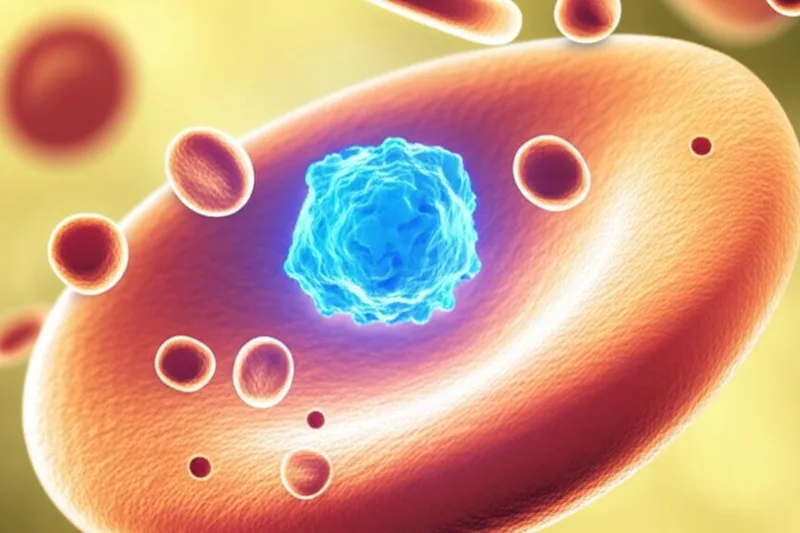
Have you ever heard of the name Hepcidin? Maybe you haven't. But this is something that plays a very important role in our body. To be precise, this Hepcidin is the main one that controls the amount of iron in our body. So today, let's talk about this Hepcidin, and what it does to our body, simply and in a friendly way.
What is Hepcidin? Simply put...
Hepcidin is a hormone produced in our body. A hormone is like a little messenger that controls every function in our body and carries information back and forth. So this hormone called hepcidin is what determines how our body uses iron, how much iron the body needs, and how much it needs to store.
Iron is an essential mineral for our bodies. Did you know that iron is a key ingredient in the production of the protein hemoglobin in our red blood cells? This hemoglobin is what binds to oxygen and carries it to our tissues and organs throughout the body. It acts like an oxygen taxi!
Not only that, iron is also needed to make the protein myoglobin, which supplies oxygen to our muscles and heart.
So, this hepcidin is sometimes called the "master of iron control." The reason for this is that it controls how much iron our cells need to do important things like make hemoglobin and red blood cells. Imagine, what happens if we have a deficiency of iron? Iron-deficiency anemia can develop. That means the body doesn't produce enough red blood cells. On the other hand, what if we have too much iron? That's also very harmful to the body, like poison, and sometimes even life-threatening.
Where is this hepcidin produced in our body?
Hepcidin is mainly produced in our liver . Once formed, it enters our bloodstream.
What does Hepcidin actually do?
We've said before that hepcidin is the "mastermind of iron regulation." That is, it helps maintain iron homeostasis in our body, meaning that the amount of iron is kept at the right level, neither too little nor too much.
We get iron from the foods we eat. We get iron from foods like meat, fish, vegetables, and nuts. However, unlike other minerals, our bodies don't have a permanent way to get rid of excess iron. For example, if we have too much sodium, it will be excreted in the urine. However, iron is only lost in small amounts from our bodies, either through blood loss or when cells die.
Instead, our bodies store iron, to use when needed. We have iron stored in places like our bone marrow, spleen, and liver . About 70% of the total iron in the body is in the hemoglobin in those red blood cells we talked about earlier.
So, this hepcidin is what greatly supports the processes that help store iron, move it from one place to another, and use it again. It does this by controlling the iron in our cells so that it is available when needed, and also so that excess iron does not become a problem for the body.
Hepcidin is mainly involved in:
- Controlling iron absorption: Iron absorption is the process by which iron from the foods we eat is absorbed into our bloodstream from our small intestine. Only after it reaches the bloodstream can the body use the iron. So, hepcidin controls how much iron goes into the bloodstream and how much is stored.
- Recycling Iron in Macrophages: Macrophages are a type of white blood cell that is like our body's cleaning soldiers. They are the ones who destroy old, dying red blood cells and make way for new red blood cells. Our bone marrow produces new red blood cells about every 120 days. So, when macrophages destroy these old red blood cells, they grab the iron from the hemoglobin in them. Hepcidin decides whether that iron is stored inside the macrophages or released back into the body.
- Release of stored iron: Iron is stored in our liver cells (called hepatocytes) and in the cells of our small intestine (called enterocytes ). Hepcidin controls whether that iron stays inside those cells or is released for use.
How does hepcidin control iron absorption?
What's really interesting is that hepcidin doesn't regulate iron absorption by initiating any process. Instead, it does so by stopping the processes that help iron absorption.
Hepcidin works with a protein called ferroportin . This ferroportin is like the "iron transporter" in our body. Its job is to release iron from its storage sites (macrophages, hepatocytes, enterocytes) and move iron back and forth between the body's cells. Ferroportin is what transports iron from the small intestine into the bloodstream so that the body can use it.
Hepcidin binds to this ferroportin. Then ferroportin breaks down. When that happens, the iron that could have been transported into the blood by ferroportin gets stuck in the same places where it was stored.
Think about it this way:
- When hepcidin increases , it becomes difficult for ferroportin to transport iron into the blood. This means that iron absorption decreases.
- When hepcidin is reduced , ferroportin can more easily transport iron into the blood. This means that iron absorption increases.
Do you understand? It's very simple, isn't it?
What factors affect the amount of Hepcidin in our body?
How much hepcidin you have in your body is determined by the signals your body sends. For various reasons, your body receives signals to make more or less hepcidin.
Here are some such things:
- Total iron in the body: If the body has low iron, it signals the body to make less hepcidin. If the body has high iron, it signals the body to make more hepcidin.
- Red blood cell production: When the body needs more hemoglobin to make red blood cells, hepcidin levels decrease. This is when ferroportin is able to take iron out and help make new cells.
- Low oxygen levels (Hypoxia): Hypoxia is when your tissues don't get enough oxygen. When oxygen levels are low, the body signals the body to reduce Hepcidin. This releases Ferroportin, which releases iron to make hemoglobin. Hemoglobin is what carries oxygen through red blood cells.
- Inflammation caused by an injury or infection: At times like these, the level of hepcidin increases. The reason for this is to stop the release of iron into the body. Many harmful germs, such as bacteria, use iron to grow. So by increasing hepcidin, reducing iron, you stop those germs from getting iron. Smart, right?
What conditions occur if hepcidin levels are abnormal?
Now you know how important hepcidin is. So, if it gets too high or too low, it can cause problems.
If there is too much hepcidin, the body may not be able to absorb enough iron, leading to conditions such as iron deficiency.
If hepcidin is low , the body can absorb too much iron, leading to iron overload.
Diseases associated with low levels of hepcidin
When hepcidin levels are low, the following conditions can be seen:
- Iron-deficiency anemia: This is the most common type of anemia associated with a decrease in hepcidin. Sometimes hepcidin levels can be undetectable. This indicates that the body is trying to transport iron into the blood by releasing ferroportin.
- Hereditary hemochromatosis: This is a genetic disease. Mutations in the cells cause the liver to produce too little hepcidin. As a result, the body absorbs too much iron. This excess iron is deposited mainly in the heart, liver, and pancreas.
- Iron-loading anemias: These are a type of anemia. However, in this case, there is not a lack of iron, but an excess of iron. Problems in the production of red blood cells lead to a decrease in the production of hepcidin. As a result, ferroportin releases too much iron.
- Hepatitis C: This is an infection of the liver caused by a virus (HCV). This virus reduces the body's ability to produce hepcidin.
- Type 2 diabetes: Some studies have shown that people with type 2 diabetes have reduced hepcidin levels, leading to iron overload. Insulin, a common treatment for diabetes, may be a cause.
Diseases associated with increased levels of hepcidin
Elevated levels of hepcidin are associated with non-iron deficiency anemia. That is, anemia that does not occur without iron deficiency. These may be due to genetic conditions, which cause excess hepcidin production.
Hepcidin levels are also elevated in conditions called anemias of inflammation or anemia of chronic disease (ACD) . In ACD, inflammation causes the body to release a protein called cytokine . This protein increases hepcidin levels.
Some diseases that may be associated with ACD include:
- Chronic infections
- Crohn's disease
- Cancer
- Chronic kidney disease
So you can see, Hepcidin is a very important thing that controls the use of iron in our body. By stopping the release of iron, Hepcidin controls our body's ability to make hemoglobin and red blood cells. In this way, Hepcidin indirectly affects how much oxygen is available throughout the body. Hepcidin also stops the body from absorbing too much iron. Because too much iron can cause serious complications in the long run.
Things we should remember from this story (Take-Home Message)
Okay, so we talked a lot about Hepcidin today, didn't we? To summarize:
- Hepcidin is a hormone produced in the liver.
- This is the master regulator of the amount of iron in our body. It's like the "Iron Lord."
- We need iron to make hemoglobin, which is what carries oxygen throughout the body.
- Hepcidin levels control the absorption, storage, and release of iron through a protein called ferroportin .
- If hepcidin is low , excess iron can be absorbed , leading to iron overload . This can lead to conditions such as hereditary hemochromatosis.
- If hepcidin is elevated , iron absorption may be reduced, leading to iron-deficiency anemia (sometimes caused by inflammation).
- To stay healthy, the body's iron levels and Hepcidin levels must be balanced.
So, if you have any problems with iron, or if you have symptoms like anemia, it's best to see a doctor and get advice. It's also very important to be aware of things like this.
` Hepcidin, iron, anemia, hormones, hemoglobin, liver, ferroportin


💬 Comments (0)
No comments yet. Be the first to share your thoughts here.
Add Your Comment