

You might be a little surprised when you hear the name 'Colorectal Surgeon', thinking, "Who is this? What do they do?" Don't worry, it's not that complicated. Simply put, this is a surgeon who specializes in treating diseases and performing surgeries on your large intestine, rectum , and anus . So let's talk about this in a little more detail, like you're talking to a friend, okay?
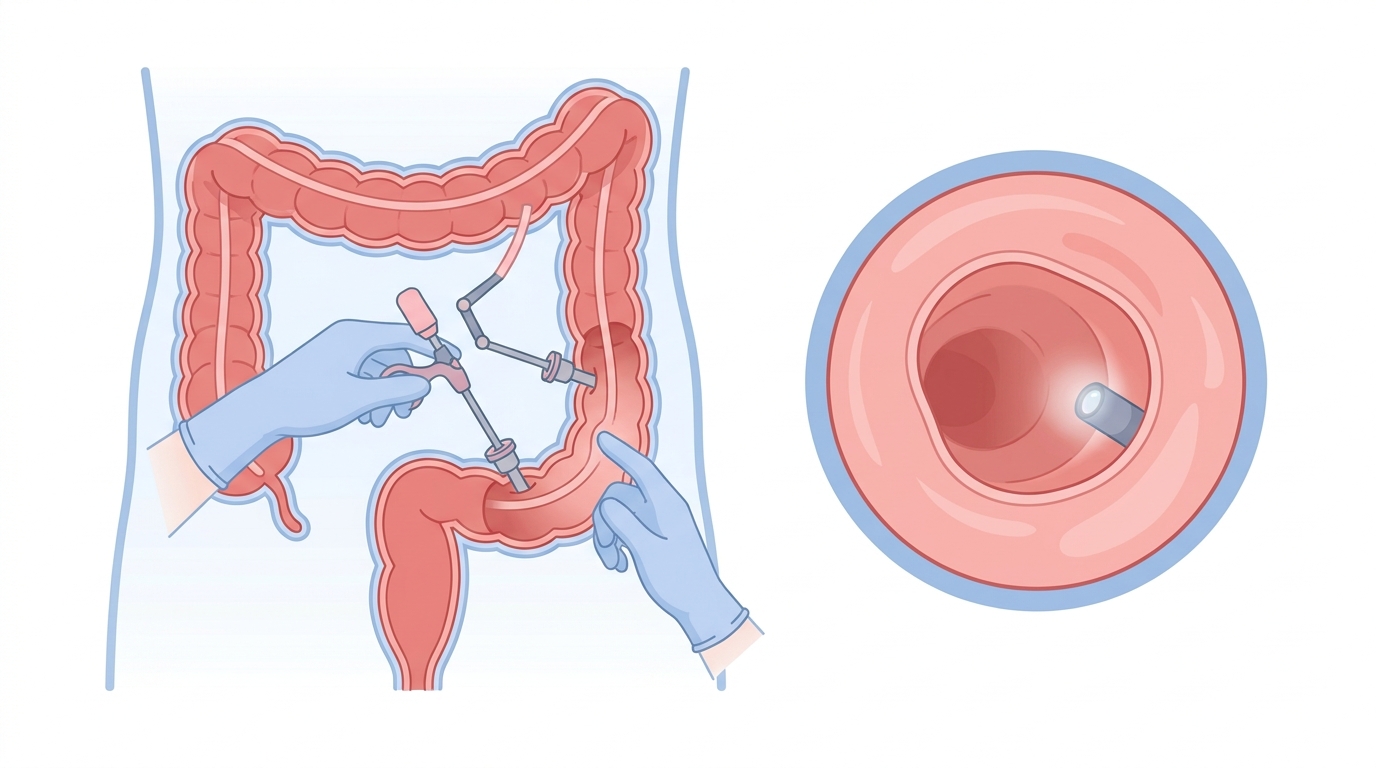
Who is this colorectal surgeon? Was it previously called a proctologist?
Yes, you've probably heard the word 'proctologist'. In fact, in the past, doctors who treated these types of diseases were called proctologists. 'Colorectal surgeon' is the more updated, modern name for that medical field.
There is a slight difference in meaning between these two names. When we say 'proctologist', it mainly refers to the rectum and anus. But when we say 'colorectal', it includes both the colon and the rectum. You know, these two are the largest parts of the large intestine. However, in practice, no matter which of these two names they are called, these specialists treat all of these parts . So there is nothing to think about it too much.
Why do we need to see a colorectal surgeon?
Imagine you have some discomfort or symptom in your lower abdomen, that is, your lower gastrointestinal (GI) tract. Then you may first go to see a general physician or a gastroenterologist.
If, after examining you, the doctor thinks that your condition requires surgery , he will refer you to a colorectal surgeon.
Some colorectal conditions that may commonly require surgery include:
- Cancer and polyposis : This refers to cancerous conditions in the colon or small growths (polyps) that can become cancerous.
- Inflammatory bowel disease (IBD): This is a long-term inflammation of the lining of the intestines. Examples include conditions such as Crohn's disease and ulcerative colitis .
- Ischemia: This is when a part of the intestine isDecreased or lost blood supply . When that happens, that part can even die.
- Structural defects: For example, fistulas - an abnormal connection between the intestine and another organ, hernias - a protrusion of part of the intestine through a weak spot, and prolapse - a protrusion or protrusion of a part of the body, such as the rectum.
Do colorectal surgeons only treat the colon?
No, that's not true. Although colorectal surgeons primarily specialize in the large intestine , they are also trained as general surgeons .
Besides, a problem in one organ of our body can affect other organs, right? Therefore, these specialists have to treat other organs that are directly related to the colon or that are affected by the same disease. Such organs are:
- Small Intestine
- Pelvic floor muscles (these help control bowel and bladder control)
- Urinary system
- Female Reproductive System
What qualifications are required to become a colorectal surgeon?
This is a really important point. A colorectal surgeon is someone who has a very high level of training and expertise . For example, in a country like the United States, to become a colorectal surgeon, one must train as a general surgeon for at least five years. After that, one must undergo another year or more of residency training in colorectal conditions.
After this training, they pass written and oral exams and become board-certified specialists from relevant medical boards (e.g., American Board of Colorectal Surgery). So as you can see, this is not an easy journey, which is why we can trust their knowledge and ability.
What specifically does a colorectal surgeon learn more than a general surgeon?
These specialists study in-depth intestinal and anorectal physiology , that is, how these organs function and how they interact with each other.
Due to this deep knowledge, the problems that arise in the intestines and rectumThey have a unique ability to analyze complex physical problems and provide the necessary delicate treatments . In fact, they are the experts in this field.
What exactly does a colorectal surgeon do?
Colorectal surgeons use all possible endoscopic and surgical techniques to treat your digestive system. This means they have all the tools they need to treat complex conditions.
They can treat you non-surgically (e.g., through endoscopy), with minimally invasive surgery , or, if necessary, with open surgery .
Some techniques used by colorectal surgeons include:
- Colonoscopy: This involves inserting a thin, flexible tube (endoscope) with a camera and light through the anus to examine the entire large intestine . This can be used to remove small polyps and take tissue samples (biopsies).
- Enteroscopy: This is also a method of examining the small intestine using an endoscope.
- Sigmoidoscopy: This examines the last part of the large intestine (sigmoid colon), rectum, and anus.
- Laparoscopy: A very small incision is made in the abdomen, through which a special camera (laparoscope) is inserted to examine the internal organs of the abdomen.
- Laparoscopic surgery: Also known as "keyhole surgery," this is a procedure that involves making several small incisions in the abdomen and using a laparoscope and special instruments. This allows the surgery to be performed without making a large incision, which reduces recovery time.
- Robotic surgery: This is also a type of laparoscopic surgery. However, here the surgeon controls a robotic arm through a computer console. This allows for very delicate and complex surgeries .
Some of the surgeries and procedures performed by colorectal surgeons include:
- Polypectomy: Removal of polyps (small growths) in the colon through endoscopy.
- Endoscopic mucosal resection (EMR) / endoscopic submucosal dissection (ESD): Advanced methods for endoscopic removal of tumors in the inner layers of the intestine that are difficult to remove.
- Transanal endoscopic microsurgery: A surgery in which a special instrument (proctoscope) is inserted through the anus to remove large tumors or obstructions in the rectum.
- Bowel resection surgery: Removal of part or all of the large intestine, depending on the condition.
- Ostomy surgery: This involves changing the way stool exits the body and creating a stoma by connecting one end of the intestine to the skin surface of the abdomen. This is called a colostomy or ileostomy.
- Anastomosis surgery: Reconnecting two parts of the intestine by removing a previously made ostomy.
- Appendectomy: Removal of the appendix when it is inflamed (appendicitis).
- Anoplasty: Repair or reshaping of the anus.
- Rectopexy: Surgically restoring rectal prolapse.
- Sacrocolpopexy: Repair of pelvic organ prolapse.
- Hernia repair: Repair of hernias in the intestine (e.g. inguinal hernia, incisional hernia) using laparoscopic or robotic techniques.
- Cecostomy / antegrade colonic enema (ACE) surgery: A tube is inserted into the colon to deliver an enema solution as a treatment for certain conditions, such as constipation.
They also do things like this to check the function of your colorectal and rectal tract:
- Digital rectal exam: A test in which the doctor inserts a gloved finger into the rectum.
- Anoscopy / Proctoscopy: Insertion of a small instrument to view the anus and lower rectum.
- Defecography: Examination of the bowel movement using X-ray or MRI.
- Endorectal ultrasound: A scan of the rectum and surrounding tissues by inserting an ultrasound probe through the rectum.
- Anorectal manometry: Measurement of the pressure and function of the muscles in the rectum and anus.
What types of conditions do colorectal surgeons treat?
There are many conditions that require a visit to a colorectal surgeon. Let's look at some of them in groups:
Colorectal cancer, examples:
- Colon cancer
- Rectal cancer
- Anal cancer
- Appendix cancer
- Peritoneal carcinomatosis - spread of cancer to the lining of the abdomen
- Gastrointestinal stromal tumors (GIST)
- Neuroendocrine tumors
- Some hereditary cancer conditions, such as hereditary nonpolyposis colorectal cancer (HNPCC) or Lynch syndrome
Colorectal polyps and inherited polyposis syndromes, examples:
- Familial adenomatous polyposis syndrome (FAP) - This can cause hundreds or thousands of polyps in the colon.
- Lynch syndrome - (also mentioned under cancer)
- MUTYH-associated polyposis (MAP)
- Serrated polyposis syndrome
- Desmoid tumors
- Peutz-Jeghers syndrome
- Juvenile polyposis syndrome
- PTEN hamartoma syndrome
Complicated colitis (inflammation of the colon), examples:
- Diverticulitis - Infection or inflammation of small pouches (diverticula) in the wall of the intestine.
- Ulcerative colitis
- Crohn's disease
- Microscopic colitis
- Pseudomembranous colitis - A condition that often occurs after the use of certain antibiotics.
- Appendicitis - Inflammation of the appendix.
- Necrotizing enterocolitis - A serious condition that affects newborns.
- Ischemic colitis - Inflammation caused by decreased blood supply to the colon.
Functional bowel disorders, examples:
- Pelvic floor dysfunction - a condition that causes difficulty defecating.
- Inability to control stool (Fecal incontinence)
- Obstructed defecation
- Anismus - Inability to relax the muscles of the rectum properly during defecation.
Structural defects, examples:
- Large bowel obstructions
- Anal fistula - The formation of an unnatural passage between the skin and the intestine near the anus.
- Rectovaginal fistula - an unnatural connection between the rectum and the vagina.
- Perineal hernia
- Perianal abscess
- Rectal prolapse
- Pelvic organ prolapse
Other benign conditions of the colon, examples include:
- Gastrointestinal bleeding / rectal bleeding
- Anal fissures
- Anal warts
- Hemorrhoids
- Rectal ulcers
- Constipation and fecal impaction
A little reminder about your colon and lower digestive system
Your large intestine is a major part of your lower gastrointestinal tract . The food we eat travels through your digestive system, and it is through this that waste products are finally eliminated from your body. So, if you are experiencing symptoms like lower abdominal pain or changes in your bowel habits (e.g., bleeding, diarrhea, constipation), it is likely a problem with your lower gastrointestinal tract.
This is when the advice and treatment of a colorectal surgeon becomes important. Not all conditions require surgery . However, when surgery is needed, seeing a specialist like this can help you get the most effective treatment. Your general practitioner or gastroenterologist will refer you to a colorectal surgeon if they feel that this specialist can best manage your condition.
Finally, I have to tell you... (Take-Home Message)
I hope you now have a good idea of who a colorectal surgeon is, what they do, and what types of diseases they treat.
The important thing is that these specialists are there to help you . They have the expertise and training needed for your condition.
- If you have any unusual symptoms related to your colon, rectum, or anus (e.g., persistent abdominal pain, blood in your stool, change in bowel habits, unexplained weight loss), don't ignore it . Seek medical advice immediately.
- If your doctor refers you to a colorectal surgeon, don't be alarmed . It just means you may need specialized treatment .
- Remember, with today's advanced medical science, many conditions related to this field can be successfully managed and cured .
So, you need to stay healthy! If you have any problems, the most important thing is to get the right advice from the right place.
` Colorectal surgeon, rectal diseases, colorectal surgeon, colon cancer, colonoscopy, digestive system, surgery
Doctor's Note
A Colorectal Surgeon is a doctor who is specially trained to treat diseases related to the colon, rectum and anus through surgery. They perform surgeries for many complex diseases such as Colorectal Cancer, Hemorrhoids, Anal Fissures, and Inflammatory Bowel Disease (IBD). Blood in the stool or persistent changes in bowel patterns should not be missed and should be checked by a doctor immediately.
❓ Some more questions you may encounter (FAQ)
What are the symptoms to see a colorectal specialist?▼
Red or black blood in the stool, unrelieved constipation or diarrhea, pain in the anus, and discharge from the anus.
What is the main diagnostic test they perform?▼
Colonoscopy is the test. Thus, the entire intestine can be observed from the inside and tissue samples (biopsy) can be obtained if there are lumps.
What measures can be taken to prevent colon cancer?▼
Eating fiber-rich vegetables, fruits, and grains, limiting red meat, and getting regular colonoscopy after age 45.


💬 Comments (0)
No comments yet. Be the first to share your thoughts here.
Add Your Comment