
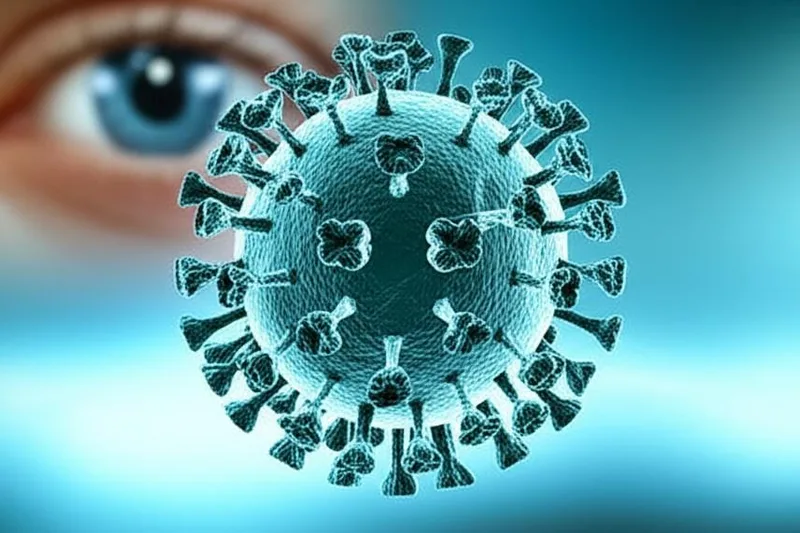
We've all heard of viruses, right? Especially recently with `(COVID-19)`, the word virus has become a part of our lives. But what exactly is a virus? How do they make us sick? Don't worry, today we'll talk about all this simply and clearly, as if we were talking to a friend.
What is a virus? (What is a Virus?)
Simply put, a virus is a very small germ . They are so small that we can't even see them with our eyes, they are like little invaders. These viruses can infect not only humans, animals, plants, but also bacteria and fungi. But there is one special thing, not all viruses affect everyone. They infect only by finding a suitable "home" for themselves. We call this host specificity .
When a virus enters the body, sometimes it can be completely painless. But sometimes it can be very serious. Here are some types of diseases that viruses can cause:
- Illnesses that cause breathing difficulties (e.g. cold, flu)
- Stomach upset, vomiting, diarrhea
- Sexually transmitted infections (STIs)
- Skin diseases (e.g., chickenpox, warts)
Think of it this way: a virus is like a little piece of genetic information wrapped in a little "package." This package, or protective shell, is called a capsid . Viruses are not made of cells. So they can't make more viruses on their own. What they do is take their instructions, go inside a host cell like ours, and use the tools in that cell to make copies of themselves.
It's like someone sneaking into your kitchen, bringing their own recipe, and using your pots, pans, and stove to cook your food. Unfortunately, they end up making a mess of the kitchen when they're done!
Viruses are sometimes called "virions".
What are the common characteristics of viruses?
Almost all viruses have a few common characteristics. Take a look:
- They are made up of genetic material (RNA or DNA) and a protective protein coat (capsid) around it.
- Some viruses have an outer covering on top of this capsid. This is called an envelope . Viruses that do not have such a covering are called "naked viruses."
- Viruses are like parasites . They absolutely need a host cell to reproduce. They can survive outside a host for a while, but only until the capsid breaks down.
- It's about 100 to 1000 times smaller than the cells in our body. It's hard to imagine, right?
What are the Types of Viruses?
Doctors and scientists classify viruses by their appearance (size, shape) and the type of genetic material they contain. They are divided into families, like tribes. Here are some of the types of viruses you may have heard of:
Some of the types of viruses we often hear about
- Influenza viruses: These are what cause the common cold (flu). These influenza viruses are also responsible for things like bird flu and swine flu (H1N1).
- Human herpesviruses: This is a large family of viruses. They are the cause of a number of diseases, including oral and genital herpes, chickenpox, herpes zoster (shingles), Epstein-Barr virus, and cytomegalovirus (CMV).
- Coronavirus: Everyone knows this name by now, right? The virus that causes COVID-19 is the most famous member of this family. But some viruses in this same family also cause minor illnesses like the common cold.
- Human Papillomaviruses (HPV): These are what cause warts. Some types of HPV can also cause cancer.
- Enteroviruses: These viruses cause infections in our intestines. They are the cause of things like polio and hand, foot, and mouth disease.
- Flaviviruses: This group of viruses is mostly spread by mosquitoes. They cause diseases like Dengue fever, Zika, and West Nile.
- Orthopoxviruses: These viruses cause blistering skin rashes. Mpox and smallpox are examples of this type of virus.
- Hepatitis viruses: Although these viruses do not belong to the same family, they all affect our liver. Hepatitis A, B, and C are the most common.
Special types of viruses
There are also some other special types of viruses:
- Retroviruses: These are RNA viruses. They use special proteins to convert their RNA into DNA. They then insert that DNA into the DNA of our cells. Our cells then start reading the virus' DNA as if it were their own instructions. HIV (the virus that causes AIDS) and HTLV-1 are examples of such retroviruses.
- Oncoviruses: These are viruses that can cause cancer. Viruses such as HPV, Epstein-Barr virus, HIV, hepatitis B and C, HTLV-1, and human herpesvirus 8 (HHV-8) have been linked to some types of cancer.
- Satellite viruses: These viruses cannot reproduce on their own. They need a "helper" virus. These are most commonly found in plants.
- Bacteriophages: Also called "phages" for short. These viruses specifically infect bacteria. Scientists are currently researching bacteriophage therapy as a treatment for bacterial infections that are resistant to antibiotics.
How do viruses enter our bodies?
Viruses usually enter our bodies through our mucous membranes. That means places like the eyes, nose, mouth, genitals, vagina, and anus. Some viruses can also enter the body through a break in the skin, or from a mosquito or tick.
How Do Viruses Work?
A virus infects a cell and follows several steps to make copies of itself.
1. Attachment: The virus first attaches to a host cell.
2. Entry: Then the cell is entered.
3. Replication: The cell makes copies of its genetic material and proteins inside it.
4. Assembly: The newly formed parts come together to form a complete virus.
5. Release: The new virus leaves the cell and goes on to infect other cells.
Entering a cell
Viruses use about three methods to enter cells:
- Receptor binding: Our cells have receptors on the outside that act like "gates." Some viruses trick these cells into thinking they have permission to enter, and enter through these gates.
- Direct fusion: Some viruses directly attach to and enter the host cell.
- Bacteriophages are viruses that inject only their genetic material into the bacterial cell. The entire virus does not need to enter.
What happens after logging in? (Making copies)
Once a virus or its genetic material enters a cell, it uses two methods to make copies of itself. Some viruses sometimes use both methods.
- Lytic cycle: In this cycle, the virus uses the resources of the host cell (like kitchen utensils) to make many copies of itself. The viral particles assemble, and the genetic material goes inside the capsid. When many copies of the virus are made in this way inside the cell, the cell eventually bursts. Then new viruses come out and infect more cells.
- Lysogenic cycle: Some viruses have a "quiet" or "hidden" period. They enter cells and stay there for a while, doing nothing. It's like sneaking into your kitchen and writing their recipe in your recipe book instead of cooking. The cell doesn't know that a virus is inside, so the cell divides and multiplies normally. Each new cell that forms has a copy of that virus. Then, something like stress , certain chemicals, or temperature changes can activate the hidden virus, causing the cells to burst open and the virus particles to spread throughout the body.
Different forms of viruses
Viruses can be described by different characteristics:
- How they look (shape and size).
- Their genome properties.
- Whether or not there are structural proteins and an envelope.
Shapes of viruses
Viruses can look very different from each other. Scientists classify them based on their shape:
- Icosahedral or polyhedral: This is a geometric shape with many sides, like a football. Most viruses that infect humans have this shape.
- Helical: This virus is shaped like a cylinder. Its genetic information is coiled inside like a spring.
- Spherical: Spherical viruses are viruses that have an envelope around them, either spiral or multi-layered. They are shaped more like a ball.
- Complex: Complex viruses have more than one shape combined. Viruses that infect bacteria have a multi-layered "head" and a spiral "body".
The size of the virus
All viruses are very small – too small to see without a powerful microscope. When measured, most are between 20 nanometers (nm) and 400nm. Think about it, that's about 2000 times smaller than a grain of sand ! They're about 100 to 1000 times smaller than the cells in our bodies.
But their sizes can vary greatly. For example, the measles virus is about five times larger than the Zika virus.
Genetic information of viruses
The information stored in a virus – its genetic material – is either `(DNA)` or `(RNA)`. `(DNA)` is like the instruction book that tells the virus how to make it. `(RNA)` is like the instructions that the cell machinery reads and translates into a language that can make proteins. A virus can be either `(DNA)` or `(RNA)` like this:
- Linear or circular .
- Positive-sense or negative-sense: Positive-sense RNA can be used as instructions to make viral particles directly without any additional steps. Negative-sense RNA viruses require special enzymes to make positive-sense RNA before making viral copies.
- Single-stranded or double-stranded: DNA viruses can have their genetic material as a single strand (ssDNA) or as two strands linked together (dsDNA). (Human DNA is double-stranded). RNA viruses are usually single-stranded, but some double-stranded RNA viruses exist.
Are viruses living or non-living?
This is a bit of an interesting question. Scientists don't usually consider viruses to be living things . That's because they can't do some of the things living things do, like convert food into energy (metabolism). They also can't live or reproduce without a host cell.
But on the other hand, they can replicate inside a suitable host cell, and they can change (evolve) over time to survive. Not only that, but they can also damage and destroy host cells in the process. Because of this, many people view viruses as something that exists in a gray area, on the border between living and non-living.
What are the diseases caused by viruses?
As we've discussed before, viruses can cause a variety of illnesses. Some of the most common viral infections are:
- Common cold
- Flu `(Influenza)`
- Covid-19 `(COVID-19)`
- Respiratory syncytial virus `(RSV)`
- Chickenpox
- Measles
- HIV/AIDS
- Human papillomavirus/genital warts (HPV/genital warts)
- Genital herpes (HSV)
- Polio
- Rabies
- Mpox `(Mpox)`
- Zika
- Hepatitis
Things we need to remember (Take-Home Message)
By now you should have a good idea of what viruses are. Remember, viruses are tiny things that come in all shapes and sizes. They need a host to infect us. But not all viruses make us sick. In fact, scientists say that there could be trillions of viruses living inside our bodies, doing no harm!
However, viruses that cause us illness are like unwanted guests who come to our homes. Therefore, we can protect ourselves from these viral infections by staying clean, washing our hands frequently, and getting vaccinated for certain diseases. If you have any illness, don't forget to seek medical advice. Stay healthy!
` Viruses, viral infections, types of viruses, diseases, health, immunity, illnesses


💬 Comments (0)
No comments yet. Be the first to share your thoughts here.
Add Your Comment