
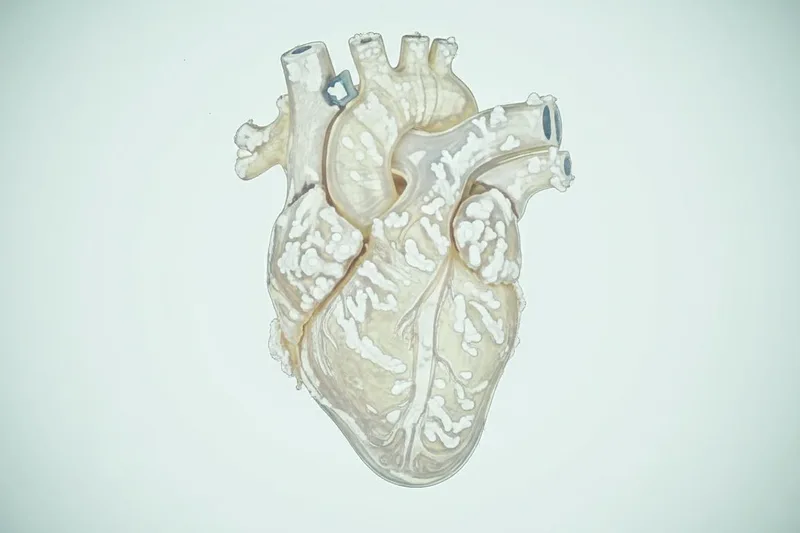
Let's learn simply about the Ross Procedure, which replaces a heart valve.

Let's learn simply about the Ross Procedure, which replaces a heart valve.

Our heart is an amazing organ. It's like a little pump that works non-stop. This pump has four parts that help send blood in only one direction, which we call heart valves in medicine. Imagine what would happen if even one of these doors were broken, if it didn't open or close properly. The flow of blood throughout the body would be disrupted, wouldn't it? Today, we're talking about a somewhat complicated but very successful surgery that is performed when the aortic valve, one of the main valves in the heart, becomes diseased.

Simply put, what is the Ross Procedure?

This is a very special surgery. Doctors call it a pulmonary autograft procedure. This is a very special thing that happens here. This surgery is performed using a part of your own body.

Simply put, the two main steps that occur here are:

1. Your dysfunctional aortic valve is removed and replaced with your own healthy pulmonary valve.

2. Then, a healthy lung valve (donor valve) taken from a deceased person is transplanted into the empty space where the pulmonary valve was.

Now you might be thinking, "Why do that? Taking one off and putting another on, and putting another on top of that, that sounds a bit complicated, doesn't it?" Yes, that's true. But there's a very good reason for that. Let's look at it.

Why is this surgery important? Why use your own pulmonary valve?

Our heart pumps clean, oxygenated blood throughout the body through a valve called the aortic valve. This is the main valve. It is also the valve that stops blood from flowing backward while the heart beats.

But sometimes this valve can become blocked without opening properly, which we call stenosis . Or it can not close properly and blood can leak backward, which we call regurgitation . If these conditions continue, the chances of heart failure and infection are very high.

So in a severe situation like this, the damaged valve has to be removed and a new one installed.

So, why replace your own pulmonary valve with an artificial one?

There are several reasons for this:

  • Withstand pressure: The aortic valve is under high blood pressure. So the valve that is placed there needs to be very strong. Because your own pulmonary valve is a living tissue, it can withstand this high pressure well and last much longer than artificial valves.
  • Less risk of blood clots: When artificial valves are inserted, there is a higher risk of blood clots. Therefore, they have to take blood thinners for the rest of their lives. But when using their own tissue, that risk is almost nonexistent.
  • Location of the pulmonary valve: The pulmonary valve is located in a place where there is less pressure. Therefore, when a donor valve is inserted there, it does not deteriorate as quickly. Also, the aortic valve and the pulmonary valve are very similar in size and shape.

Simply put, what surgeons do is place your strongest "original" valve in the most important part of the heart, where it bears the most weight, and place a "donor" valve in the part that bears the least weight.

Who is this surgery best suited for, and who is it not suitable for?

This surgery is not suitable for everyone. Doctors carefully examine the patient's condition and decide whether or not they are suitable for this. Let's take a closer look at the table below.

Who is suitable for this surgery? People who are not suitable for this surgery
Usually for young and middle-aged people under 60 years of age . People with autoimmune diseases such as lupus and rheumatoid arthritis.
For those who suffer from congenital aortic stenosis. People with connective tissue disorders such as Marfan syndrome.
For those suffering from other types of aortic valve disease. For those with blockages in three or more of the main blood vessels that supply blood to the heart (coronary artery disease).
For those with aortic valve endocarditis. For those with a pulmonary valve condition.

What happens during the surgery?

The Ross procedure is a very delicate and careful procedure that takes several hours. It is performed by a team of expert cardiac surgeons. Let's take a look at what happens during the procedure.

1. Anesthesia: First, you will be put under general anesthesia. This means that you will be in a deep sleep until the surgery is over, so you will not feel any pain. You will not remember anything about the surgery.

2. Connecting to a heart-lung machine: Next, doctors will connect you to a special machine called a cardiopulmonary bypass machine. This machine temporarily takes over the work of your heart and lungs during surgery. This allows surgeons to safely perform the surgery without stopping your heart.

3. Opening the chest: Surgeons make an incision in the middle of your chest, separating the breastbone (sternum) in two to access the heart. This procedure is called a sternotomy .

4. Valve examination: Next, the pulmonary valve is carefully examined to see if it is in good health and suitable for transplantation as a replacement for the aortic valve.

5. Valve replacement: If everything goes well, surgeons will remove the damaged aortic valve and replace it with your own pulmonary valve. Then, a healthy pulmonary valve from a deceased donor is transplanted into the empty space where the previous pulmonary valve was.

6. Heart resuscitation: After both new valves are properly implanted, surgeons will restart your heart. Then you will be slowly weaned off the heart-lung machine.

7. Final check and closure: The newly inserted valves are checked again to make sure they are working properly. If everything is successful, the sternum is reattached with wires, and the chest incision is stitched closed.

What are the benefits and possible risks of this surgery?

Like any surgery, Ross surgery has its benefits and risks. The risks can be greatly reduced by undergoing treatment under a skilled surgeon who has extensive experience in this surgery and regularly performs this procedure.

Benefits Risks
You don't need to take blood thinners for the rest of your life. Aortic autograft dilation (widening of the aorta near the newly implanted valve).
You can live an active life without any restrictions, doing things like exercising and driving. Heartbeat irregularities (Arrhythmia).
Women who are planning to become pregnant can safely give birth to a child. Heart attack.
Blood flow throughout the body is at an excellent level (Excellent hemodynamics). Excessive bleeding (Hemorrhage).
Shortly after surgery, symptoms subside and you begin to feel a rapid recovery . Infection.
Because it is its own tissue, its durability is very high. Leaky heart valve.

How is the recovery time after surgery?

After surgery, you will wake up in the Cardiac ICU. For the first few hours, you may be connected to a ventilator to help you breathe. Your heart function will be monitored continuously. You will usually stay in the ICU for about 5 days.

It can take several months to fully recover after you go home. During this time, it is common to experience things like:

  • Constipation
  • Mental disorders such as depression
  • Insomnia
  • Appetite
  • Numbness and swelling around the surgical incision

During this time, it is very important to follow your doctor's instructions exactly and attend clinics on the scheduled dates.

Will lifelong treatment be required?

Yes. After the Ross procedure, you will need to be under medical supervision for the rest of your life. You will need to have scans at regular intervals to check that the two transplanted valves are working properly.

Remember, a donor pulmonary valve transplant does not last a lifetime. It may need to be replaced again, usually after 15-20 years. But don't worry. In such cases, doctors often replace the valve using minimally invasive techniques, without making a large incision. Therefore, the recovery time is much shorter.

When should you see a doctor?

It is very important to be aware of any signs of complications when you go home after surgery. If you experience any of the following symptoms, call your doctor immediately.

  • Chest pain
  • If you feel feverish or have a cold
  • If you feel dizzy or your eyes are turning blue
  • If you cough up blood
  • If you have unusual bruising or bleeding
  • If vomiting occurs
  • If your limbs are numb
  • If the stool is bright red

Take-Home Message

  • Ross surgery is a very successful treatment for people with severe aortic valve disease.
  • Because your own pulmonary valve is used here, the results are very good and long-lasting.
  • One of the biggest advantages of this surgery is that you don't have to take blood-thinning medication for the rest of your life.
  • After surgery, you will be able to lead an active life without any obstacles.
  • Because this is a very complex surgery, it is very important to seek treatment from a surgeon who has extensive experience in this field.
  • Lifelong medical monitoring and testing is required after surgery.

Ross procedure, aortic valve replacement, pulmonary autograft, heart surgery, aortic stenosis

Frequently Asked Questions (FAQ)

So, why replace your own pulmonary valve with an artificial one?

There are several reasons for this:

⚠️ Important: The medical articles and information on Nirogi Lanka are for general awareness only, and are by no means a substitute for professional medical advice, diagnosis, or treatment. For any medical problem you have, consult a qualified physician immediately.

💬 Comments (0)

No comments yet. Be the first to share your thoughts here.

Add Your Comment

Please calculate: 2 + 8 =
Let's learn simply about the Ross Procedure, which replaces a heart valve.
SurgeriesJuly 7, 2026

Let's learn simply about the Ross Procedure, which replaces a heart valve.

Our heart is an amazing organ. It's like a little pump that works non-stop. This pump has four parts that help send blood in only one direction, which we call heart valves in medicine. Imagine what would happen if even one of these doors were broken, if it didn't open or close properly. The flow of blood throughout the body would be disrupted, wouldn't it? Today, we're talking about a somewhat complicated but very successful surgery that is performed when the aortic valve, one of the main valves in the heart, becomes diseased.

Simply put, what is the Ross Procedure?

This is a very special surgery. Doctors call it a pulmonary autograft procedure. This is a very special thing that happens here. This surgery is performed using a part of your own body.

Simply put, the two main steps that occur here are:

1. Your dysfunctional aortic valve is removed and replaced with your own healthy pulmonary valve.

2. Then, a healthy lung valve (donor valve) taken from a deceased person is transplanted into the empty space where the pulmonary valve was.

Now you might be thinking, "Why do that? Taking one off and putting another on, and putting another on top of that, that sounds a bit complicated, doesn't it?" Yes, that's true. But there's a very good reason for that. Let's look at it.

Why is this surgery important? Why use your own pulmonary valve?

Our heart pumps clean, oxygenated blood throughout the body through a valve called the aortic valve. This is the main valve. It is also the valve that stops blood from flowing backward while the heart beats.

But sometimes this valve can become blocked without opening properly, which we call stenosis . Or it can not close properly and blood can leak backward, which we call regurgitation . If these conditions continue, the chances of heart failure and infection are very high.

So in a severe situation like this, the damaged valve has to be removed and a new one installed.

So, why replace your own pulmonary valve with an artificial one?

There are several reasons for this:

  • Withstand pressure: The aortic valve is under high blood pressure. So the valve that is placed there needs to be very strong. Because your own pulmonary valve is a living tissue, it can withstand this high pressure well and last much longer than artificial valves.
  • Less risk of blood clots: When artificial valves are inserted, there is a higher risk of blood clots. Therefore, they have to take blood thinners for the rest of their lives. But when using their own tissue, that risk is almost nonexistent.
  • Location of the pulmonary valve: The pulmonary valve is located in a place where there is less pressure. Therefore, when a donor valve is inserted there, it does not deteriorate as quickly. Also, the aortic valve and the pulmonary valve are very similar in size and shape.

Simply put, what surgeons do is place your strongest "original" valve in the most important part of the heart, where it bears the most weight, and place a "donor" valve in the part that bears the least weight.

Who is this surgery best suited for, and who is it not suitable for?

This surgery is not suitable for everyone. Doctors carefully examine the patient's condition and decide whether or not they are suitable for this. Let's take a closer look at the table below.

Who is suitable for this surgery? People who are not suitable for this surgery
Usually for young and middle-aged people under 60 years of age . People with autoimmune diseases such as lupus and rheumatoid arthritis.
For those who suffer from congenital aortic stenosis. People with connective tissue disorders such as Marfan syndrome.
For those suffering from other types of aortic valve disease. For those with blockages in three or more of the main blood vessels that supply blood to the heart (coronary artery disease).
For those with aortic valve endocarditis. For those with a pulmonary valve condition.

What happens during the surgery?

The Ross procedure is a very delicate and careful procedure that takes several hours. It is performed by a team of expert cardiac surgeons. Let's take a look at what happens during the procedure.

1. Anesthesia: First, you will be put under general anesthesia. This means that you will be in a deep sleep until the surgery is over, so you will not feel any pain. You will not remember anything about the surgery.

2. Connecting to a heart-lung machine: Next, doctors will connect you to a special machine called a cardiopulmonary bypass machine. This machine temporarily takes over the work of your heart and lungs during surgery. This allows surgeons to safely perform the surgery without stopping your heart.

3. Opening the chest: Surgeons make an incision in the middle of your chest, separating the breastbone (sternum) in two to access the heart. This procedure is called a sternotomy .

4. Valve examination: Next, the pulmonary valve is carefully examined to see if it is in good health and suitable for transplantation as a replacement for the aortic valve.

5. Valve replacement: If everything goes well, surgeons will remove the damaged aortic valve and replace it with your own pulmonary valve. Then, a healthy pulmonary valve from a deceased donor is transplanted into the empty space where the previous pulmonary valve was.

6. Heart resuscitation: After both new valves are properly implanted, surgeons will restart your heart. Then you will be slowly weaned off the heart-lung machine.

7. Final check and closure: The newly inserted valves are checked again to make sure they are working properly. If everything is successful, the sternum is reattached with wires, and the chest incision is stitched closed.

What are the benefits and possible risks of this surgery?

Like any surgery, Ross surgery has its benefits and risks. The risks can be greatly reduced by undergoing treatment under a skilled surgeon who has extensive experience in this surgery and regularly performs this procedure.

Benefits Risks
You don't need to take blood thinners for the rest of your life. Aortic autograft dilation (widening of the aorta near the newly implanted valve).
You can live an active life without any restrictions, doing things like exercising and driving. Heartbeat irregularities (Arrhythmia).
Women who are planning to become pregnant can safely give birth to a child. Heart attack.
Blood flow throughout the body is at an excellent level (Excellent hemodynamics). Excessive bleeding (Hemorrhage).
Shortly after surgery, symptoms subside and you begin to feel a rapid recovery . Infection.
Because it is its own tissue, its durability is very high. Leaky heart valve.

How is the recovery time after surgery?

After surgery, you will wake up in the Cardiac ICU. For the first few hours, you may be connected to a ventilator to help you breathe. Your heart function will be monitored continuously. You will usually stay in the ICU for about 5 days.

It can take several months to fully recover after you go home. During this time, it is common to experience things like:

  • Constipation
  • Mental disorders such as depression
  • Insomnia
  • Appetite
  • Numbness and swelling around the surgical incision

During this time, it is very important to follow your doctor's instructions exactly and attend clinics on the scheduled dates.

Will lifelong treatment be required?

Yes. After the Ross procedure, you will need to be under medical supervision for the rest of your life. You will need to have scans at regular intervals to check that the two transplanted valves are working properly.

Remember, a donor pulmonary valve transplant does not last a lifetime. It may need to be replaced again, usually after 15-20 years. But don't worry. In such cases, doctors often replace the valve using minimally invasive techniques, without making a large incision. Therefore, the recovery time is much shorter.

When should you see a doctor?

It is very important to be aware of any signs of complications when you go home after surgery. If you experience any of the following symptoms, call your doctor immediately.

  • Chest pain
  • If you feel feverish or have a cold
  • If you feel dizzy or your eyes are turning blue
  • If you cough up blood
  • If you have unusual bruising or bleeding
  • If vomiting occurs
  • If your limbs are numb
  • If the stool is bright red

Take-Home Message

  • Ross surgery is a very successful treatment for people with severe aortic valve disease.
  • Because your own pulmonary valve is used here, the results are very good and long-lasting.
  • One of the biggest advantages of this surgery is that you don't have to take blood-thinning medication for the rest of your life.
  • After surgery, you will be able to lead an active life without any obstacles.
  • Because this is a very complex surgery, it is very important to seek treatment from a surgeon who has extensive experience in this field.
  • Lifelong medical monitoring and testing is required after surgery.

Ross procedure, aortic valve replacement, pulmonary autograft, heart surgery, aortic stenosis

Frequently Asked Questions (FAQ)

So, why replace your own pulmonary valve with an artificial one?

There are several reasons for this:

⚠️ Important: The medical articles and information on Nirogi Lanka are for general awareness only, and are by no means a substitute for professional medical advice, diagnosis, or treatment. For any medical problem you have, consult a qualified physician immediately.

💬 Comments (0)

No comments yet. Be the first to share your thoughts here.

Add Your Comment

Please calculate: 2 + 8 =