
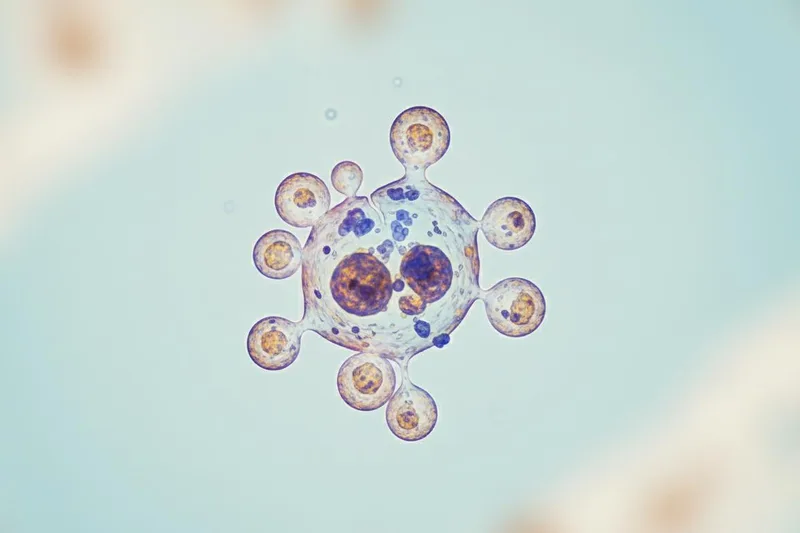
Have you ever wondered what happens to the cells in our bodies, especially when they get old or damaged? In fact, our bodies have an amazing ability to recognize these cells and get rid of them in an orderly manner. That's what we call apoptosis . Simply put, this is a process of cell death that the body plans and controls, similar to 'programmed cell death'.
Why is this thing called apoptosis so important to us?
Imagine, some cells in our body age, or their DNA gets damaged. If these cells continue to exist in the body, they can just keep dividing and multiplying uncontrollably, causing dangerous diseases like cancer. This process called apoptosis helps us prevent such risks.
This is like getting rid of old, broken furniture in a house. Just as having that furniture can make a mess in the house, having these damaged cells in our body can cause problems. So, apoptosis is an essential thing that helps keep our body healthy.
But, everything has to go according to plan. If something goes wrong in this apoptosis process, whether it's too many cells dying or if the cells that should be dying don't die, that can cause problems.
- If apoptosis is excessive, it can also destroy healthy cells that our body needs. For example, this condition is seen in diseases such as Alzheimer's disease.
- If apoptosis does not occur properly (is reduced): Damaged and broken cells remain in the body, where they begin to divide and multiply uncontrollably. This can lead to diseases such as cancer.
You may be interested in learning about apoptosis because you or someone you know has been diagnosed with it. It's natural to wonder how these tiny processes inside cells that can only be seen with a microscope can be related to the symptoms we experience. However, understanding apoptosis can help you understand the 'reason' behind your diagnosis. This knowledge can also help you talk to your doctor about your condition and treatment options.
What actually happens with apoptosis? What is its purpose?
Apoptosis is a process that is essential to our bodies. It starts even before we are born. Think about it, when a fetus is developing in the womb, for example, in order for the fingers to form properly, some of the cells in between need to die at the right time. That's what apoptosis helps with.
Even after we are born, apoptosis performs many important functions:
- Our body's old cells and tissues need to be constantly replaced with new ones. Apoptosis helps with this.
- It helps our immune system fight various infections.
- Damaged cells that cannot be repaired are removed from the body.
- It prevents damaged cells from multiplying uncontrollably.
- Helps maintain balance (`(Homeostasis)`) in the body's tissues.
How does this thing called apoptosis work?
This is a complex process, but in simple terms, it happens like this. Some special proteins in our bodies initiate this apoptosis process. An example is a protein called `(p53 protein).` This is also called a ``tumor suppressor protein'' because it helps stop cells from dividing uncontrollably, such as cancer cells.
Here's how the `p53` protein works:
1. First, this protein activates the ``genes'' that store information in our body and tries to repair cells with damaged ``DNA''.
2. However, if the damage is too great to repair, that protein will not allow that cell to divide or multiply.
3. Instead, that protein sends a signal, "Okay, now this cell needs to start the apoptosis process."
Once apoptosis begins, a series of chemical changes occur, and the cell breaks down into tiny pieces. Then, the dying cell sends a signal to other cells called phagocytes (a type of white blood cell, like our body's garbage collectors), saying, "Come and eat these pieces of me." At the same time, the dying cell sends signals to the surrounding tissues that help reduce inflammation and heal faster. Pretty neat, right?
Is excessive apoptosis dangerous?
Yes, absolutely. If apoptosis occurs too much, healthy cells that our body needs can also die. This excess cell death is linked to the development of many diseases. Some of these diseases include:
- `(Alzheimer's disease)` (Alzheimer's disease)
- `(Huntington's disease)` (Huntington's disease)
- `(Amyotrophic lateral sclerosis (ALS))` (ALS disease)
- `(Parkinson's disease)` (Parkinson's disease)
- `(AIDS)` (AIDS)
- Ulcerative colitis
- `(Rheumatoid arthritis)` (Rheumatoid arthritis)
In such conditions, the symptoms arise due to the destruction of cells that the body needs.
What happens if apoptosis does not occur properly (is reduced)?
As we've talked about before, apoptosis is essential for getting rid of damaged cells, or for stopping uncontrolled cell growth. So, if this doesn't happen properly, that is , if apoptosis doesn't happen enough, those bad, damaged cells will stay in the body and start dividing and multiplying uncontrollably.
This is like a weed. If not properly controlled, it will quickly spread and destroy the entire garden.
This abnormal cell proliferation can cause serious health problems such as cancer and autoimmune disorders .
What is the role of apoptosis in treating diseases?
Researchers have found that changes in the apoptosis process are involved in the development of some diseases. So they are now looking for drugs that can stop apoptosis when it is too much, or stimulate it when it is needed .
Imagine, sometimes some proteins in our body stop apoptosis when it should happen. Then the damaged cells can persist and grow into cancerous tumors. Researchers are looking for drugs that can stop the action of these proteins. Then apoptosis can happen properly, and those bad cells are destroyed.
There are other cases where we want to slow down the apoptosis process a little bit so that we can prevent the healthy cells we need from dying.
Treatments that control apoptosis in this way may help manage many diseases in the future. Your doctor can tell you more about this.
What is the difference between apoptosis and necrosis?
Like apoptosis, necrosis is another process in which cells die. The main difference between the two is that apoptosis helps us develop even before we are born, during the embryonic stage (remember those finger-like formations?). However, necrosis is not related to embryonic development. It usually occurs after we are born, when cells are damaged by various infections, injuries, toxins, etc.
Researchers used to think that apoptosis and necrosis were two completely opposite processes. They thought that apoptosis was a planned, orderly cell death, and necrosis was an unplanned, chaotic cell death . That's true to some extent. In necrosis, the contents of a dying cell spill out, spread to surrounding tissue, and can cause inflammation. It's a bit of a "chaotic" process. But in apoptosis, cells die without spilling out their contents. Instead, the cell pieces are packaged up in an orderly manner, and cells called phagocytes come in and eat them.
However, new research has found that there are some similarities between these two processes. Some types of necrosis, like apoptosis, have been found to be programmed (or regulated) necrosis. Examples include necroptosis and pyroptosis . Sometimes, when apoptosis fails, the body uses methods like necroptosis to get rid of unwanted or harmful cells. So, these different cell death methods work together to help protect our bodies.
How is the word `Apoptosis` pronounced?
There are two common ways to pronounce the word `Apoptosis`. One is `App-up-toe-sis` and the other is `App-uh-toe-sis`, which means without the second `p` sound. You can ask your doctor about this, or any other word related to your health. It's not a big deal, the important thing is to understand the concept.
Finally, things to remember
Apoptosis is an invisible, yet extremely important process that happens inside our bodies every day to keep us alive and healthy. This programmed cell death not only supports our health but also helps prevent disease.
If you have been diagnosed with apoptosis, talk to your doctor about it so you can gain a clear understanding of the condition, how it affects you, and possible treatments.
Remember, being aware of things like this will help you a lot when making decisions about your health.
` Apoptosis, cell death, programmed cell death, body function, health, disease, cancer


💬 Comments (0)
No comments yet. Be the first to share your thoughts here.
Add Your Comment