
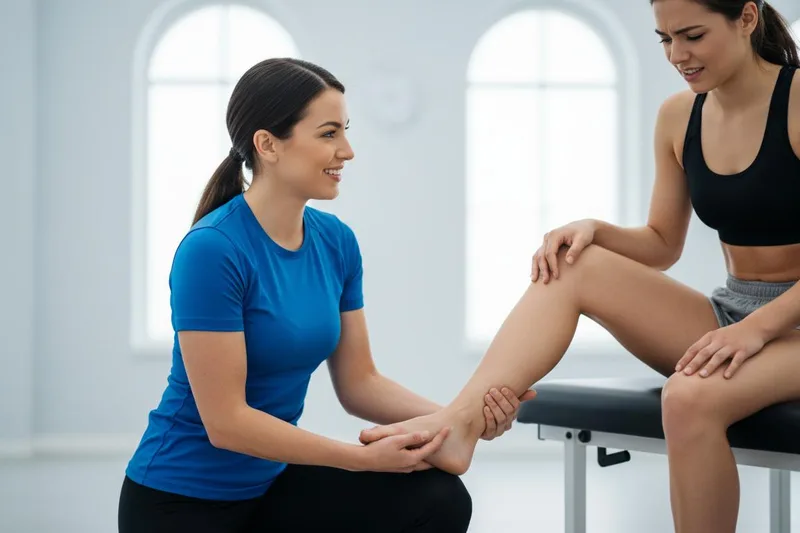
Are you a cricketer? Or something like netball or volleyball? Maybe you like running, jumping, or going to the gym. It's very common for minor injuries, sprains , and muscle strains to occur when doing these kinds of physical activities. But did you know that there is a special person with medical knowledge who can help you right now? We are talking about that Athletic Trainer today.
Simply put, who is this Athletic Trainer?
An athletic trainer is a healthcare professional who helps prevent, diagnose, and treat sports-related injuries. They work not only with athletes, but with anyone who is physically active. You may have seen them on the sidelines of a sports match or during a training session.
The most important thing is that an Athletic Trainer is not just a coach. They have specialized training and qualifications related to healthcare.
What help do you get from an athletic trainer?
Imagine you suddenly sprained your leg while playing cricket. In such a situation, an athletic trainer can help you in many ways.
- Identify and treat injuries: They can quickly identify things like sprains , concussions, and heat stroke. They can also provide emergency first aid, such as CPR (cardiopulmonary resuscitation) .
- Helping to reduce the risk of injury: They will teach you how to play a sport or exercise safely. They may also use special techniques, such as taping, to reduce the risk of injury.
- Creating Rehab Plans: They create special plans to help you recover quickly after an injury and safely return to sports or exercise.
- Working with a sports medicine team: The doctor treating your injury and other healthcare professionals work together to provide you with the best treatment. This means they work as a team.
Where do athletic trainers work?
Many people think that Athletic Trainers only work with famous sports teams like national-level cricket teams. That's true, but they work in many other places.
- In schools and universities (such as school sports festivals, inter-university competitions)
- In youth sports clubs
- In police and fire departments
- In the armed forces
- In performing arts groups such as dance groups
- In some hospitals and clinics
Don't confuse these two: Athletic Trainer and Personal Trainer
Because these two names are very similar, many people confuse them. But these two are two people who perform two completely different roles. Let's understand this difference clearly.
| Point of comparison | Athletic Trainer | Personal Trainer |
|---|---|---|
| Main function | A healthcare professional. Prevents, diagnoses, and treats sports injuries. | A fitness instructor. Providing exercise plans and advice. |
| Education and qualifications | A university degree and often a postgraduate degree are required. Certified exams must be passed. | There may be various certificate courses, but not a regulated healthcare qualification. |
| Things to do | Diagnosing, treating, and developing rehabilitation plans. | They don't diagnose or treat disorders. They just create exercise plans. |
| Regulation | A licensed, regulated healthcare profession. | Healthcare is not regulated as a profession. |
The difference between an Athletic Trainer and a Sports Medicine Physician
This is another important point. An athletic trainer is not a doctor. They do not go to medical school. But they are health professionals who have received university degrees and specialized certified training.
Simply put, a Sports Medicine Physician is the leader of your healthcare team. The physician makes decisions about prescribing medications, surgeries, etc. An Athletic Trainer is an important member of that team who will be there to help you immediately on the field, implement your rehabilitation program according to the doctor's instructions, and constantly monitor your condition.
What knowledge and skills does an athletic trainer need to have?
To carry out this kind of responsibility, they need to have extensive knowledge.
- Knowledge about the body (Anatomy): A deep understanding of how the body's parts, such as bones, muscles, and joints, work together.
- Biomechanics and Kinesiology: The science of how the body moves when running, jumping, or throwing something.
- Knowledge about diseases and disorders `(Pathology):`: How injuries and diseases occur.
- Nutrition: How what we eat and drink affects the body's function and healing.
- Physical Therapy and Rehabilitation: The process of planning for someone's recovery after an injury.
In addition to this scientific knowledge, they must also have good interpersonal skills . They must be able to speak compassionately and patiently to an injured person, think quickly and make decisions, and explain complex medical matters to someone in a simple way.
You don't have to be a professional athlete to seek the help of an athletic trainer. Anyone who is physically active, recovering from surgery, or trying to manage a long-term condition like obesity can benefit from their services.
Take-Home Message
- An athletic trainer is a healthcare professional who specializes in sports-related injuries.
- They help with injury diagnosis, treatment, prevention, and rehabilitation.
- An Athletic Trainer and a Personal Trainer are two completely different people. A Personal Trainer is a fitness instructor.
- An athletic trainer is not a doctor, but they work closely with the healthcare team, including the sports physician.
- You don't have to be a professional athlete to avail of their services; anyone who is physically active can seek their help.


💬 Comments (0)
No comments yet. Be the first to share your thoughts here.
Add Your Comment