

Are you hoping to start a family, or are you trying to learn more about your body's natural monthly cycle? Tracking your body's changes can give you wonderful insights into your reproductive health. One simple, natural way to do this is by checking your basal body temperature, often called the BBT method. With a little patience and a special thermometer, you can learn a lot about when your body is most fertile.
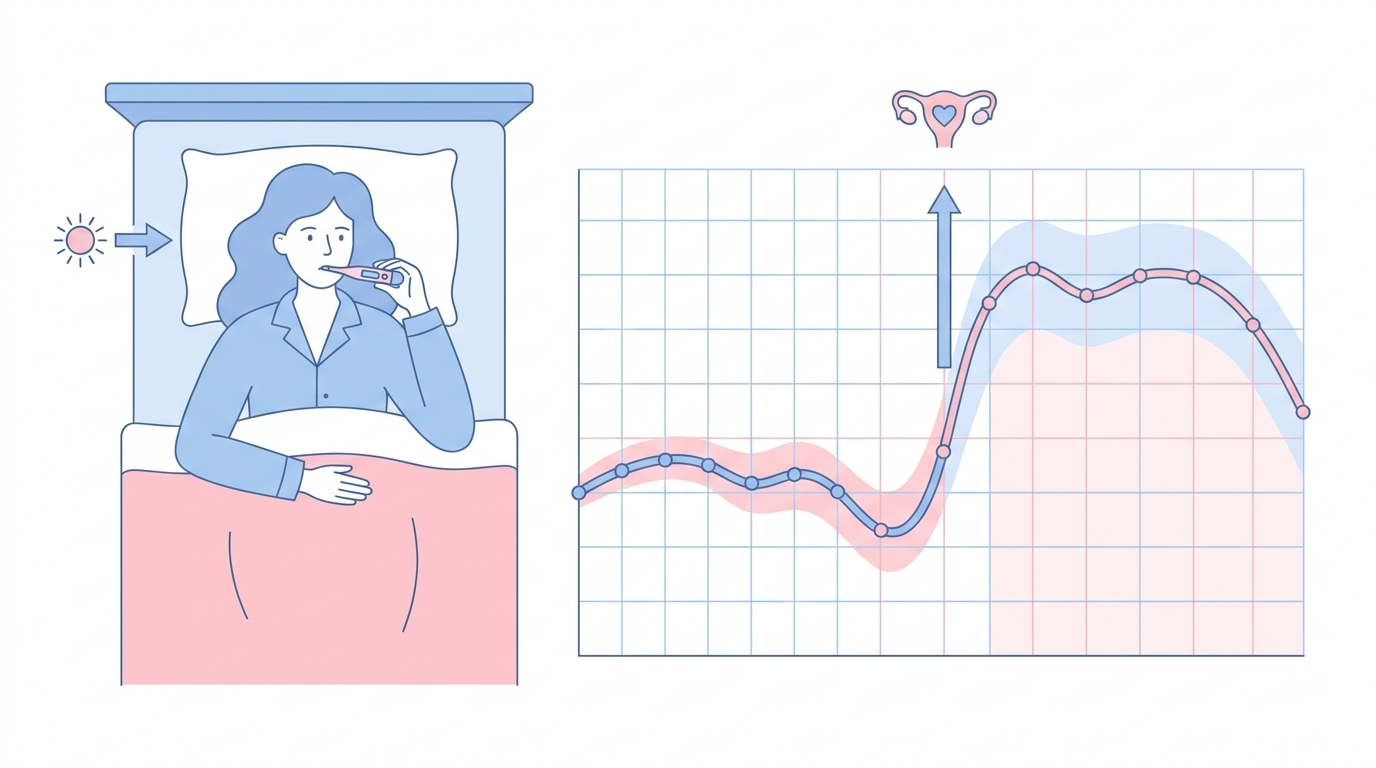
You do not need fancy equipment or expensive lab tests to get started. You just need a reliable thermometer, a notebook or a phone app, and a daily morning routine. Let us look at how the BBT method works and how you can use it to track your ovulation.
Key Takeaways.
- Basal Body Temperature (BBT) is your lowest body temperature when you are fully at rest.
- Your temperature rises slightly right after ovulation due to an increase in the hormone progesterone.
- You must measure your temperature every morning right when you wake up before getting out of bed.
- Use a special basal thermometer that shows two decimal places for accurate tracking.
- Tracking your BBT for several months helps you spot a clear pattern in your monthly cycle.
What is Basal Body Temperature and How is it Different?
Basal body temperature, or BBT, is your lowest body temperature when you are completely at rest. Think of it as the temperature your body has right when you wake up in the morning before you get out of bed, move around, or do anything else.
This is very different from the temperature you take during the day when you feel sick. During the day, you move, walk, talk, and eat. All these normal daily actions change your body temperature. BBT is special because it measures your resting baseline temperature before daily activities change it.
You cannot use a standard fever thermometer to measure your BBT because those small temperature changes are very tiny. You need a special thermometer called a basal thermometer that measures temperatures down to two decimal places. For example, a regular thermometer might show 98.1 degrees Fahrenheit, while a basal thermometer shows 98.15 degrees Fahrenheit. That tiny difference is what helps you track your fertile days.
How Does the BBT Method Work?
During your monthly menstrual cycle, one of your ovaries releases an egg. Doctors call this process ovulation. Right after ovulation happens, your body starts producing more of a hormone called progesterone. This hormone prepares your uterus to receive a fertilized egg if pregnancy occurs.
When progesterone levels rise, your basal body temperature also rises slightly. The increase is very small, but it is enough to measure. By tracking this temperature shift over time, you can figure out when ovulation happened.
To make this method work, you need to measure and record your BBT for at least three menstrual cycles. You might not spot the pattern in the very first month. After a few months, you will start to see a clear pattern. You might notice your temperature always goes up around the same days every month. You can use this information to guess your fertile window if you want to get pregnant or avoid pregnancy.
How to Measure Your BBT Correctly.
Taking your temperature the right way is very important. If you do not follow these steps carefully, your readings might not be correct.
- Use the Right Thermometer: Get a basal thermometer that measures temperatures to two decimal places. Check the package to make sure it says basal thermometer.
- Measure Right After Waking Up: Take your temperature the moment you wake up. Do not get out of bed, talk, or move around much before taking it. Keep your thermometer right next to your bed.
- Measure at the Same Time Every Day: Try to check your temperature at the same time every morning. If you wake up at 6 AM on weekdays but sleep until 8 AM on weekends, your readings may vary. Try to keep your wake-up time steady.
- Use the Same Method: Measure your temperature using the same method every day. Most people measure orally under the tongue, while some use rectal measurement. Stick to whatever method you choose.
- Record Every Reading: Write down your daily temperature along with the date. You can use a paper chart or a fertility tracking app on your phone to see your daily changes easily.
- Look for the Temperature Rise: After ovulation, your BBT usually rises by less than half a degree. Finding this pattern can take a few months of daily tracking.
- Understand Your Fertile Window: You are most likely to get pregnant in the four days before ovulation and on the day of ovulation itself.
Patience and consistency are the most important parts of this process. Doing it at the same time every day gives you the most accurate results.
What Should Your BBT Usually Be?
For many women, the basal body temperature before ovulation stays between 96 and 98 degrees Fahrenheit, or about 35.5 to 36.6 degrees Celsius. After ovulation happens, the temperature rises to between 97 and 99 degrees Fahrenheit, or about 36.1 to 37.2 degrees Celsius.
The exact temperature rise is different for every person. Some people see a small rise of 0.4 degrees Fahrenheit. This others see a rise of up to 1 full degree Fahrenheit.
Some women notice a slight drop in temperature right before ovulation happens. Once ovulation occurs, that drop is followed by a clear, steady rise. Look at your own chart to see if you can spot this pattern.
Continue recording your BBT through the end of your cycle until your period starts. If you become pregnant that month, your BBT will stay high because your body keeps producing progesterone to support the pregnancy. If you do not get pregnant, your temperature will drop, and your period will begin a day or two later.
How to Tell If Ovulation Happened Using Your BBT Chart.
One challenge with the BBT method is that it only tells you ovulation has already happened after the fact. That is why tracking your chart for multiple months helps you learn your personal cycle pattern.
When you look at your BBT chart, look for two main phases: the pre-ovulation phase and the post-ovulation phase. Your daily numbers will bounce around a little, but you should see a clear jump in temperature after ovulation. If your temperature stays at a higher level for at least three days in a row, you can safely assume ovulation has taken place.
Using the BBT Method to Help Conceive.
If you want to use the BBT method to help get pregnant, your main goal is to find the days when you are most fertile. This helps you identify your fertile window.
For example, if your past charts show your temperature rises around cycle days 12, 14, and 16, you can plan to have unprotected sex around days 8 through 16 during your next cycle.
Remember that sperm can live inside your uterus for up to four or five days. That is why the days leading up to ovulation are so important. Hitting those days gives you the highest chance of conceiving.
Does Your BBT Change If You Get Pregnant?
Yes. As mentioned before, if you become pregnant, your BBT stays high instead of dropping before your expected period. However, you cannot rely on temperature alone to confirm a pregnancy. You must always take a pregnancy test or visit your doctor to be certain.
What Happens to Your BBT Right Before Your Period?
Your BBT does not stay high right before your period starts. If you are not pregnant, your body stops producing high levels of progesterone, and your BBT drops back down a day or two before your period begins.
Benefits of the BBT Method.
The biggest benefit of the BBT method is that it has no side effects and costs very little. The only expense is buying a basal thermometer. It is a completely natural method that introduces no hormones or medicines into your body. It also helps you learn a lot about how your body works.
Disadvantages and Things to Watch Out For.
The BBT method is not right for everyone, and it has some clear limitations and disadvantages.
- Irregular Cycles: If you have an irregular menstrual cycle where your period dates change a lot, it is much harder to find a clear ovulation pattern.
- Forgetting to Measure: If you forget to take your temperature at the exact right time every morning, your chart will not be accurate.
- No Protection Against STIs: This is very important. The BBT method offers no protection against sexually transmitted infections (STIs).
- Not Reliable Alone for Birth Control: Using the BBT method by itself to prevent pregnancy is not very reliable because many everyday things can change your temperature. If you use this method to avoid pregnancy, you should always combine it with another birth control method like condoms.
Several everyday factors can change your basal body temperature and make your chart harder to read:
- Breastfeeding .
- Drinking alcohol .
- Getting sick or running a fever .
- Not getting enough sleep .
- having high stress .
- Taking certain medicines .
- Traveling to different time zones .
If any of these things happen, your temperature reading that morning might be unusual. It is a good idea to write notes on your chart when these events happen.
Feature. BBT Method for Pregnancy Planning. BBT Method for Birth Control. Reliability. Helpful when combined with other signs. Low reliability when used alone. STI Protection. None. None (requires barrier methods). Cost. Very low (cost of a basal thermometer). Very low. Take-Home Message.
We hope this guide gives you a clear understanding of how the BBT method works. Here are the main points to keep in mind:
- BBT is your lowest body temperature measured when you are completely at rest.
- Progesterone hormone causes your BBT to rise slightly after ovulation occurs.
- You need a special basal thermometer and must take your temperature every morning before getting out of bed.
- Tracking your cycle for multiple months helps you learn your personal pattern and find your fertile days.
- If you want to get pregnant, time intercourse around your fertile days.
- Do not rely on the BBT method alone to prevent pregnancy. Use another reliable contraceptive method alongside it.
- Remember that illness, stress, poor sleep, and alcohol can change your daily temperature readings.
Talk with your doctor to see if this method fits your personal health goals and lifestyle. They can help you decide how to use it safely and effectively.
The BBT method is a natural, low-cost way to learn more about your body and your reproductive health. Many doctors recommend combining it with other fertility tracking methods for the best results. With patience and consistent daily habits, you can learn a lot from your body's natural signals!
When to Seek Medical Attention.
If you experience severe pelvic pain, very irregular periods, unusual bleeding, or signs of infection, contact your doctor right away. Call 911 (US/Canada) or 999 (UK) or go to your nearest Emergency Department if you experience sudden, severe abdominal pain or heavy bleeding that makes you feel dizzy or faint.
A Note from Dr. Priya Sammani.
Basal body temperature tracking is a wonderful tool to help you connect with your body's natural cycles. Because resting body temperature rises slightly after ovulation due to progesterone production, daily morning checks can help you map your fertile days. Consistency is key, so make it part of your routine. Always speak with your doctor if you have questions about your fertility or family planning goals.


💬 Comments (0)
No comments yet. Be the first to share your thoughts here.
Add Your Comment