
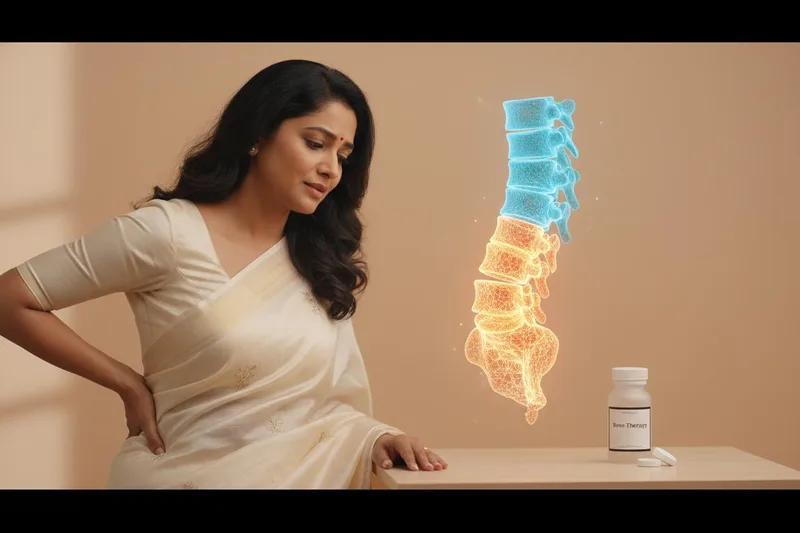
You must have heard our mothers, fathers, grandmothers, and grandfathers say, "Oh, my body is weak now," and "My bones are brittle." In fact, as we age, our body's strength decreases, and the strength of our bones gradually decreases. Sometimes, when this condition becomes severe, even a small fall or even getting out of bed can lead to a very high risk of breaking an arm or leg. This condition in which bones become weak and brittle is called osteoporosis . So, today we are going to talk about a very important class of drugs that doctors use to control this type of bone weakness.
Simply put, what are these bisphosphonates?
Bisphosphonates are a class of medications used to treat conditions such as osteoporosis that reduce bone density and strength. This means that there is not one drug with this name, but a combination of several drugs. In addition to osteoporosis, doctors also prescribe this medication for some cases of dangerously high blood calcium levels (hypercalcemia).
Let's look at the main types of medications under this category. These come in two main forms. One is oral (pills taken by mouth), and the other is intravenous (IV) (liquid given into a vein).
| How to give medicine | Examples of medicines (commonly used in Sri Lanka) |
|---|---|
| Oral Bisphosphonates | Alendronate, Risedronate, Ibandronate |
| Intravenous fluids (IV Bisphosphonates) | Zoledronic acid, Pamidronate |
How does this medicine affect the body?
To understand this, we first need to understand a little about how our bones work. Think of our bones as a building that is constantly being repaired. Our body naturally breaks down and removes old, weak bone. We call this process bone resorption . At the same time, new, strong bone is formed in the places where it was removed. As long as these two processes are in balance, our bones are strong.
However, as we age, especially after menopause in women, this balance is lost. What happens is that old bone is broken down much faster than new bone is formed. The result is that bones gradually become thinner, more porous, and weaker.
So, what these bisphosphonates do is significantly control and reduce the rate of bone resorption. Then, because the old bone is strong while new bone is being formed, the overall density and strength of the bones increase. Simply put, they stop bone loss.
What conditions are bisphosphonates used for?
Doctors mainly recommend this medication for the following conditions:
- Osteoporosis is a condition that occurs in women after menopause.
- Osteoporosis in men.
- To prevent the occurrence of osteoporosis.
- Osteoporosis caused by the continued use of medications such as steroids (glucocorticoids).
- Paget's disease of the bone is a disease in which bones develop abnormally.
- Control complications that occur with certain types of cancer (e.g. Multiple Myeloma) and when cancer cells spread to the bones (Bone Metastasis).
- To control cancer-related hypercalcemia (increased calcium levels in the blood due to cancer).
How should I use this medicine? This is very important!
It is essential to follow these instructions exactly to get the full benefit of the medicine and minimize side effects.
Oral Medications
The way to take these pills is very specific. You must follow the doctor's instructions exactly.
- The pill should be taken in the morning, before eating or drinking anything (on an empty stomach) .
- The pill should only be taken with a full glass of water (plain water) . It is strictly forbidden to take this medicine with things like tea, coffee, milk, or fruit drinks.
- Most importantly: After taking the medicine, you should sit or stand for at least 30 to 60 minutes . Do not lean, lie down, or sleep for any reason.
- The reason for this is that this medicine can damage the esophagus. That risk is eliminated when you stand up because the medicine passes more quickly into the stomach.
- It is not a good idea to eat or drink anything else during this 30-60 minute period. After that time is up, you can have breakfast as usual.
IV Medications
You can't do this at home. This treatment is given in a hospital or clinic. Depending on your condition, this injection (infusion) is usually given once a year or every few months.
While taking this medication, your doctor will often recommend that you eat foods rich in calcium (milk, yogurt, cheese, small fish) and take a vitamin D supplement , as both are essential for strong bones.
What are the side effects of bisphosphonates?
As with any medication, there may be some side effects. But don't worry, most of them are minor.
| Type of medicine | Possible side effects |
|---|---|
| Oral medication | Gastrointestinal problems such as heartburn, GERD, esophagitis, stomach pain, and ulcers. (These can be largely prevented by following the correct way to take your medicine.) |
| Intravenous (IV) medication | Symptoms similar to those of a cold or flu, such as fever, body aches, headache, and joint and muscle pain, may occur for a day or two after taking the medicine. These usually go away within a few days. |
Side effects that are very rare but worth being aware of
Although these are very rare , it is important to be aware of them.
- Osteonecrosis of the jaw: This risk is very small, especially after surgery such as tooth extraction. So if you are taking this medication, tell your dentist every time you see him.
- Atypical femur fractures: This is a rare occurrence among people taking this medication for a long time (more than 3-5 years).
- Eye problems: Inflammations (uveitis, scleritis) of various parts of the eye can occur.
The most important thing is that the risk of breaking a bone due to osteoporosis if you do not take this medication is a thousand times greater than the very small risk of these side effects. Therefore, it is very important to follow your doctor's instructions.
When do you want to see the doctor again?
If you are taking this medication, it is important to see your doctor at regular intervals to check if the medication is working and if there are any side effects. You may also be referred to a bone specialist (Endocrinologist or Rheumatologist).
Your doctor may also recommend a DXA scan to see how dense your bones are.
Special Note: If you have been using this medication for more than three years and experience new pain in your thigh or groin, do not ignore it and inform your doctor immediately.
Take-Home Message
- Bisphosphonates are a very effective medication that helps strengthen bones weakened by osteoporosis.
- These medications work by slowing down the rate of bone loss.
- When taking oral medication, it is imperative to drink it on an empty stomach, with water only, and to remain standing or sitting for 30-60 minutes after taking the medication.
- Although minor side effects may occur, serious side effects are very rare. The benefits of the medicine far outweigh the risks.
- If you have any questions, concerns, or doubts about this medication, talk to your doctor about it openly. Never stop taking your medication without medical advice.


💬 Comments (0)
No comments yet. Be the first to share your thoughts here.
Add Your Comment