
Do you sometimes feel short of breath when walking a short distance? Or do you have chest tightness or a persistent cough? When you have symptoms like these, your doctor will want to know if your lungs are working properly. So, today we are going to talk about a special, very accurate test that will check exactly that.
What is Body Plethysmography?
The name may sound a bit complicated, but it's actually quite simple. Simply put, Body Plethysmography is a test that measures how much air you can take in and how much air is left after you exhale. It falls under the category of tests that measure lung function, known as Pulmonary Function Tests (PFTs).
Think of it like a balloon. It's like seeing how much air you can fill it with and how much air is left after you let it out. This test is very safe and can be done without any discomfort. The information you get from this will help your doctor develop the best treatment plan for you.
Why is this test being done? What does it find?
There are several reasons why a doctor might recommend this test. The main one is that it helps diagnose lung and respiratory conditions.
- Identify diseases like asthma: Determine whether you have asthma or not.
- Identify conditions like COPD: Identify chronic lung disease called ``Chronic Obstructive Pulmonary Disease''.
- Pulmonary Fibrosis: Find out about conditions that cause the lungs to become stiff.
Not only that, this test is important for many other things.
- Compare lung function: See if your lungs are working properly for your age and height. You can also compare your results with previous tests.
- Measure the success of treatment: Imagine you have asthma, and the doctor has prescribed medication. Now this test helps to see exactly whether your lungs are working well with that medication.
- Detect changes in the lungs early: Sometimes this can detect even small changes in the lungs before symptoms appear.
- Check the impact of the environment: Find out if your lungs are being damaged by things like dust and chemicals at work or at home.
- Ability to tolerate surgery: Before major surgery, assess whether your lungs can handle it.
| Symptoms that may require this test | |
|---|---|
| Symptom | Description |
| Chest tightness or pain | Feeling like something is pressing on your chest. |
| Cough | A persistent cough, especially with mucus. |
| Difficulty taking a deep breath | Feeling of difficulty breathing. |
| Difficulty breathing (Dyspnea) | Feeling suffocated, short of breath. |
| Wheezing (cheese) sound when breathing | A soft sound coming from the throat or chest when breathing in or out. |
How do you do this test?
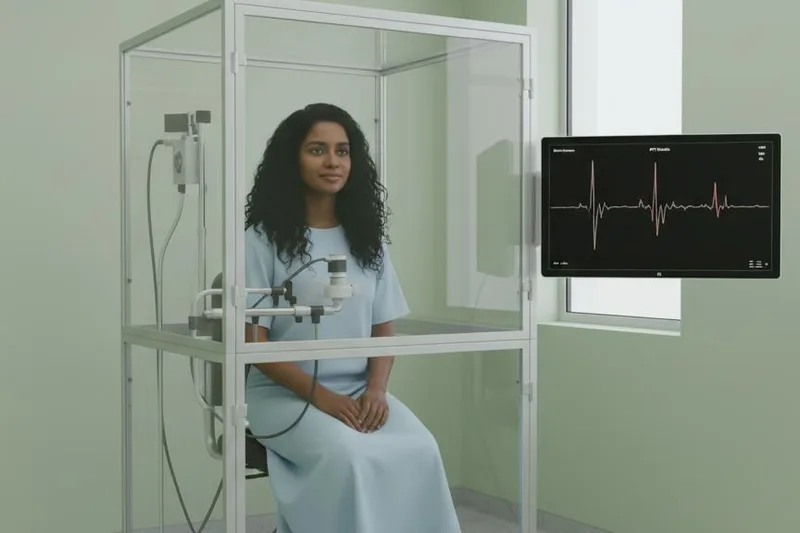
This test is done inside a box made of clear glass or plastic that is sealed so that no air can move around. Think of it like a telephone booth. While you sit in a chair inside, you are asked to breathe in and out through a tube.
When you breathe in and out, your chest expands and contracts. The air pressure inside the chamber changes according to that change. By measuring those pressure changes, you can calculate exactly how much air is in your lungs. This is done using a scientific principle called ``Boyle's law''.
You can see the medical staff during the examination, and they can see you. So there is no reason to be afraid. You can also talk to them at any time.
How do you prepare before the test?
To get an accurate result, you need to follow a few things starting the day before the test. Your doctor will advise you on this.
- Avoid smoking: Do not smoke for at least one hour before the test.
- No alcohol: Do not drink alcohol for at least four hours beforehand.
- Do not do strenuous exercise: Avoid strenuous exercise 30 minutes before the test.
- Don't eat large meals: Don't eat until you're full two hours before.
- Be careful with your clothing: Wear loose clothing that doesn't constrict the chest and stomach area . Tight clothing may change the results.
- Tell your doctor about all medications you are taking. You may be asked to stop taking some medications on the day of the test.
Is the test painful? What kind of experience will it be?
No, this test is not painful at all.
All you have to do is sit inside the chamber, put a small clip on your nose (breathe only through your mouth), and breathe into the tube according to the instructions they give you. The entire test takes about 15 minutes.
However, some people may feel a little dizzy or tired as they breathe in and out deeply. They may also cough. But don't worry, these will go away soon after the test is over. If you feel uncomfortable, tell the staff and they will give you a short break.
Very rarely, conditions such as increased carbon dioxide in the blood (hypercapnia) or decreased oxygen (hypoxia) can occur. However, these are very rare.
What are the main things measured by the test?
This test can measure some very valuable information about your lungs.
| Measurement | Simple meaning |
|---|---|
| Total Lung Capacity (TLC) | The total amount of air in your lungs after you take the deepest breath you can. |
| Functional Residual Capacity (FRC) | The amount of air remaining in the lungs after a normal exhale. |
| Residual Capacity (RC) | The amount of air left in your lungs after you exhale as hard as you can. |
What is the difference between Spirometry and Body Plethysmography?
You may have heard of a test called `(Spirometry)`. It is also a commonly used test that measures lung function. However, the Body Plethysmography test is more accurate and detailed than the `(Spirometry)` test.
The main difference is that `(Spirometry)` cannot measure the `(Residual Capacity - RC)` mentioned above, that is, the amount of air remaining in the lungs after exhaling completely. However, Body Plethysmography can measure it accurately. Therefore, this test is essential to diagnose certain medical conditions.
When will I receive the results (report)?
You can usually get your results within a few days of the test. Your doctor will review the report and explain what it means to you.
What is considered "normal" varies from person to person. It depends on factors like your age, height, weight, and gender . So don't compare your results to someone else's. The most important thing is to talk to your doctor about this and decide on your health status and future treatment.
Take-Home Message
- Body Plethysmography is a safe test that provides very accurate information about the health of your lungs.
- This is very helpful in diagnosing diseases like asthma and COPD and measuring the success of treatments.
- The test is not painful at all and takes only about 15 minutes.
- Follow the doctor's instructions carefully before the test (such as avoiding smoking and alcohol).
- After receiving your test report, be sure to discuss it and your next steps with your doctor.




💬 Comments (0)
No comments yet. Be the first to share your thoughts here.
Add Your Comment