
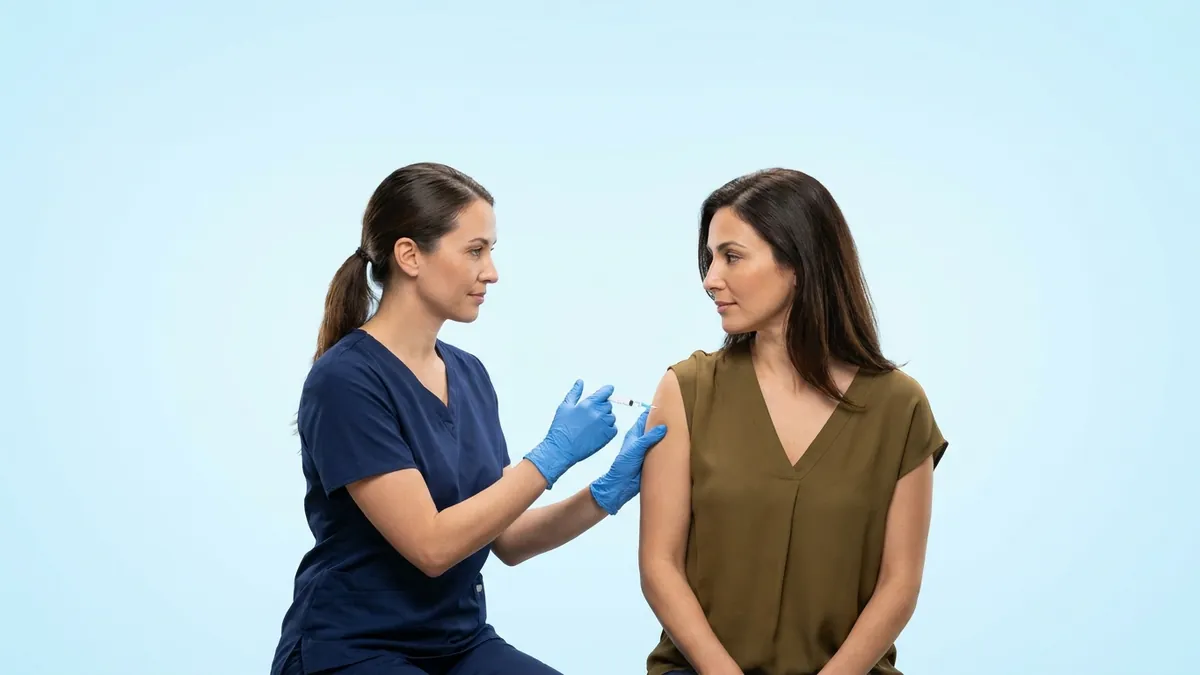
Understanding where cabotegravir (Cabenuva & Apretude) is injected—along with the ventrogluteal Z-track technique and soothing post-shot soreness—is one of the smartest steps you can take before starting long-acting HIV treatment or prevention. Switching away from daily tablets to an injection given only once every month or two feels liberating, doesn't it? Yet almost everyone sitting in the exam room wonders the exact same thing before their first appointment: where exactly does that needle go, and how sore am I going to feel tomorrow morning?
We doctors talk patients through these exact questions every single week at Primary Care Physician (PCP) offices, family GP clinics, and specialist sexual health centers across the United States, the United Kingdom, Canada, and Australia. Because cabotegravir is engineered to stay active in your body for weeks at a time, it cannot be given like a quick flu shot in your upper arm. Instead, it relies on a specific deep hip muscle placement that protects nearby nerves while letting the medication release at a steady, reliable pace.
When you understand how your nurse locates this sweet spot on the side of your hip, why they gently pull your skin sideways before injecting, and what simple habits calm tenderness afterward, the whole visit feels far less intimidating. Let's walk through everything you need to know together, step by step.
📌 Key Takeaways at a Glance
- Preferred Injection Site: Both Cabenuva and Apretude are injected exclusively into the deep gluteal muscle—ideally the side-hip muscle (ventrogluteal site), with the upper-outer buttock (dorsogluteal site) used as a secondary option.
- Never in the Arm or Thigh: Cabotegravir must never be injected into your upper arm (deltoid), thigh, subcutaneous fat, or veins.
- One Shot vs. Two Shots: Apretude for HIV prevention requires one gluteal injection per visit, whereas Cabenuva for HIV treatment requires two separate gluteal injections (cabotegravir and rilpivirine) placed on opposite hips or spaced at least 2 cm apart.
- Z-Track Sealing Method: Clinicians pull your skin laterally before inserting the needle so the tissue slides back afterward like a trapdoor, locking the medication deep inside the muscle.
- Soreness Fades Over Time: Mild aching or a small firm bump for two to four days is very common after your first few doses and eases significantly with future visits.
Where Is Cabotegravir (Cabenuva & Apretude) Injected in the Body?
Cabotegravir (used in both Cabenuva and Apretude) is injected exclusively into the deep hip muscle known as the ventrogluteal site, or occasionally into the upper-outer buttock (dorsogluteal site) as a backup. Trained clinicians administer it slowly using the Z-track technique, and never inject it into your arm or thigh.
Have you ever wondered why this shot cannot simply go into your shoulder muscle like a routine tetanus booster? Think about it for a second. A standard vaccine holds only half a milliliter of watery liquid that clears quickly, whereas cabotegravir is a thick, slow-release dose of 2 milliliters (mL) or 3 mL designed to sit comfortably inside muscle fibers for up to two full months. Your upper arm simply does not have enough deep muscle cushion to hold that volume safely without severe pain or leakage.
Why We Doctors Strongly Prefer the Side-Hip (Ventrogluteal) Site
When people hear the word "gluteal," they usually picture the back of their buttocks. Pretty surprising, right? In reality, the gold-standard target—called the side-hip injection site (ventrogluteal site)—sits further forward on the side of your hip, right over the thick gluteus medius muscle. To find it, your nurse places the heel of their hand over the bony bump on the side of your upper thigh (greater trochanter), points their thumb toward your groin, rests their index finger on the front pelvic bone, and spreads their middle finger back toward your iliac crest to form a "V." The injection goes cleanly into the fleshy triangle right in the middle of that "V."
We doctors love this side-hip triangle for three big reasons: the layer of overlying fat is noticeably thinner here than on the back of the buttocks, the muscle belly is thick and well-supplied with blood vessels, and it stays far away from your major sciatic nerve and superior gluteal artery. If scar tissue, hip hardware, or personal anatomy makes the ventrogluteal spot tricky, a clinician can use the upper-outer quadrant of the buttock (dorsogluteal site), though the side hip remains safer and more consistent.
How Does Long-Acting Cabotegravir Work Under the Muscle, and Why Is the Z-Track Technique Used?
To appreciate why placement matters so much, look at what happens beneath your skin once the plunger goes down. Cabotegravir is formulated as an extended-release micro-crystal liquid (nanocrystalline aqueous suspension). Unlike dissolved liquids that rush straight into your bloodstream all at once, millions of microscopic drug particles settle neatly between your gluteal muscle fibers to create a tiny, slow-dissolving reservoir—what we doctors call a muscle depot (intramuscular depot).
Over the next four to eight weeks, tiny capillaries inside your hip muscle gradually absorb those crystals, maintaining steady antiviral protection around the clock. In Apretude, cabotegravir works solo as HIV pre-exposure prophylaxis (PrEP) to stop the virus from integrating into immune cells if exposure happens. In Cabenuva, cabotegravir is paired with a second long-acting antiviral called rilpivirine to keep existing HIV-1 fully suppressed. Because Cabenuva includes two distinct medicines that cannot be mixed in the same syringe, you receive two gluteal injections at the same visit—typically cabotegravir on one hip and rilpivirine on the opposite hip (or on the same side spaced at least 2 centimeters apart).
How the Z-Track Technique Locks Your Dose in Place
What do you think would happen if a thick suspension followed the needle straight back up toward your skin surface? If medicine tracks backward into your fatty layer (subcutaneous tissue), it triggers stinging inflammation, red surface lumps, and uneven absorption. That is where the skin-sliding sealing method (Z-track injection technique) saves the day.
Before inserting the needle at a straight 90-degree angle, your nurse gently pulls your skin and underlying tissue about one inch (2.5 centimeters) to the side and holds it taut while pushing the medication slowly over several seconds. The moment the needle slides out, your nurse releases your skin. As the surface layers glide back to their natural resting spot, the straight needle path zigzags shut like a sliding door, sealing every drop safely inside the deep muscle belly. Now that makes sense, right?
What Needle Length, BMI Rules, and Dosing Schedules Should You Expect at Your Clinic?
Remember how we talked a moment ago about making sure cabotegravir lands deep inside muscle rather than surface fat? Reaching true muscle depth depends directly on matching the needle length to your natural body build, measured using body mass index (BMI). Standard Cabenuva and Apretude kits come packed with a 23-gauge, 1.5-inch (38 mm) needle, which works wonderfully for most lean and average builds. However, clinical pharmacokinetic studies proved that if cabotegravir sits in adipose tissue instead of muscle, first-month blood levels drop slower than intended.
- BMI under 30 kg/m²: Clinicians use the standard 1.5-inch (38 mm), 23-gauge intramuscular needle.
- BMI of 30 kg/m² or higher: Guidelines strictly recommend switching to a longer 2-inch (50 mm), 21- to 23-gauge needle so the tip reliably clears subcutaneous fat and enters the gluteus medius muscle.
- Injection Doses & Schedules: For Apretude, you receive one 600 mg (3 mL) injection one month apart for two starter doses, then every two months thereafter. For Cabenuva, monthly dosing uses 400 mg (2 mL) cabotegravir plus 600 mg (2 mL) rilpivirine every month; every-two-month dosing uses two starter monthly visits of 600 mg (3 mL) each, followed by 600 mg (3 mL) of each medicine every two months.
- Your +/- 7-Day Appointment Window: Life gets busy—flights get delayed, kids catch colds, or work shifts change. You have a built-in grace window of 7 days before or 7 days after your target injection date. If a trip will force you past that 7-day buffer, call your clinic ahead of time so we doctors can prescribe daily oral cabotegravir tablets (Vocabria, plus oral rilpivirine if taking Cabenuva) as temporary oral bridging.
Before starting, always tell your doctor or nurse if you have cosmetic buttock implants or silicone/hyaluronic fillers—injecting through synthetic filler material carries serious infection and malabsorption risks. Also flag blood-thinning medications, bleeding disorders (like hemophilia or low platelets), liver disease, or strong enzyme-inducing drugs such as carbamazepine, oxcarbazepine, phenytoin, phenobarbital, rifampin, or rifapentine, which break cabotegravir down too rapidly and make it ineffective. And if you take Apretude for PrEP, your clinic will run a sensitive HIV antigen/antibody and HIV-1 RNA blood test before every single injection to confirm you remain HIV-negative, preventing drug resistance.
Normal Post-Shot Soreness vs. Warning Signs: How Can You Tell What Is Normal?
In major clinical trials, around 75% to 80% of people noticed mild-to-moderate tenderness at the injection site after their initial shots, yet fewer than 2% ever chose to go back to daily pills because of it. Why? Because most reactions feel very much like doing heavy hip-abductor squats at the gym after a break! Still, knowing how to tell routine depot settling apart from something that needs a clinic check gives you real peace of mind. Look through our comparison guide below.
| Post-Injection Symptom or Finding | What It Means Clinically & What You Should Do |
|---|---|
| Mild-to-moderate deep hip ache or stiffness (Days 1–4) | Your muscle fibers are gently stretching around the 2 mL to 3 mL fluid depot, creating harmless localized inflammation that peaks around 24 to 48 hours. What you should do: Keep walking lightly to boost blood flow, apply a warm compress or cold pack for 15 minutes, and take acetaminophen (paracetamol) or ibuprofen if cleared by your doctor. |
| Small, firm pea- or marble-sized bump deep under the skin (Nodules) | Remember how we talked earlier about those tiny medicine crystals slowly dissolving? Occasionally your immune cells form a painless, temporary cushion around the depot that can linger for two to six weeks. What you should do: Leave the bump alone—avoid deep-tissue massage guns or vigorous kneading, which can irritate surrounding tissue. Mention it at your next scheduled clinic visit so your nurse alternates sides. |
| Superficial redness, surface itching, or warm shallow swelling | A tiny drop of suspension may have touched the upper fatty layer despite Z-track sealing, triggering mild skin irritation. What you should do: Place a clean cool gel pack wrapped in a soft towel over the hip for 10 to 15 minutes and wear loose waistbands. Contact your PCP or GP clinic if redness widens after 72 hours. |
| Lightheadedness, sweating, or ringing ears 5–15 minutes post-shot | Usually a brief vasovagal reflex from needle tension, or rarely a transient post-injection reaction (especially seen if rilpivirine in Cabenuva enters a tiny blood vessel). What you should do: Stay seated or lie flat at the clinic for at least 10 to 15 minutes right after your shot, sip cool water, and alert your nurse immediately before standing up. |
| Spreading hot redness, pus, high fever, or electric leg pain | Expanding heat with fever points toward a bacterial skin infection (cellulitis or abscess), while sharp shooting pain or numbness down your leg signals nerve irritation. What you should do: Do not wait for your next appointment—visit your family GP clinic, local Urgent Care center, or hospital Emergency Room (ER / A&E) the same day for hands-on evaluation. |
How Can You Soothe Post-Shot Soreness Before and After Your Appointment?
Be honest, you've probably felt tempted to rub a sore muscle right after a vaccine, haven't you? With cabotegravir, skipping that habit—and using a few insider clinic tricks instead—makes a night-and-day difference in how your hips feel over the weekend. See? Small tweaks before the needle even touches your skin do most of the heavy lifting.
- Make Sure the Vial Reaches Room Temperature First: Cabenuva requires refrigerator storage at the pharmacy or clinic. Cold, thick suspension stings noticeably more going in, so nurses let the vials sit at room temperature (below 25°C / 77°F) for at least 15 minutes before drawing up your dose.
- Take Weight Totally Off the Target Hip: Tight muscle fibers pinch around the needle. If you lie on your side, bend your top knee slightly forward onto a pillow; if standing, shift all your weight onto the opposite foot and let the injected leg hang completely floppy while breathing out slowly.
- Take a Gentle Walk Right Afterward: Going for an easy 15- to 20-minute stroll around the block or grocery store right after your appointment keeps your gluteus medius warm and limber, preventing stiffness from locking in overnight.
- Use Temperature Therapy Smartly: Before your shot or on Day 2, a warm shower or warm heating pad for 15 minutes relaxes tight muscle fibers (just avoid scorching heat directly over fresh injection sites in the first couple of hours). If the spot feels warm or puffy on Day 1, use a cloth-wrapped ice pack instead.
- Support Recovery with Everyday Comforts: Stay well-hydrated with plain water, sparkling water, or herbal tea, eat balanced protein-rich meals like grilled salmon, scrambled eggs, oatmeal, or Greek yogurt, and wear soft joggers or relaxed jeans whose waistband doesn't press straight onto your side hip.
✔️ What You Should Do & ❌ What to Avoid
- ✔️ DO keep every +/- 7-day clinic window: Put calendar reminders in your phone a week early so your antiviral levels never dip into a range where HIV could develop resistance.
- ✔️ DO speak up about your comfort and BMI: Remind a new nurse if you usually need a 2-inch needle, prefer lying down rather than standing, or remember which hip went last time.
- ✔️ DO rest at the clinic for 10 to 15 minutes post-shot: Give yourself a few calm minutes scrolling on your phone in the waiting area before driving home.
- ❌ DON'T rub, knead, or use a percussion massage gun on the injection site: Deep pressure right after a Z-track shot can push suspension backward toward your fat layer and worsen soreness.
- ❌ DON'T schedule intense heavy leg-day workouts for 24 to 48 hours: Swap heavy barbell squats, lunges, or long cycling sessions for easy walking or upper-body stretching for two days.
- ❌ DON'T start new seizure, tuberculosis, or herbal medicines (like St. John's wort) without checking: Certain liver-enzyme triggers clear cabotegravir dangerously fast—always check with your pharmacist or PCP first.
🚨 When to Seek Immediate Emergency Care (Red-Flag Symptoms)
If you or someone near you develops any of these red-flag symptoms, do not wait — call 911 (US & Canada), 999 or 111 (UK), or 000 (Australia) immediately or go straight to the nearest hospital Emergency Room (ER / A&E):
- Signs of a severe allergic reaction (anaphylaxis): Sudden swelling of your lips, tongue, face, or throat, widespread hives, wheezing, chest tightness, or trouble breathing.
- Severe post-injection systemic reaction: Intense shortness of breath, crushing chest heaviness, flushing, stomach cramps, or feeling like you are about to faint within minutes of your injection.
- Signs of acute liver injury: Yellowing of your skin or the whites of your eyes (jaundice), tea-colored dark urine, pale stools, persistent nausea, or sharp upper-right belly pain.
- Spreading deep tissue infection or nerve injury: Rapidly expanding angry red skin hot to the touch, pus draining from the puncture site, shaking chills with high fever, or sudden electric pain, foot drop, or numbness shooting down your leg.
💡 Key Take-Home Message
- Cabotegravir (Cabenuva and Apretude) belongs strictly in the deep gluteal muscle—most safely in the side-hip ventrogluteal triangle—sealed with the Z-track technique and matched to the right needle length for your BMI.
- Two or three days of hip stiffness or a small temporary under-skin bump is normal depot physiology, eases noticeably after your first few visits, and responds well to gentle walking and simple over-the-counter pain relief.
- Partnering closely with your Primary Care Physician, family GP, or sexual health nurse—especially around your +/- 7-day dosing window—keeps your protection seamless and stress-free.






No comments yet. Be the first to share your question or experience below.