

Have you ever wondered how your body manages to keep your bones strong and your blood chemistry in balance every single day? Deep inside your neck, your thyroid gland quietly makes a special hormone called calcitonin that plays a key role in managing your calcium levels.
You might not hear about calcitonin as often as other hormones like insulin or thyroid hormone, but it acts like a behind-the-scenes helper for your skeleton. Let us take a close look at what calcitonin does, why your doctor might order a blood test for it, and what your results actually mean.
- Calcitonin is a hormone produced by special cells in your thyroid gland.
- Its main job is to lower your blood calcium levels when they get too high.
- It works in opposition to parathyroid hormone (PTH), which raises blood calcium.
- Doctors rarely test calcitonin for routine checkups, but use it to check for specific thyroid conditions.
- High calcitonin levels can sometimes point to medullary thyroid cancer or C-cell growth.
What is Calcitonin?
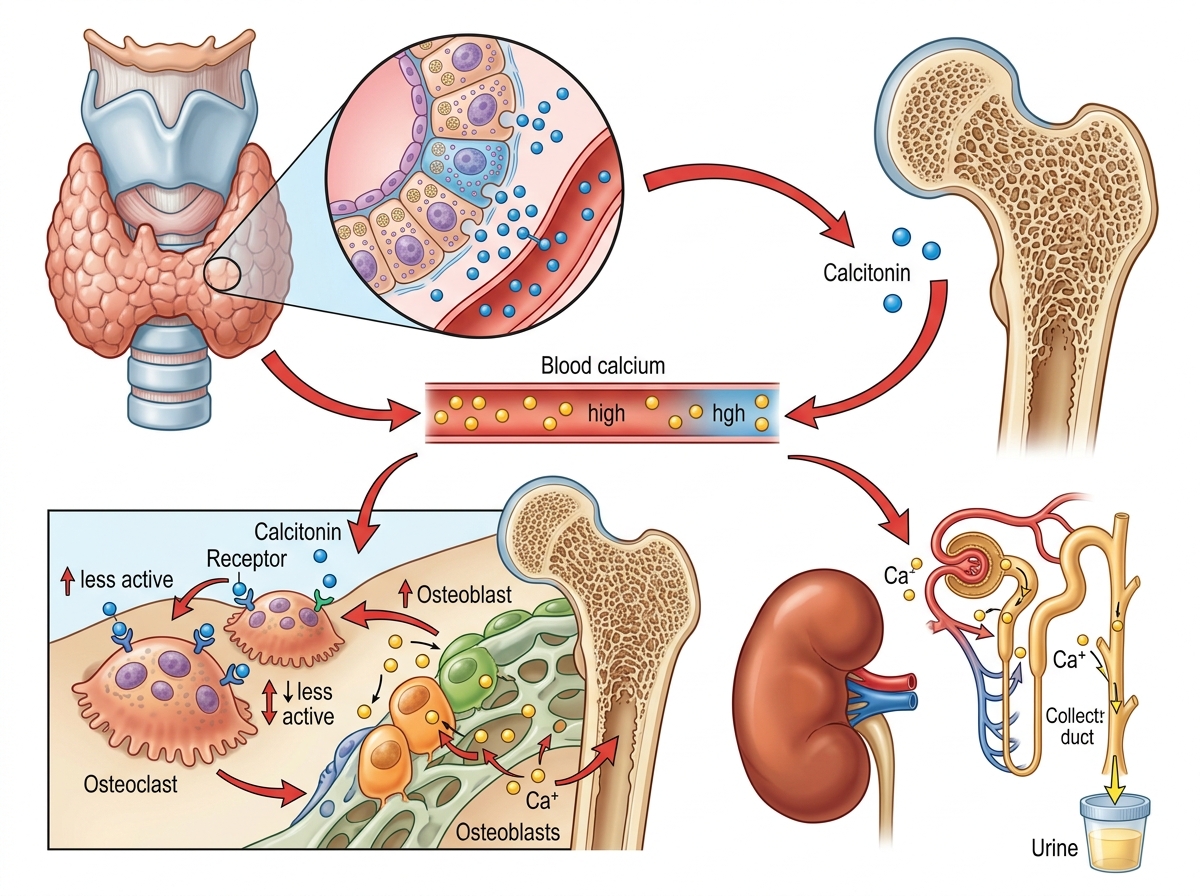
Simply put, calcitonin is a hormone made and released by your thyroid gland, which sits right in the front of your neck and is shaped a bit like a butterfly. Its main job is to lower the amount of calcium circulating in your bloodstream. Think of calcitonin as a biological police officer that steps in whenever your blood calcium gets too high.
Calcitonin works in direct opposition to another hormone called parathyroid hormone, or PTH. While calcitonin lowers your blood calcium, PTH raises it. These two hormones pull in opposite directions to keep your calcium levels balanced and steady.
Special cells inside your thyroid gland called C-cells, also known as parafollicular cells, produce and release calcitonin. Even though scientists understand how it works, they are still learning why we have it. People with very low or absent calcitonin levels often show no noticeable health problems at all.
Is Calcitonin Used as a Medicine?
In the past, doctors sometimes prescribed man-made calcitonin nasal sprays or injections as a treatment for conditions like Paget's disease of the bone and severe high blood calcium, known as hypercalcemia.
Today, doctors rarely use calcitonin as a medicine because newer, much more effective drugs like bisphosphonates are available. These modern medicines manage bone health and calcium levels with fewer side effects and better results.
What Does Calcitonin Actually Do?
The main job of calcitonin is to lower the amount of calcium in your blood rather than your bones. It achieves this goal through two primary actions:
1. It slows down bone breakdown. Your bones contain cells called osteoclasts that break down bone tissue and release calcium into your blood. Calcitonin temporarily slows down these cells, which stops extra calcium from flooding into your bloodstream.
2. It reduces calcium reabsorption in your kidneys. Your kidneys filter your blood and decide what to keep. Calcitonin tells your kidneys to let a bit more calcium pass out through your urine rather than putting it back into your blood.
Think of your blood calcium level like water in a tank. Calcitonin works by slowing down incoming water from your bones and helping drain a little extra out through your kidneys.
What Triggers Calcitonin Release?
Your thyroid gland releases calcitonin based directly on the amount of calcium flowing in your blood at any given moment.
- When your blood calcium level rises, your thyroid gland releases more calcitonin to bring it back down.
- When your blood calcium level drops, your thyroid gland slows down or stops releasing calcitonin.
This natural feedback loop operates automatically without you ever needing to think about it.
How Do Doctors Check Calcitonin Levels?
Your doctor can check your calcitonin level by ordering a simple blood test. Because abnormal levels rarely cause obvious early symptoms, doctors do not include this test in routine annual physical exams.
Doctors typically recommend a calcitonin blood test in specific situations:
- To check for medullary thyroid cancer, which is a rare type of thyroid cancer.
- To investigate C-cell hyperplasia, which is a non-cancerous overgrowth of the cells that make calcitonin.
- To monitor how well treatment is working for someone diagnosed with medullary thyroid cancer.
- To screen family members if someone has a history of a genetic condition called multiple endocrine neoplasia type 2.
Normal Calcitonin Levels.
Standard reference ranges for blood calcitonin levels typically fall within these limits:
- For adult males: Less than 25 pg/mL (picograms per milliliter).
- For adult females: Less than 20 pg/mL (picograms per milliliter).
Laboratory reference ranges can vary from one testing facility to another. Always look at the reference range provided on your specific lab report when reviewing your results with your doctor.
What Happens If Your Calcitonin Level Is High?
A high calcitonin level does not usually cause any physical discomfort or symptoms on its own. However, an elevated level can serve as an important warning sign for specific medical conditions.
1. Medullary Thyroid Cancer: This is a rare form of cancer that starts in the C-cells of your thyroid gland. Cancerous C-cells often produce very large amounts of calcitonin.
2. C-Cell Hyperplasia: This condition involves a non-cancerous increase in the number of C-cells in your thyroid. These extra cells can release more calcitonin into your blood. Over time, severe hyperplasia can sometimes develop into medullary thyroid cancer.
If your blood test shows high calcitonin, your doctor will recommend further diagnostic imaging or specialist consultations to find out why.
What Happens If Your Calcitonin Level Is Low?
Having a low calcitonin level generally does not cause health problems. Some people who have had their thyroid gland surgically removed have undetectable calcitonin levels and still maintain normal blood calcium without any issues.
This discovery led scientists to realize that other hormones play a much larger role in daily calcium balance than calcitonin does.
Difference Between Parathyroid Hormone (PTH) and Calcitonin.
Both parathyroid hormone and calcitonin help manage your body's calcium, but they perform opposite tasks and have different levels of influence.
| Hormone. | Main Effect on Blood Calcium. | Clinical Importance. |
|---|---|---|
| Parathyroid Hormone (PTH). | Raises blood calcium levels. | Critical for survival; abnormal levels cause serious illness. |
| Calcitonin. | Lowers blood calcium levels. | Secondary role; mostly used as a marker for specific thyroid cancers. |
Difference Between Calcitonin and Calcitriol.
Calcitonin and calcitriol are both hormones that affect calcium, but they work in very different ways.
- Calcitriol: This is the active form of vitamin D. It raises your blood calcium by helping your gut absorb more calcium from the food you eat and reducing calcium loss through your kidneys.
- Calcitonin: As discussed, this hormone lowers blood calcium by slowing bone breakdown and increasing kidney excretion.
Call 911 (US/Canada), 999 (UK), or visit your nearest emergency department right away if you experience severe neck swelling, sudden difficulty breathing, trouble swallowing, or a rapidly growing lump in your neck.
Take-Home Message.
- Calcitonin is a thyroid hormone that helps lower blood calcium levels.
- It works against parathyroid hormone to keep your mineral balance steady.
- Abnormal calcitonin levels rarely cause symptoms on their own, so blood tests are only used in specific clinical situations.
- High calcitonin levels can be an important warning sign for medullary thyroid cancer or C-cell hyperplasia.
- If you have questions about your thyroid health or test results, speak with your doctor right away for personalized medical guidance.
Calcitonin is a fascinating hormone that gives us valuable clues about thyroid health. While routine screening is rarely needed, understanding your lab results helps you and your doctor make informed healthcare choices. Always consult your doctor if you notice any unusual lumps or changes in your neck.


💬 Comments (0)
No comments yet. Be the first to share your thoughts here.
Add Your Comment