
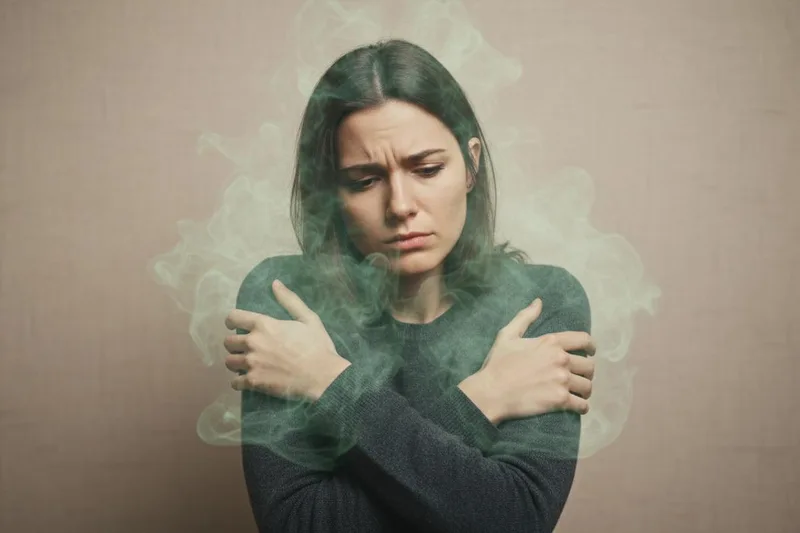
Cannabis, also known as marijuana, is something that many people use for fun, when they get together with friends. But sometimes this 'little' bit can get too much and become uncontrollable. Then it starts to affect your daily activities, relationships, and health. Do you have a problem like this due to cannabis use? Or does someone you know suffer from this condition? So today we will talk about the disease caused by this cannabis use, that is , Cannabis Use Disorder .
What is Cannabis Use Disorder?
Simply put, Cannabis Use Disorder (CUD) is a condition in which the use of cannabis (marijuana) causes problems in your life and affects your mental health. It is also a type of Substance Use Disorder (SUD).
When we say cannabis, we mean any product derived from the plant `Cannabis sativa`. That means its dried flowers, leaves, stems, and seeds. This plant contains more than 500 chemicals. `Cannabidiol` (`CBD`) is one such chemical.
Marijuana refers to any part or product of the `Cannabis sativa` plant, but it must contain a significant amount of a chemical called tetrahydrocannabinol (`THC`) . This `THC` is what gives you that `high`, that is, the feeling of intoxication. Marijuana is a type of cannabis, but not all cannabis is marijuana. The `CUD` condition is mainly caused by `THC` containing substances (that is, marijuana).
This `CUD` condition can range in severity – some people may experience mild symptoms , others moderate symptoms, and others severe symptoms . It typically involves an uncontrollable urge to use cannabis, an increased tolerance to cannabis (meaning you need more to feel the same way you used to), and withdrawal symptoms when you stop.
CUD can have a major impact on your health, your relationships with family and friends, and your entire life. So it's important to seek help as soon as you start to notice symptoms.
What is the difference between this `CUD` and marijuana addiction?
We call cannabis use disorder (CUD) mild, moderate, or severe. Marijuana addiction is the most severe form of the condition. It means continuing to use marijuana despite the problems it causes. Marijuana addiction occurs when your brain's reward system becomes accustomed to using the drug, prompting you to seek it out.
How common is this `CUD` condition?
In fact, `CUD` is a relatively common condition. A 2021 study found that about 5.8% of people aged 12 and older in the United States (that's about 16.3 million people) had `CUD` in the past 12 months. This condition can also be seen in Sri Lanka to a greater or lesser extent.
What are the symptoms of `Cannabis Use Disorder`?
According to the American Psychiatric Association's Diagnostic and Statistical Manual (DSM-5), the following are the symptoms of Cannabis Use Disorder:
- Using more cannabis and for longer than you intended.
- A strong desire or urge to use cannabis.
- Attempts to reduce or control cannabis use have failed.
- It takes a long time to find, use, or recover from the effects of cannabis.
- The inability to perform tasks at work, school, or at home due to cannabis use.
- Continuing to use cannabis despite relationship problems.
- Giving up social, occupational, or recreational activities due to cannabis use.
- Repeated use of cannabis, even in dangerous situations , such as driving a vehicle.
- Continuing to use cannabis despite knowing that it is causing a physical or mental problem.
- Increased tolerance (meaning you need more cannabis to feel the same high as before).
- Experiencing withdrawal symptoms when stopping cannabis, and using cannabis again to overcome those symptoms.
If you have symptoms like these, it is very important to seek medical advice as soon as possible.
Other symptoms and behaviors
In addition to this, some other characteristics and behaviors can be seen:
- Confusion, difficulty concentrating.
- Memory problems.
- Difficulty learning new things.
- Seeing or hearing things that are not there (`Hallucinations`).
- Delusions.
- Being away from friends and family.
- Sudden changes in mood and behavior.
- Getting angry and denying when someone asks about cannabis use.
- Not caring about their appearance like they used to.
- Secretive behavior to hide cannabis use.
What are the causes of `Cannabis Use Disorder`?
A person developing a `Cannabis Use Disorder` can typically follow a pattern like this:
1. Experimental use.
2. Occasional use.
3. Heavy use.
4. Substance use disorder.
This journey is a bit complicated. There are several factors that contribute to the development of a substance use disorder. The main ones are:
- The effects of THC on your brain chemistry.
- Genetic factors (influence from heredity).
- Mental health conditions.
- Easy access to and exposure to cannabis.
Brain chemistry
The chemical `THC` affects your brain, especially the `reward center`.
We are all biologically wired to seek pleasure. Most of the time, this pleasure comes from healthy things. When you spend time with someone you love, or when you eat a delicious meal, your body releases a chemical called dopamine . This is what makes you feel happy and fulfilled. It's like a cycle; you seek out these experiences because they make you feel good.
When you use drugs like marijuana, a huge surge of dopamine rushes through your brain. However, instead of motivating you to do the things you need to do to survive (eating, working, spending time with loved ones), these high dopamine levels can cause harmful changes in your thoughts, feelings, and behavior.
This leads you to seek more pleasure from marijuana than you would from healthy experiences. Over time, marijuana (`THC`) changes your brain chemistry, making you less sensitive to it. Then, you need more to feel the same effect.
Genetic influence (heredity)
Research has shown that between 40% and 60% of the risk of developing any substance use disorder is genetic. This means that if someone in your immediate family (a sibling, parent) has had a substance use disorder, you are more likely to develop it too. Scientists have found that a mutation in a gene called CHRNA2 (located on chromosome 8) is linked to CUD.
Mental health conditions
About half of people with a mental health problem also have a substance use disorder (e.g., `CUD`). Similarly, about half of people with a substance use disorder also have a mental health problem. This is called `dual diagnosis` .
Substance use disorders and other mental health conditions are caused by several interrelated factors:
- Genetic risks.
- Problems that occur in the same areas of the brain.
- Environmental influences.
Research shows that mental health conditions can lead to substance use, and substance use can lead to mental health conditions. Some people may use cannabis in an attempt to manage the symptoms of their mental health problems (this is called `self-medication`). This can also contribute to the condition `CUD`.
Easy access to and exposure to cannabis
The easy availability of cannabis is a particularly influential environmental risk factor. Factors that increase the likelihood of exposure to and use of cannabis include:
- Someone in your home is using cannabis.
- Your friends using cannabis.
- Having a medical marijuana certificate (in countries/states where it is legal).
What are the risk factors for `Cannabis Use Disorder`?
Certain factors can increase your risk of developing CUD. Some of them include:
- Age: People who start using cannabis before the age of 18 are four to seven times more likely to develop CUD than adults.
- Potency of marijuana: Using high-potency marijuana (i.e., high THC levels) can increase the risk of CUD. Also, some methods of using marijuana (such as dabbing and vaping concentrates) can deliver very high levels of THC to the body.
- Frequency of use: One study found that 17% of people who used cannabis once a week and 18.8% of people who used cannabis daily showed signs of cannabis dependence.
- Depression: People with depression are at higher risk of developing CUD.
- Gender: Men are more likely to develop CUD.
- Other drug use: Using other drugs, such as alcohol, nicotine, or hallucinogens, can increase the risk of CUD.
Risk factors for CUD, especially among adolescents, include:
- Parental drug use.
- Weakening of school education.
- Antisocial and oppositional behavior.
- Alcohol and/or nicotine use.
- Sexual abuse during childhood.
What complications can this cause?
CUD can have negative effects on your mental, physical, and social health. Some of the physical complications of the condition associated with cannabis use include:
- Cannabis-induced psychosis.
- Cannabis-induced anxiety disorder.
- Cannabis-induced sleep disorder.
- Cannabis hyperemesis syndrome.
- Chronic bronchitis if you smoke or vape marijuana.
- Fertility issues.
Young children with CUD are more likely to develop complications such as:
- Severe `CUD` (marijuana addiction).
- Affecting brain development.
- Cognitive impairment.
- Weakening educational outcomes.
- Increased likelihood of dropping out of school.
- Decreased intelligence quotient (`IQ`).
How do you recognize this?
There is no single test that can diagnose Cannabis Use Disorder. Instead, healthcare providers will take a detailed look at your medical history and behaviors related to cannabis use. They may also perform drug tests.
Since it is common for people with CUD to have a mental health problem, the doctor will also ask about your mental health history.
According to the American Psychiatric Association's Diagnostic and Statistical Manual (DSM-5), to be diagnosed with Cannabis Use Disorder, at least two of the symptoms we discussed earlier must be present for more than 12 months .
The most important thing to remember is that `CUD` can exist at different levels:
- Mild `CUD`: Two or three symptoms.
- Moderate `CUD`: Four or five symptoms.
- Severe CUD: Six or more symptoms.
What are the treatments?
There are effective treatments for Cannabis Use Disorder. Treatment depends on the severity of the condition, and it varies from person to person – you may need different treatments at different times.
Because CUD is a chronic condition that can recur, ongoing care is required for treatment to be successful.
Because people with CUD often have other mental health conditions, it is usually better to treat them together than separately.
There are two main types of CUD treatment:
1. Detoxification.
2. Cognitive and behavioral therapies.
Also, there are different places and ways to get treatment:
- Outpatient counseling.
- Intensive outpatient treatment.
- Inpatient treatment.
- Long-term therapeutic communities, such as sober living communities.
Detoxification (removing toxins from the body)
Detoxification involves stopping the use of cannabis and allowing it to leave your body. Depending on the severity of your CUD, a doctor may recommend that you gradually reduce your use (tapering off) to reduce the withdrawal effects. This is the first major step in CUD treatment. You may undergo detoxification on an inpatient or outpatient basis.
Scientists are currently researching drugs for cannabis `detoxification`.
Cognitive and behavioral therapies
Psychotherapy (talk therapy) can help treat CUD and other co-occurring mental health conditions. Therapy also teaches healthy coping mechanisms.
Healthcare providers may recommend cognitive and behavioral therapies alone or in combination with medication.
Some successful treatments for adults with CUD include:
- Cognitive Behavioral Therapy (CBT): CBT is a structured, goal-oriented form of psychotherapy. In CBT, a mental health counselor helps you look deeply into your thoughts and feelings. Through CBT, you can learn to let go of unhealthy thoughts and behaviors and develop healthier thought patterns and habits. CBT for CUD also focuses on motivating change, educating about treatment, and preventing relapse.
- Dialectical Behavior Therapy (DBT): DBT is particularly effective for people who have difficulty managing and controlling their emotions. DBT has been shown to be effective in treating and managing a variety of mental health conditions, including CUD.
- Assertive Community Treatment (ACT): ACT provides mental health services in the community, rather than in a residential or hospital setting. ACT is a treatment that is tailored to each individual. Your treatment plan is based on your strengths, needs, and future goals.
- Therapeutic Communities (TCs): TCs are long-term residential treatment that help people with CUD develop new and healthier values and behaviors regarding substance use and related mental health conditions.
- Contingency Management (CM): CM involves encouraging healthy behaviors by rewarding good behavior. Often, people with CUD are given something of monetary value to encourage them to abstain from cannabis use. For example, if you get a negative result on a drug test, you have the chance to win a prize or gift voucher.
Participating in self-help groups like Marijuana Anonymous can also play a big role in CUD treatment.
What kind of future can someone with `Cannabis Use Disorder` expect?
The prognosis of Cannabis Use Disorder depends on several factors:
- The type and severity of `CUD`.
- The level of drug dependence and the difficulties experienced in quitting.
- Commitment to complete abstinence from drugs.
- Treatment period.
- Genetic factors.
- How do you cope when you are stressed?
Substance use disorders, including Cannabis Use Disorder, are lifelong illnesses. However, you can recover and live a full life. Getting help is essential to recovery. Different people find different methods effective, but ongoing therapy and self-help groups help many people.
CUD is a relapsing disease. If you are in recovery, you are at high risk of relapse. This can happen years after you last used cannabis.
Because of the possibility of relapse, you will need ongoing treatment. Your doctor will review your treatment plan with you and adjust it to meet your changing needs.
How to avoid this `Cannabis Use Disorder`?
The risk of substance abuse, including cannabis use, increases significantly during times of stress and life changes. For an adult, the risk of substance abuse can increase due to things like divorce, job loss, or the death of a loved one. For a young child, the risk can increase due to things like moving, a family divorce, or a change of school.
During times of change like these, it's important to engage in healthy coping strategies, such as exercising, meditating, or learning a new hobby. If you're having trouble managing your stress, consider seeing a mental health counselor .
Finally, things to remember
Cannabis Use Disorder is a complex mental health and brain condition. Because of the changes that occur in your brain, it can be difficult to stop using cannabis, even if you want to. If you or someone you love has Cannabis Use Disorder, talk to a healthcare provider as soon as possible. A trained professional can guide you to the treatment you need. Remember, asking for help is not a weakness, it is a strength! You are not alone, and there are many people who can help you on this journey.
` Cannabis, Marijuana, Cannabis Use Disorder, Drugs, Addiction, Mental Health, Treatment


💬 Comments (0)
No comments yet. Be the first to share your thoughts here.
Add Your Comment