
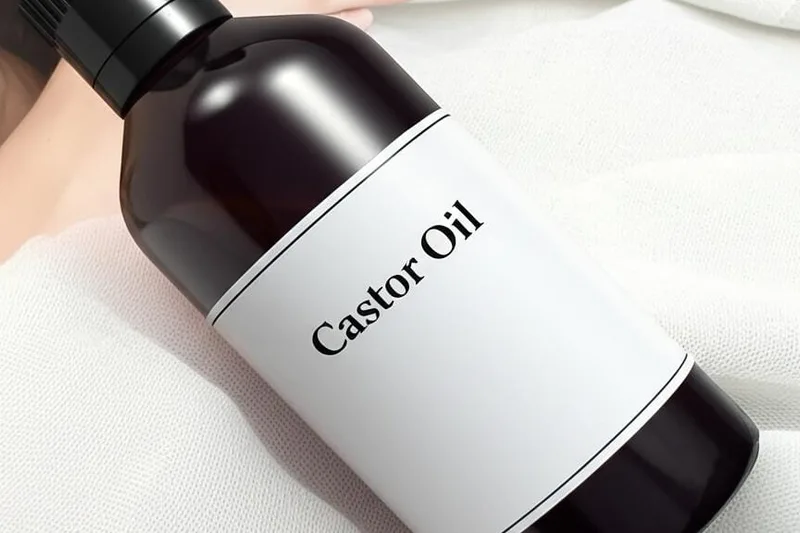
Castor oil has been a very popular item in our homes, especially since the time of our grandparents. Some people drink it for constipation, others apply it to their hair, and some even use it for skin wounds. Is this bottle of castor oil that is in almost every home really a good remedy for everything? Or does it have dangerous side effects that we are not aware of? Okay, so today, let's talk about this castor oil in a simple and straightforward way.
First of all, what is castor oil?
Simply put, castor oil is a thick, odorless oil extracted from the seeds of the castor plant. Its history dates back to ancient Egypt, when it was used to light lamps, as well as for beauty and health purposes.
Today, India produces the largest amount of castor oil in the world. It is also widely used in our country. It is mainly used as a relief for constipation and as an ingredient in skin and hair products. The main active ingredient in this oil is a fatty acid called ricinoleic acid . It is this ingredient that is responsible for many of its properties.
What are the real benefits of castor oil?
Although many people talk about castor oil, there are very few scientifically proven benefits. Let's break them down clearly.
| Usefulness | Scientific explanation |
|---|---|
| Relief from constipation | This is the only major reason why castor oil has been approved by reputable institutions like the FDA in the United States. The ricinoleic acid in castor oil stimulates the muscles in the intestines and makes the process of passing stool easier. However, this is only suitable for temporary constipation . If you have constipation that lasts for several days, definitely see a doctor. |
| A moisturizer for the skin | Because it is rich in fatty acids, castor oil has a good ability to retain moisture in the skin. This is why it is included in many beauty products. However, some people may be allergic to it. Therefore, it is better to mix it with another oil, such as coconut oil, rather than using it directly. |
| A little help to heal wounds | Castor oil has antibacterial properties, so it is used in some medical ointments. For example, an ointment called (Venelex) . These help keep the wound moist and protect it from infection. But remember, do not apply castor oil to small cuts and burns at home. These should only be used under medical supervision. |
| To cause labor pains | This is a traditional method that has been around for a very long time. While some studies have shown that it may be beneficial, others have refuted it. Therefore, there is no scientific consensus on this. If you are pregnant, do not use castor oil for any reason without talking to your doctor. |
Myths and truths about castor oil
Now let's look at some things that many people believe, but have no scientific basis.
Is it better to grow hair or get rid of baldness?
Many people use castor oil to stop hair loss, promote new hair growth, and treat baldness. Castor oil can actually moisturize your scalp and hair. However , there is no scientific evidence to prove that it promotes hair growth or prevents baldness. Sometimes, applying too much castor oil can cause a rare condition called ``hair felting,'' where hair becomes tangled, frizzy, and brittle.
Is it good to apply to acne?
This is another myth. There is no research evidence to suggest that castor oil is good for acne. In fact, castor oil can clog pores and increase acne because it is thick. It can also cause a condition called folliculitis, which is an infection of the hair follicles.
Remember, not everything that is 'natural' is 'safe'. It is very important to be well informed about anything before using it.
Let's also be aware of potentially dangerous side effects.
Castor oil contains a highly toxic compound called `(Ricin),` but this toxin is removed when the oil is made. However, there are still some risks and side effects associated with using castor oil.
| Side effect | What you need to know |
|---|---|
| Allergies | Itching, redness, and swelling may occur when applied to the skin. Therefore, it is wise to do a patch test on a small area of skin first. |
| Stomach discomfort | Drinking too much, especially for constipation, can cause nausea, vomiting, stomach cramps, bloating, and dizziness. |
| Problems with other medications | If you are taking castor oil for constipation, take it a few hours before or after other medications you are taking, as these can change the way your body absorbs other medications. |
| Critical Situations | |
| Pregnant and lactating mothers | Absolutely not. It can cause premature labor by contracting the uterus. It has not been confirmed whether these are safe during breastfeeding and for young children. Therefore, avoid use completely. |
| Overdose | If you accidentally drink too much, you may experience symptoms such as severe stomach cramps, chest pain, diarrhea, dizziness, skin rashes, and difficulty breathing. If this happens, immediately call the National Poisons Information Center at the Colombo National Hospital , or go to a hospital Emergency Unit (ETU) immediately. |
Take-Home Message
- The main medically proven benefit of castor oil is its use as a short-term solution to temporary constipation .
- There is no scientific evidence that castor oil is beneficial for things like hair growth and acne removal.
- Avoid using castor oil completely for pregnant mothers, nursing mothers, and young children .
- Always consult your doctor before using castor oil for any health problem, especially constipation. Don't rely on what others say.




💬 Comments (0)
No comments yet. Be the first to share your thoughts here.
Add Your Comment