
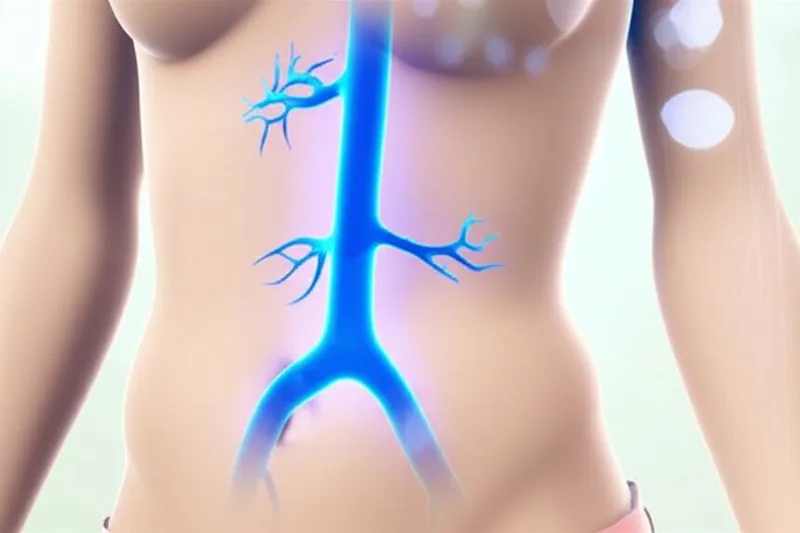
Have you ever wondered how complex a system is inside our bodies to properly digest the food we eat and absorb nutrients from it? Today we are going to talk about one that does such a very important job, but we don't talk about it much. That is the main blood vessel called the Celiac Trunk . Although the name is a bit strange, the service it performs is very great.
What exactly is the Celiac Trunk?
Simply put, the Celiac Trunk is a major artery in our abdominal cavity, that is, inside the stomach. Imagine that you have a large water tank that supplies water to your house, and that tank is where the water goes to the other small pipes in the house. Similarly, the Celiac Trunk receives blood from the largest blood vessel in our body, the Abdominal Aorta . So, a large amount of blood flows through it.
We only have one celiac trunk artery in our body. But it does a very important job. It supplies clean, oxygenated blood to some of the most important organs in our digestive system, that is, the digestive tract. Do you feel a little sleepy after eating lunch? At that time, remember that your celiac trunk is helping your digestive organs by pumping extra blood to them. Because those organs are working hard to extract nutrients from the food you eat.
The word "celiac" comes from a Greek word meaning "stomach." People with celiac disease also experience problems in this abdominal area. So that's the name given to this important blood vessel.
What happens to the Celiac Trunk?
Its main function, as we mentioned earlier, is to carry oxygen-rich, nutrient-rich blood to the parts of our digestive system. Think of it like these organs are like factories. They definitely need fuel, that is, oxygen and nutrients, to work. The main pipeline that supplies that fuel is the celiac trunk.
These are the organs that receive blood from the celiac trunk:
- Liver: One of the largest glands in our body, it is a very important organ that detoxifies and produces bile.
- Gallbladder: Stores bile produced by the liver and helps digest fatty foods when we eat them.
- Spleen: An organ that purifies the blood, helps the immune system, and removes old red blood cells.
- Esophagus: When we swallow food, it is the tube that carries food from the mouth to the stomach.
- Stomach: This is the main place where the digestion process of the food we eat begins. This is where the food mixes with acid and begins to break down.
- Pancreas: Produces important hormones like insulin, as well as enzymes that help digest food.
- Duodenum: The beginning of our small intestine. Another important place where digestion and absorption of nutrients take place.
Now you understand that if there is any blockage or obstruction in this celiac trunk, it can affect all of these organs. Just like if a water line breaks, all the taps in the house will stop working.
Where is this Celiac Trunk located?
Okay, now let's see where this small but very important blood vessel is hidden in our bodies. Just below the bone in the middle of your chest, the sternum, think about going from the side to the spine, across your belly, and then to the side. It's located just above your lumbar spine, close to the spinal cord. To be precise, it's at the level of the first lumbar vertebra (L1) where it branches off from the abdominal aorta. That means it's located just below our rib cage, but close to the spinal cord.
What are the parts of the Celiac Trunk?
This celiac trunk does not work alone. It also has small blood vessel branches that carry blood to the organs mentioned above. There are three main branches:
1. Splenic artery: This is the artery that carries blood to the spleen. It also has smaller branches that supply blood to the stomach and pancreas.
2. Left gastric artery: This supplies blood to parts of the stomach and esophagus.
3. Common hepatic artery: This gives off branches that carry blood to the liver, gallbladder, some parts of the stomach, pancreas, and duodenum.
But here's a little something to know. Not everyone has the same way these branches divide. In some people, these branches of the artery may not connect to the celiac trunk, but may start directly from the abdominal aorta or splenic artery. Also, although there are usually three branches, some people may have four, five, or even six branches. It is said that such variations are slightly more common among people of black, Japanese, or Korean descent. These are just normal anatomical variations, not diseases.
What does the Celiac Trunk look like?
This is a very small blood vessel. It's about 1.5 to 2 centimeters long (0.59 to 0.78 inches). That's smaller than a postage stamp! And its diameter, or cross-sectional width, is between 6 and 12 millimeters (0.23 to 0.47 inches). That's about the size of a regular pea.
Like other arteries, the wall of the celiac trunk has three layers. These layers contain connective tissue, muscle, and elastic fibers . Arteries need to be somewhat flexible to withstand the pressure of the blood rushing from the heart. That's what these layers help with.
What are the common conditions that affect the Celiac Trunk?
These tiny blood vessels can also be affected by various diseases and conditions. Some of them are:
- Stenosis: This is when the blood vessel becomes blocked from the inside, narrowing the blood flow. This can be caused by things like cholesterol deposits (atherosclerosis).
- Thrombosis: A blood clot forms and completely or partially blocks a blood vessel.
- Aneurysm: A weakened blood vessel wall that bulges out like a balloon. This can be dangerous because it can burst.
- Arterial dissection: This is when the layers of the blood vessel wall separate from each other, causing them to tear. This is also an emergency.
- Median Arcuate Ligament Syndrome (MALS): In this, a ligament that runs through our diaphragm pushes on the celiac trunk, obstructing blood flow.
Important: This condition may cause symptoms such as upper abdominal pain, nausea, and vomiting. If this persists, you should definitely see a doctor.
How to check the health of the Celiac Trunk?
If your doctor suspects that there is a problem with the celiac trunk, he or she may perform several tests, such as:
- Doppler ultrasound: This uses sound waves to see how blood flows inside blood vessels. It is a painless and easy test.
- CT angiogram (Computed Tomography angiogram): This is a type of X-ray. A special dye is injected into the body and clear pictures are taken of the blood vessels.
- MRA (Magnetic Resonance Angiogram): This is an MRI (Magnetic Resonance Imaging) scan. It uses magnetic fields and radio waves to produce detailed images of blood vessels.
- Angiogram: This also uses X-ray technology (fluoroscopy) and a dye to take pictures of the blood vessels. It can sometimes be used as a treatment.
These tests allow the doctor to accurately determine if there is any blockage, swelling, or other abnormalities in the celiac trunk and its branches.
What are the common treatments for Celiac Trunk?
Fortunately, there are treatments for many conditions that affect the celiac trunk. The treatment you receive will depend on the condition, its severity, and your overall health.
Some of the main treatment methods are:
- Medications: Medications such as antihypertensives and anticoagulants may be prescribed.
- Angioplasty: A procedure in which a small balloon-like device is inserted into a blocked blood vessel and inflated to reopen it.
- Stent placement: After angioplasty, a small mesh tube (stent) is inserted to keep the blood vessel from collapsing again.
- Bypass surgery: A surgery to bypass a blocked blood vessel and create a new blood path.
- Surgery: Surgery may be required to treat MALS, aneurysms, or dissection.
Your doctor will choose the treatment method that is most suitable for you.
How do I keep my Celiac Trunk healthy?
This is the most important part. Everything that is good for our heart health is good for all other blood vessels, including our celiac trunk. So, here are some things you can do:
- Exercise for at least 150 minutes a week: Do something you enjoy, such as brisk walking, running, cycling, or swimming.
- Eat a healthy diet low in salt and fat: Eat more vegetables, fruits, legumes, and whole grains. Reduce processed foods, sugary drinks, and high-fat foods as much as possible.
- Avoid tobacco products completely: Smoking is very harmful to blood vessels.
- Manage stress: Maintain mental well-being through things like yoga, meditation, and engaging in a hobby you enjoy.
- Maintain a healthy weight that suits you.
- If you are an adult, get between seven and nine hours of good sleep a day.
- If you have medical conditions like high blood pressure or diabetes, control them well. Follow your doctor's instructions exactly.
Finally, the most important thing
Your Celiac Trunk is a vital blood vessel that supplies life and oxygen to the organs that help you digest the food you eat and absorb nutrients from it. So, taking care of it is the same as taking care of your other blood vessels. That means following a healthy diet and an active lifestyle .
By regularly going for medical checkups, your doctor can identify any problems with your celiac trunk or other blood vessels early. If you have any symptoms, don't be afraid to talk to your doctor about them and ask about treatment. Remember, a healthy blood vessel system is essential for a healthy life!
` Celiac trunk, celiac trunk, abdominal artery, digestion, blood supply, abdominal aorta, symptoms, treatment


💬 Comments (0)
No comments yet. Be the first to share your thoughts here.
Add Your Comment